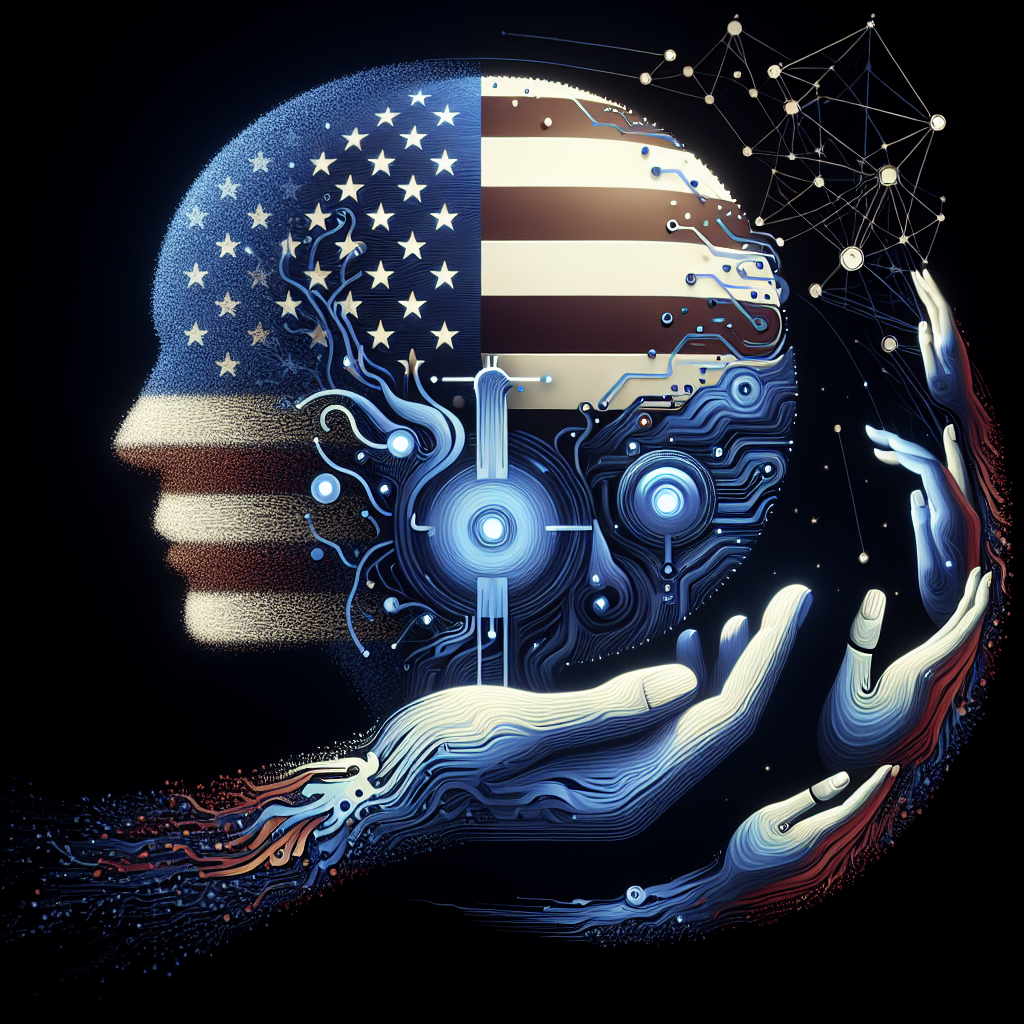
The Race Towards Advanced AI: Opportunities and Challenges
A technological revolution is upon us, poised to redefine our world in ways we can barely fathom. As artificial intelligence (AI) evolves at an unprecedented pace, America’s intensified investment in this domain not only shapes the nation’s future but may also alter the very fabric of humanity.
Leading experts assert that artificial general intelligence (AGI) could become a reality within the next two to five years. This groundbreaking development is expected to usher in scientific advancements that may well eclipse anything we have seen before. Some may call it the Second Industrial Revolution, yet many believe its impact will be even more profound. However, amid the excitement lies an undeniable concern: Are we truly prepared for what lies ahead?
The potential benefits of AGI are staggering. Imagine a future where diseases we’ve battled for generations are cured, complex mathematical problems are solved, and new wealth is generated in unimaginable quantities. Yet, these advancements come with inherent risks—dangers that could jeopardize jobs, national security, and, fundamentally, human existence. As Anthropic CEO Dario Amodei warns, the race for AI superiority might lead to a “bloodbath” for job seekers, just one of many threats that demand our attention.
The same technologies that could eradicate cancer also carry the possibility of creating bioweapons, underscoring the dual-edged nature of innovation. In a world where countries hurry to develop advanced AI, discussions surrounding the risks of such progress often remain woefully underexplored. With the technologies that might solve our greatest challenges also able to create catastrophic risks, a balanced approach is critical.
Echoing this sentiment, Stephen Hawking once cautioned that developing full artificial intelligence could herald the end of the human race. OpenAI CEO Sam Altman echoes similar fears, suggesting that while AI will create great companies, it might also lead to our undoing. Even professions once deemed secure, such as those in law and medicine, find their futures uncertain under the looming shadow of AI advancement.
In light of these complexities, The Alliance for Secure AI is being launched to ensure that while innovation continues, security and safety remain paramount. This is not about halting technological progress but rather about weaving caution into the fabric of our advancements. As we venture into this brave new world, it is vital that we foster communication across political and sectoral lines, bringing together experts in technology, policy, and national security.
But effective communication must extend beyond the elite. Most Americans remain unaware of the unprecedented risks AI poses to their daily lives. A comprehensive educational campaign is essential, translating complex AI concepts into terms that resonate with everyday experiences. By uniting different stakeholders—AI experts, policymakers, and journalists—we can cultivate a community dedicated to responsible AI development.
The implications of AGI extend deeply into our lives—affecting the economy, national security, and perhaps even the essence of consciousness itself. Companies like Google are already preparing for a “post-AGI” reality. It is crucial that the U.S. leads in technological innovation while ensuring these developments align with human values and foundational principles.
This brings us to fundamental questions that echo biblical wisdom: What role should AI play in society? What ethical considerations must we navigate? As Proverbs 15:22 (NIV) wisely notes, “Plans fail for lack of counsel, but with many advisors they succeed.” Seeking diverse perspectives can guide us toward the responsible use of AI.
As we approach this transformational era, let us remember the importance of collaboration and deep engagement—not just from technology leaders but from every individual. Together, we can ensure that the potential of AI serves the common good, fostering an environment of innovation that reflects compassion and shared responsibility.
In these times of change, it’s crucial to embrace the opportunities that lie ahead while acknowledging the responsibility we share. Technology has the power to uplift humanity; let us be stewards of that power, ensuring it enriches, rather than endangers, our shared future. Reflecting on this wider vision reminds us that, while innovation is vital, our moral compass should guide us toward a more hopeful and just world.
Explore and dig up answers yourself with our BGodInspired Bible Tools! Be careful – each interaction is like a new treasure hunt… you can get lost for hours 🙂