Title: Cornell Scientists Create VR Headsets for Mice, Unveiling New Insights into Animal Behavior
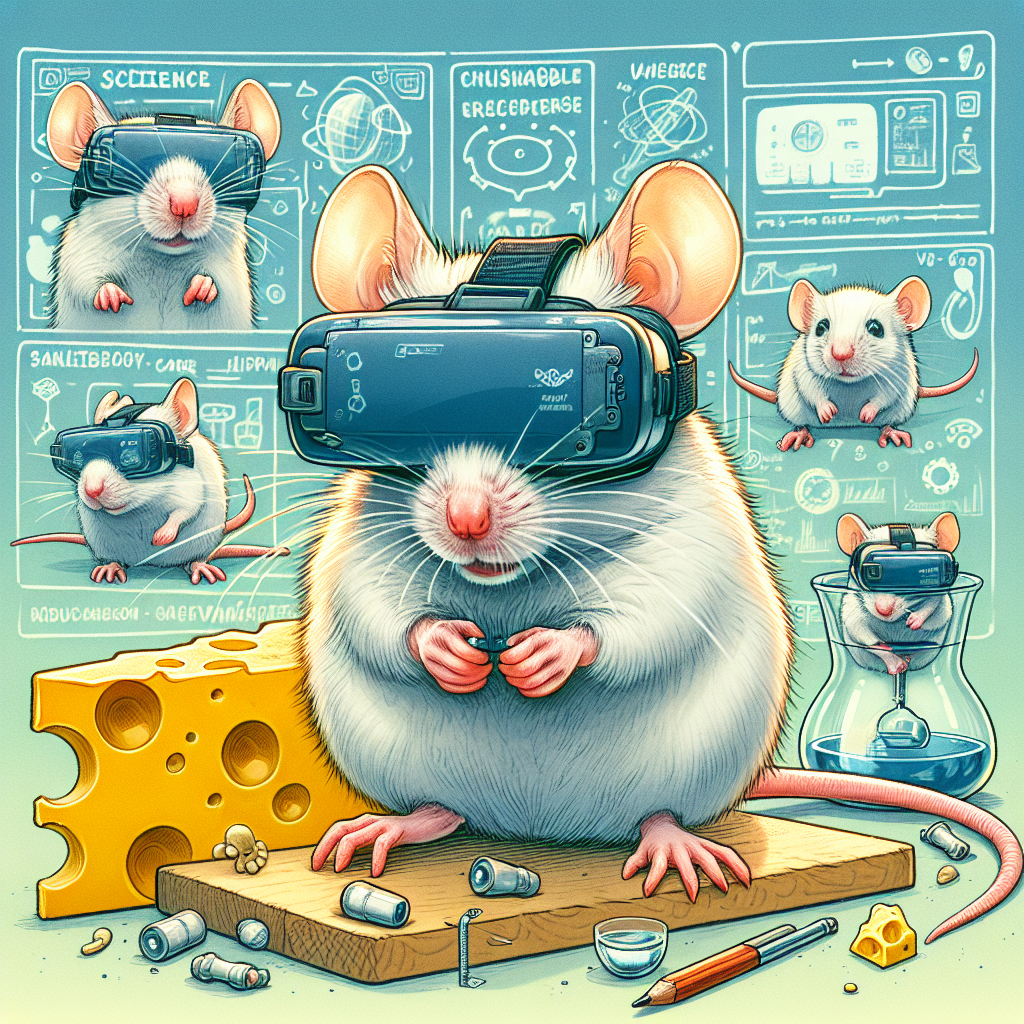
In a groundbreaking study, scientists at Cornell University have developed miniature virtual reality headsets for mice, aptly named "MouseGoggles." While the image of a mouse sporting a tiny VR headset may evoke a smile, this innovative technology serves a serious purpose: it grants researchers unparalleled access to understanding mouse behavior and brain functions.
The design of the MouseGoggles is quite different from the VR systems we are familiar with. Instead of being mounted on the head, these devices are secured on a scaffold, featuring two smartwatch displays behind Fresnel lenses. This unique setup allows for precise tracking of the mice’s eye movements and pupil dilation. As the mice navigate their virtual landscapes on a spherical treadmill, they exhibit stronger reactions to stimuli related to rewards and threats compared to previous methods that relied on larger projector screens.
While the playful notion of mice in VR might bring about lighthearted amusement, the implications of this research stand to illuminate important truths about creation and design. Just as God created a world filled with intricate details and connections among living beings, this advanced technology fosters deeper exploration into the complexity of animal behavior. The Bible reminds us in Psalm 139:14, "I praise you because I am fearfully and wonderfully made; your works are wonderful, I know that full well." In understanding the behavior and neurological responses of mice, scientists may also draw parallels to the designed wonders within all of creation, including ourselves.
In recent experiments using the MouseGoggles, researchers simulated a looming predator to gauge the mice’s reactions. The results were remarkable—most mice jumped in response, indicating a heightened immersion and perception of danger when using the headsets. This striking differentiation between the traditional screen setup and the immersive VR experience highlights the importance of perception in decision-making, a theme relevant to our own lives.
The potential for MouseGoggles extends beyond just providing better experimental conditions. This research lays the groundwork for further understanding of spatial navigation and memory, connecting to the biblical teaching of stewardship and wisdom in our pursuits. The effort taken by these scientists mirrors the call to seek knowledge and understanding while recognizing a greater purpose in our explorations.
Looking toward the future, the Cornell team aims to develop wearable VR experiences for other animals and incorporate multimodal sensory integration. As this research progresses, it encourages us to consider how deeply interconnected all beings are and to reflect on our responsibilities toward creation.
In light of these developments, we can find encouragement in Proverbs 1:5, "Let the wise listen and add to their learning, and let the discerning get guidance." The exploration of technology and behavior speaks not only to scientific advancement but also to the sacred duty we hold in seeking wisdom and understanding within God’s creation.
As you ponder this exciting advancement, consider the broader implications of curiosity and discovery. Let your own journey be one of mindful exploration, recognizing that every aspect of life offers an opportunity for learning and deeper connection with the world around us.
Explore and dig up answers yourself with our BGodInspired Bible Tools! Be careful – each interaction is like a new treasure hunt… you can get lost for hours 🙂