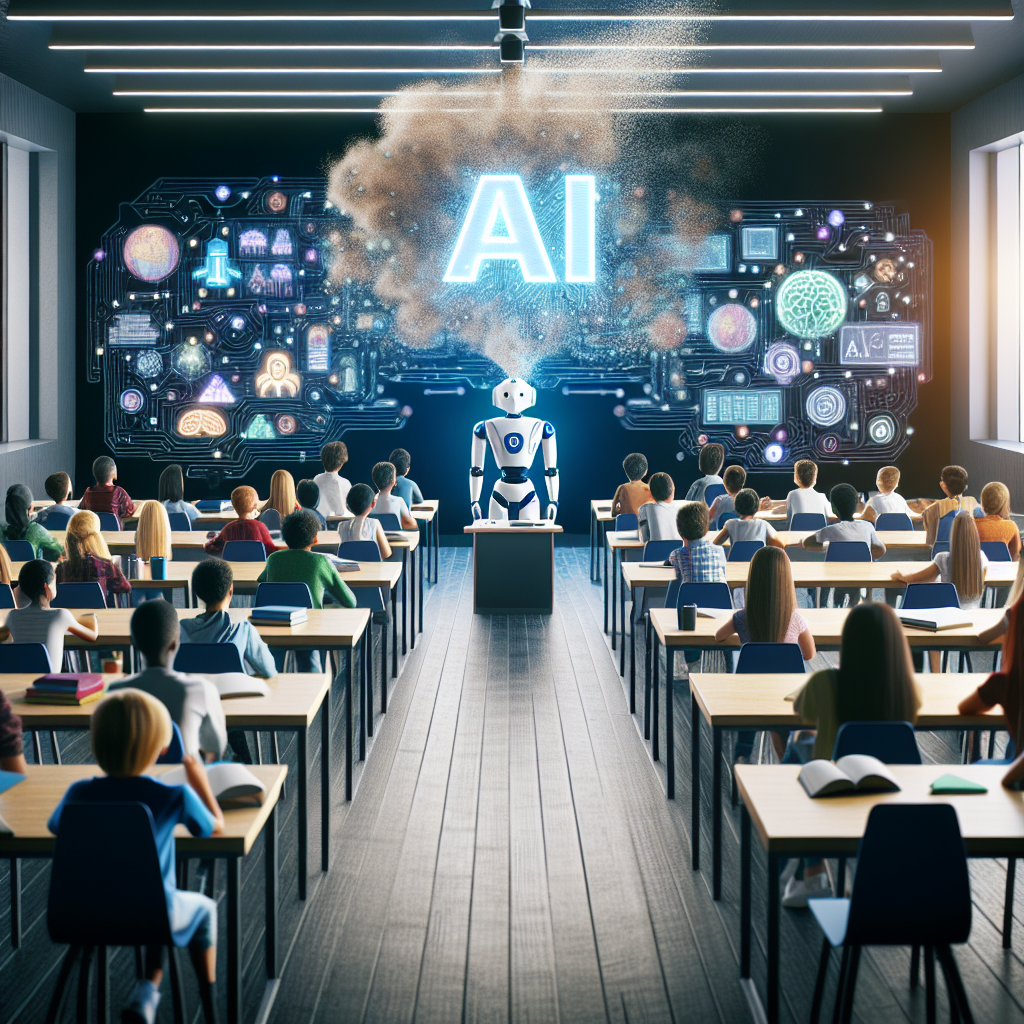
Empowering Our Future: The Urgent Need for AI Literacy in Education
In a rapidly advancing digital landscape, the call for AI literacy has never been more urgent. Just as early internet adopters forged the digital world we navigate today, today’s youth must be equipped to utilize artificial intelligence (AI) as a tool for creativity and ethical engagement. Failure to embrace this educational shift could leave a generation behind, passive observers in a $16 trillion machine-driven economy by 2030.
Much like the iconic sound of dial-up modems heralded a new age, the widespread adoption of AI challenges educators and policymakers to avoid treating this transformative tool as merely a novelty. In embracing AI as a core life skill, the next generation can learn to question its outputs, utilize it creatively, and ultimately contribute to the shaping of a future driven by machine logic.
AI: A Staple of Youth Culture
AI is woven into the fabric of youth culture, influencing how children communicate, create, and explore. From generative chatbots that assist with homework to algorithms that curate their music playlists, AI is omnipresent. Yet, many young users remain unaware of the complexities behind these "magic boxes," resembling passive consumers rather than informed participants. This gap poses a risk: without proactive education, we may end up cultivating digital bystanders rather than empowered, critical thinkers.
Integrating AI into Education
Teaching children about AI doesn’t mean each child needs to become a machine-learning expert. Just as we didn’t require every student to be a network engineer to teach online safety or research skills, AI education should be a fundamental part of the digital literacy curriculum. Integrating AI concepts into existing subjects—such as media literacy and computer science—can contribute to a more comprehensive understanding of the tools they will inevitably encounter in their professional lives.
Fostering Accountability and Critical Thinking
Educating about AI also involves instilling a sense of accountability. Algorithms, reflecting entrenched human biases, demand that our youth understand the implications of data privacy, misinformation, and the ethical dimensions of technology. By encouraging critical thinking, we equip students to discern the veracity of AI-generated outputs and advocate for ethical usage.
As author and educator John C. Maxwell teaches, “The pessimist complains about the wind; the optimist expects it to change; the realist adjusts the sails.” Students need to become realists in the age of AI, learning to adapt and navigate a complex digital landscape effectively.
The Workforce of Tomorrow Speaks AI
AI’s influence transcends the tech industry, stirring change across healthcare, finance, art, and journalism. Understanding these technologies will be vital for employability. With proper education, children can utilize AI not just for academic shortcuts but as amplifiers for creativity and innovation—developing not only skills for job interviews but for meaningful engagement in their communities.
Time for Action
History illustrates the consequences of unpreparedness: societies that fail to equip their youth for the future often regret it later. As the internet revolution surprised many, we risk a similar fate if we ignore the integration of AI education in our schools.
Proverbs 22:6 tells us, “Train up a child in the way they should go; even when they are old, they will not depart from it.” This ancient wisdom underscores the importance of preparing the next generation to lead wisely and compassionately in a world increasingly governed by technology.
Let us take action now, not merely to teach our children how to use AI but to inspire them to think critically and ethically about the digital tools at their disposal. If we seize this moment, we can cultivate a generation of innovators who approach technology with a sense of purpose and responsibility.
Invitation for Reflection
As we ponder the implications of AI literacy, let us consider our shared responsibility to mentor and guide the youth of today. How can we empower them to emerge as thoughtful, engaged citizens in a world fraught with challenges and opportunities? The sound of the dial-up tone may be echoing again—will we join the conversation or stay silent? The choice is ours.
Explore and dig up answers yourself with our BGodInspired Bible Tools! Be careful – each interaction is like a new treasure hunt… you can get lost for hours 🙂