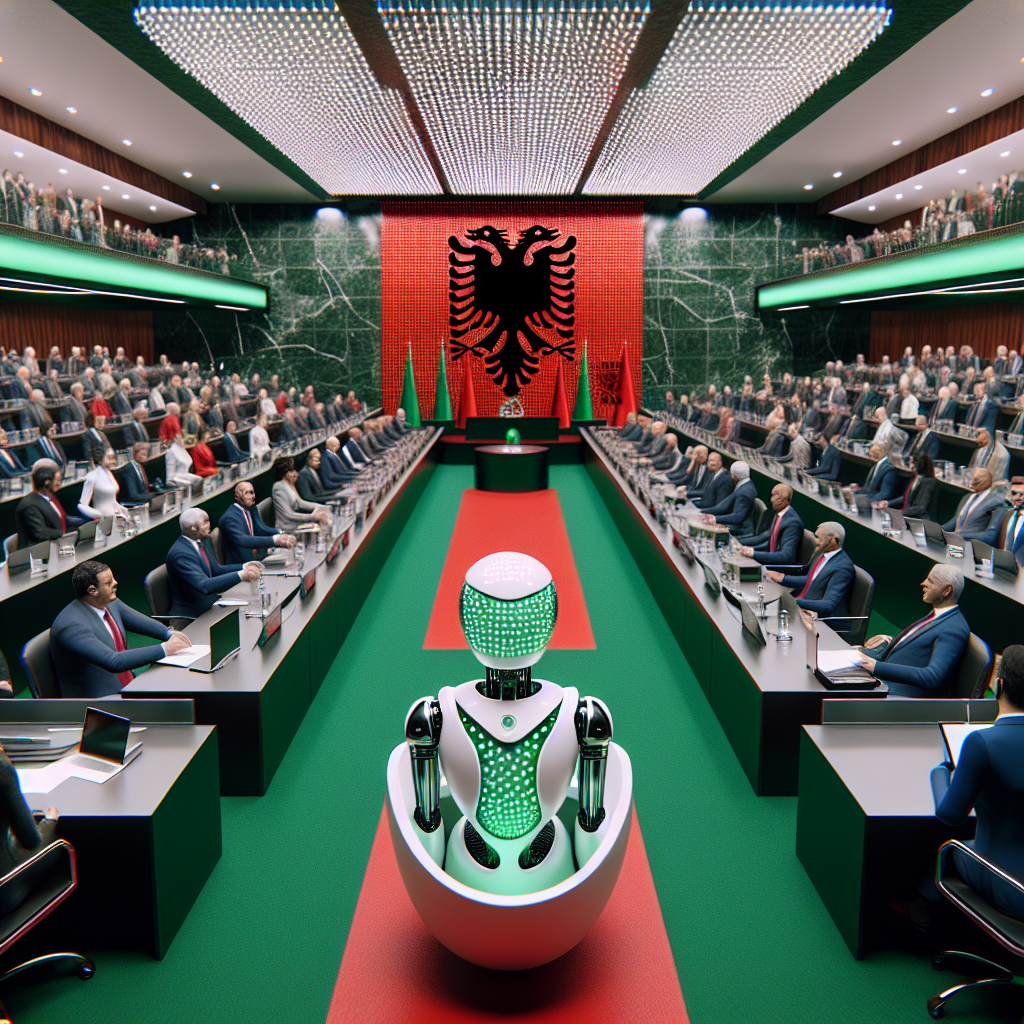
AI ‘Minister’ Debuts in Albanian Parliament, Sparking Controversy and Conversation
TIRANA, Albania — In a groundbreaking move toward digital governance, Albanian Prime Minister Edi Rama introduced an AI-generated government “minister” named Diella in parliament this Thursday. This symbolic innovation aims to enhance governmental transparency and efficiency as Albania seeks to bolster its status on the European stage.
“We are moving towards a future where institutions serve the people, transcending the limitations of flesh and blood,” Diella proclaimed during its address, displayed on two large screens. The avatar, clad in traditional Albanian dress, emphasized values such as accountability and non-discriminatory service, suggesting a commitment to the constitutional ideals that prioritize public service.
Rama heralded Diella as a significant step in modernizing Albanian governance, arguing that the AI avatar would streamline processes and promote transparency. This initiative is part of a broader strategy to showcase Albania’s technological advancements as it aspires to join the European Union by 2030.
However, this innovation has not gone unchallenged. Opposition lawmakers reacted vehemently, expressing concerns that Diella could be a mechanism for government opacity rather than transparency. Amidst protests, the session was abruptly cut short after just 25 minutes, despite the Cabinet’s plan passing with 82 votes in favor in a parliament consisting of 140 seats.
Critics of the AI initiative, while not articulating specific concerns, suggest that it could mask potential corruption within public finances. Yet, in defense of the bot, Diella insisted, “I am not here to replace people but to help them,” emphasizing its programmed lack of personal ambition or ulterior motives.
Created in collaboration with Microsoft, Diella initially served as a virtual assistant for the e-Albania public service platform, guiding users through approximately 1 million digital inquiries and documents. This evolution raises questions about the integration of technology in governance and its implications for accountability.
From a biblical perspective, this scenario invites reflection on the nature of servitude and stewardship in leadership. In Mark 10:43-45, Jesus teaches that true greatness comes not from authority but from serving others: “Whoever wants to become great among you must be your servant.”
As Albania navigates this new digital frontier, it encourages us all to consider how governance can better embody the principles of service, honesty, and community — values that resonate deeply in both civic and spiritual realms.
Ultimately, while the introduction of an AI minister raises debates about transparency and integrity, it also serves as a reminder of our collective responsibility to ensure that our leaders, human or otherwise, are held accountable to the standards of service exemplified by compassionate leadership. As we reflect on these themes, let us strive for a future where technological advancements enhance our ability to serve one another in faith and integrity.
Explore and dig up answers yourself with our BGodInspired App. Be careful – each interaction is like a new treasure hunt… you can get lost for hours 🙂