 0
0
 0
0
Title: Climate Stability: The Silent Fate of Ice Age Giants
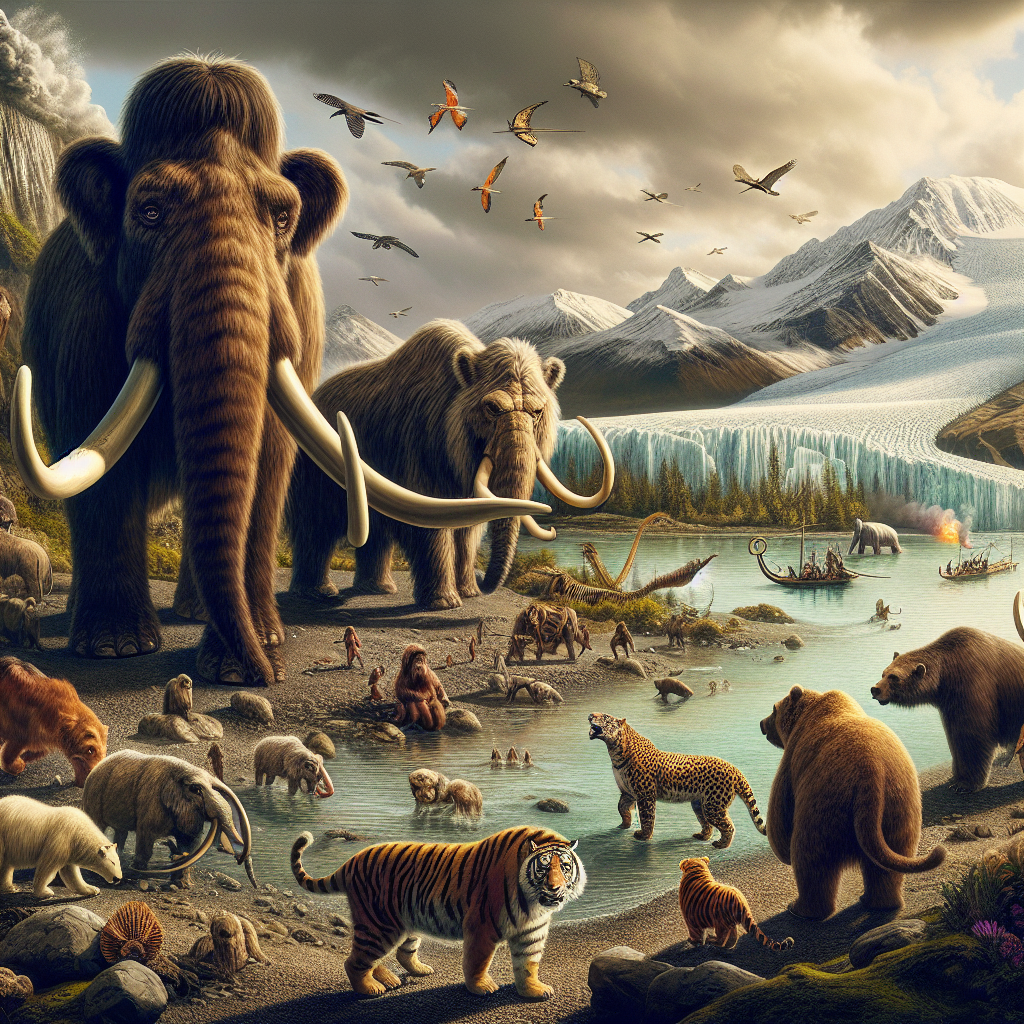
In a thought-provoking lecture at the University of Alaska Fairbanks, Professor Dan Mann presented a striking hypothesis on the extinction of large animals, such as mammoths and mastodons, which once roamed the Earth. Rather than attributing their demise solely to human hunters, Mann suggests that the relative stability of today’s climate may be detrimental to the survival of massive species.
Mann and his colleague, Pam Groves, have uncovered thousands of bones from extinct creatures along Alaska’s waterways, unearthing secrets of a time when the Earth was ruled by colossal animals. Their research indicates that, over the last 100,000 years, approximately 64% of large animal species have vanished—a phenomenon that has occurred most steeply outside Africa. In contrast, Africa, with its pronounced climate variations, has retained a greater proportion of its massive wildlife.
"There’s no silver bullet that killed them all," Mann stated, emphasizing that a combination of factors likely contributed to these extinctions. He argues that our current era—the Holocene—is too stable for large animals to thrive, favoring smaller, more adaptable species instead. "The small, meek and cute inherited the Earth," he quipped.
Delving deeper into climatic history, Mann noted that the last ice age was marked by dramatic temperature swings that allowed large animals to evolve success strategies, such as mobility to migrate in search of resources. However, the transition to the present climate has resulted in shorter growing seasons and diminished nutrition for these once-mighty creatures.
Mann frames his arguments within a broader environmental perspective, distancing the extinction narrative from human blame by noting that large animals began to disappear even before widespread human presence in North America. Yet he does not excuse humanity’s role in contemporary environmental changes, stating, "Humans are preventing the current ice age." By altering the carbon balance through agricultural advancements, humans have unwittingly affected animal populations that have evolved over millennia.
This reflective moment resonates with the biblical notion of stewardship. As highlighted in Genesis 1:28, humanity is called to "fill the earth and subdue it," which emphasizes the responsibility we have toward God’s creation. The lecture invites us to consider how our choices impact the delicate balance of life on Earth—a theme mirrored in Jesus’ teachings about caring for the least among us (Matthew 25:40).
As Mann’s findings challenge us to rethink extinction narratives, they also underscore the vital importance of coexistence and environmental compassion. Let us reflect on our responsibilities not only to preserve wildlife but also to be mindful stewards of the Earth, harmonizing our actions with the rhythm of creation that God designed.
In the face of changing climates and dwindling populations, the encouragement lies in our collective capacity for care and positive action. As we navigate this intricate web of life, may we cultivate curiosity about the world around us, acknowledging both its fragility and our role in its continuity.
If you want to want to know more about this topic, check out BGodInspired.com or check out specific products/content we’ve created to answer the question at BGodInspired Solutions