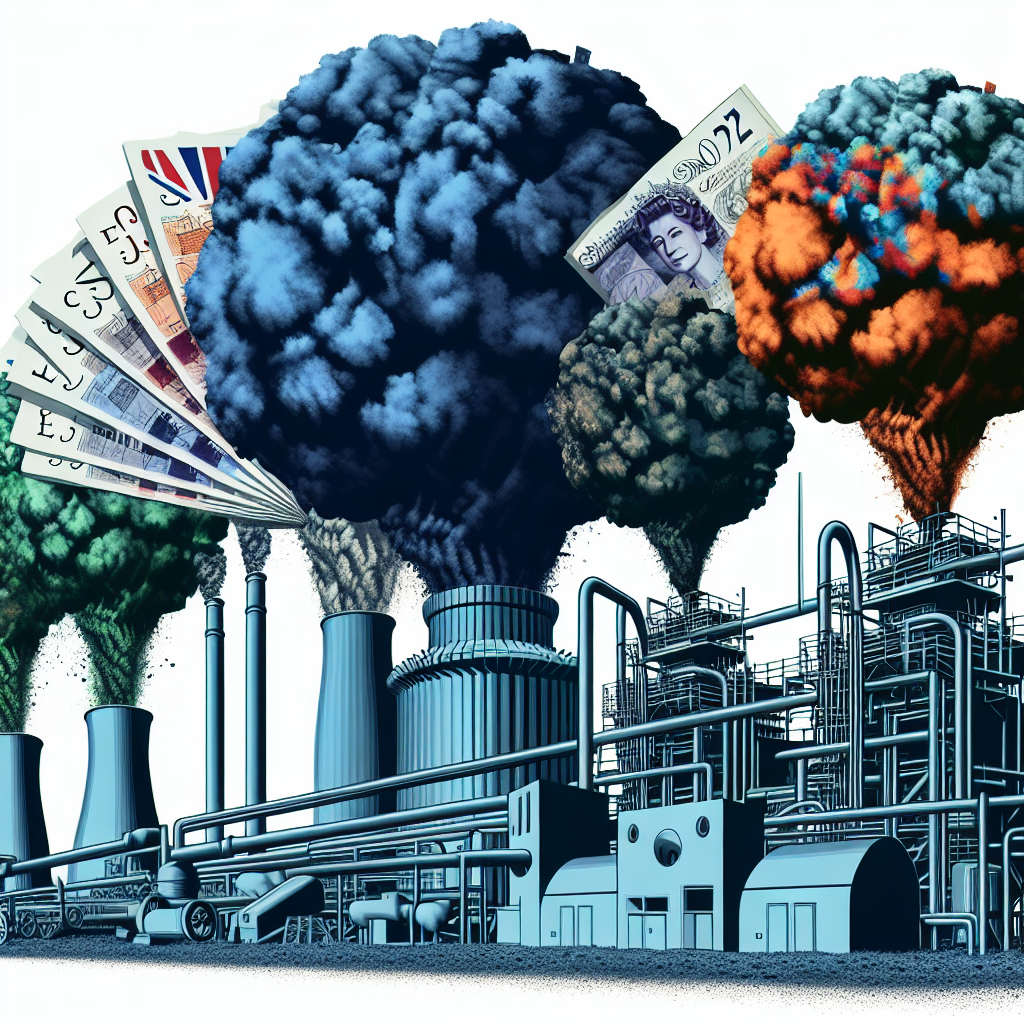
UK Banks Finance Carbon Bombs: A $100 Billion Investment in Environmental Catastrophe
In a shocking revelation, a recent study has uncovered that leading banks in the City of London have invested over $100 billion (£75 billion) into companies developing what are termed "carbon bombs." These massive oil, gas, and coal projects threaten to push global temperatures beyond the limits set by international climate agreements, with potentially catastrophic consequences.
The report identifies nine prominent London-based banks, including HSBC, NatWest, Barclays, and Lloyds, as key financiers of at least 117 carbon bomb projects across 28 countries from 2016 to 2023—merely the year after the Paris Agreement aimed at limiting global warming was signed. Collectively, these projects could produce an alarming 420 billion tonnes of carbon emissions, equivalent to more than a decade’s worth of current global carbon dioxide emissions.
Fatima Eisam-Eldeen, an analyst at the Leave It in the Ground Initiative, emphasized the paradox of the UK’s climate ambitions and the flow of capital toward environmentally damaging projects. "Real climate ambition and leadership would mean stopping all financial flows to companies exacerbating the climate crisis," she stated.
This situation brings to mind a biblical principle found in Matthew 25:14-30, the Parable of the Talents. In this parable, servants are entrusted with resources and expected to use them wisely. This principle invites reflection on how financial resources are employed—not merely for profit, but for sustainable and ethical purposes that align with stewardship of the earth.
As the study builds upon a Guardian investigation from 2022, which revealed hidden fossil fuel plans threatening to derail efforts to limit global heating to 1.5 degrees Celsius, it underscores the UK’s role as a critical financial hub for such mega-projects. Lucie Pinson of the campaign group Reclaim Finance noted that these banks risk turning London into “Europe’s stronghold for financing fossil fuel expansion.”
While the banks involved have come under scrutiny, their representatives have defended their actions. Barclays stated that they are committed to financing the energy sector in a balanced manner and aim to mobilize $1 trillion toward sustainable financing by 2030. NatWest emphasized its significant lending towards climate-related initiatives, though it acknowledges a small fraction allotted to oil and gas.
Yet, the depth of the investments raises philosophical questions about responsibility and integrity, which are central themes in Christian teachings. Luke 12:48 reminds us, “To whom much is given, much will be required.” Therefore, with the substantial financial power these banks possess, their decisions reflect not only on their bottom line but also on their responsibility to the planet and future generations.
As we consider the broader implications of this investment crisis, it invites a moment of introspection. How do we use our own resources—be it finances, time, or influence? The responsibility of stewardship extends beyond financial gains; it challenges us to cultivate a world in alignment with ethical standards and sustainable practices.
Reflect on this: How might our choices, both personally and collectively, pave the way for a future that reflects care and consideration for creation? Just as the parable urges wise stewardship of talents, so too are we called to be thoughtful in our contributions towards a sustainable future, reflecting the principles of love and care for our shared home.
Explore and dig up answers yourself with our BGodInspired Bible Tools! Be careful – each interaction is like a new treasure hunt… you can get lost for hours 🙂