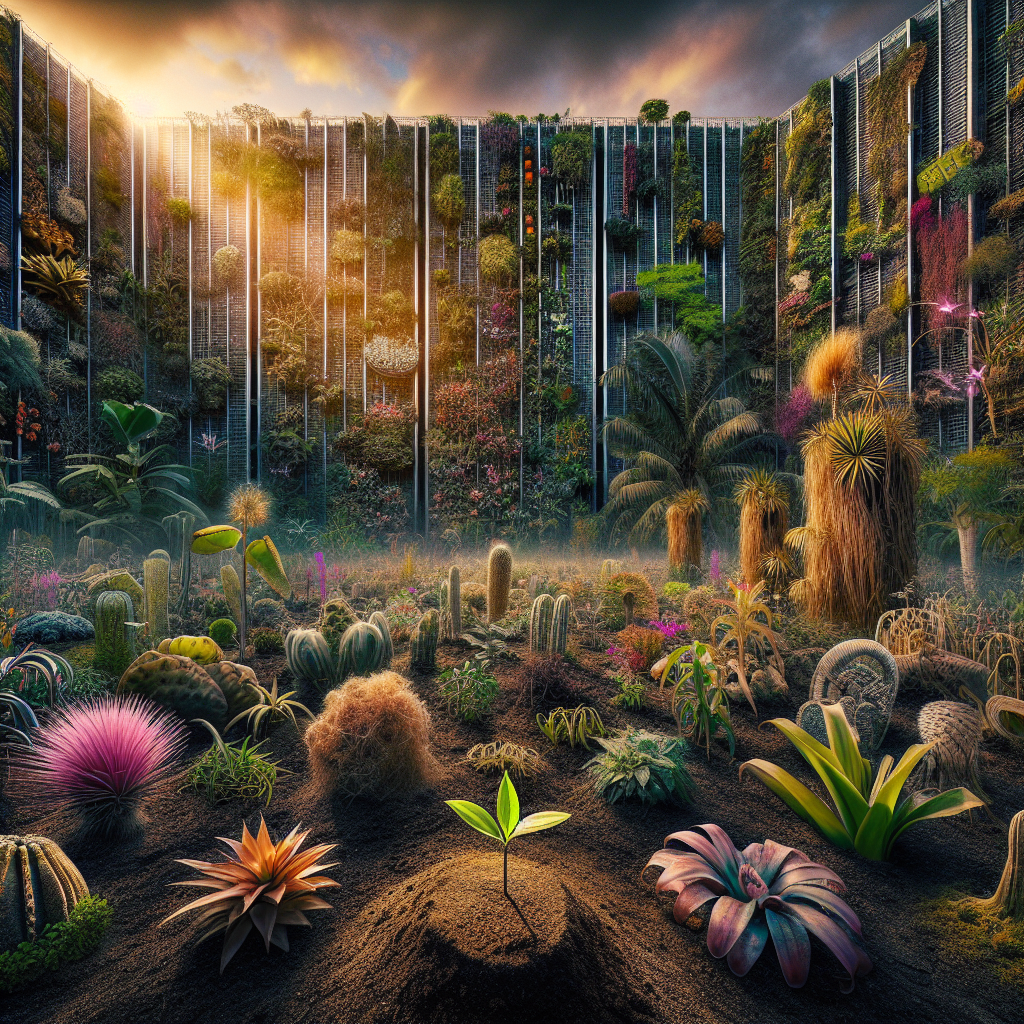
Botanic Gardens Worldwide Struggle to Preserve Rare Plants Amid Space Limitations, Research Reveals
Global botanic gardens are facing a crisis in their conservation efforts, unable to adequately preserve the rarest and most endangered plant species in their living collections due to severe space constraints. This alarming finding is highlighted in new research from the University of Cambridge, which reveals that the world’s living plant collections have reached peak capacity.
Researchers analyzed a century’s worth of data from 50 botanic gardens and arboreta that together house approximately half a million plants. Their results, published in the journal Nature Ecology and Evolution, indicate that international regulations around plant collection are hindering the ability to study and maintain plant diversity at a crucial time when the threat of extinction is on the rise. "Botanic gardens are full. We’re running out of space and resources," stated Prof. Sam Brockington, curator of the Cambridge University Botanic Garden.
The urgency of the situation is underscored by previous research, which found that 40% of the world’s plant species are at risk of extinction due to habitat destruction. This growing crisis emphasizes the need for a more effective infrastructure for conservation within botanic gardens worldwide. “They can’t all fit,” Brockington added, noting that the Cambridge garden alone hosts over 8,000 species, which exceeds the diversity found in some entire tropical countries.
While the Cambridge garden made efforts last year by adding half a million seeds of rare or threatened plants—including the giant palm Tahina spectabilis and the critically endangered Pinus torreyana—the challenge remains. These endangered plants must compete for limited space with popular, yet less threatened, species that draw visitors and funding.
A crucial aspect of this dilemma touches on a broader principle of stewardship. Scripture encourages care for creation, reflecting the teachings of Jesus, who implored His followers to be responsible caretakers of the earth and its resources. “The earth is the Lord’s, and everything in it” (Psalm 24:1) reminds us that we are stewards of the natural world, called to protect it for future generations.
The challenges facing botanic gardens illustrate the stark reality of political and geographical limitations in global conservation efforts. Since the introduction of the 1993 United Nations Convention on Biological Diversity, the ability to share plant materials across borders has been compromised, with significant impacts felt in exchanges among European gardens following Brexit. These restrictions have contributed to a halving of the wild-collected plants in botanic gardens, ultimately hampering the collective effort to steward global biodiversity.
With the climate emergency further complicating these efforts, Brockington advocates for a collaborative approach among botanic gardens to form a “meta collection.” By cultivating endangered plant species across multiple institutions, the hope is to safeguard plant populations more effectively.
The stakes are high: failure to act could result in the loss of invaluable species and the potential benefits they hold for future discoveries in food, medicine, and materials. The tragic irony is that as we search for solutions, we risk losing the very diversity that God has intricately designed and valued.
As we face these challenges, let us not only advocate for the preservation of our natural environment but also embrace the spiritual lesson inherent in the stewardship of creation. Reflecting on our responsibility, consider the words of Jesus in Matthew 6:26: “Look at the birds of the air; they do not sow or reap or gather into barns, and yet your heavenly Father feeds them. Are you not of more value than they?”
This call to reflect on our value in creation prompts us to act with intentionality in conservation efforts. By recognizing the interconnectedness of all living things, we can inspire greater awareness and appreciation for the role we play in the intricate web of life God has created. Let us ponder how we can contribute to the preservation of our precious flora, ensuring that the beauty and diversity of the natural world continue to pervade our lives and those of future generations.
Explore and dig up answers yourself with our BGodInspired Bible Tools! Be careful – each interaction is like a new treasure hunt… you can get lost for hours 🙂