Unraveling the Mysteries of North America’s "Hell Pigs": Insights from Archaeotherium Research
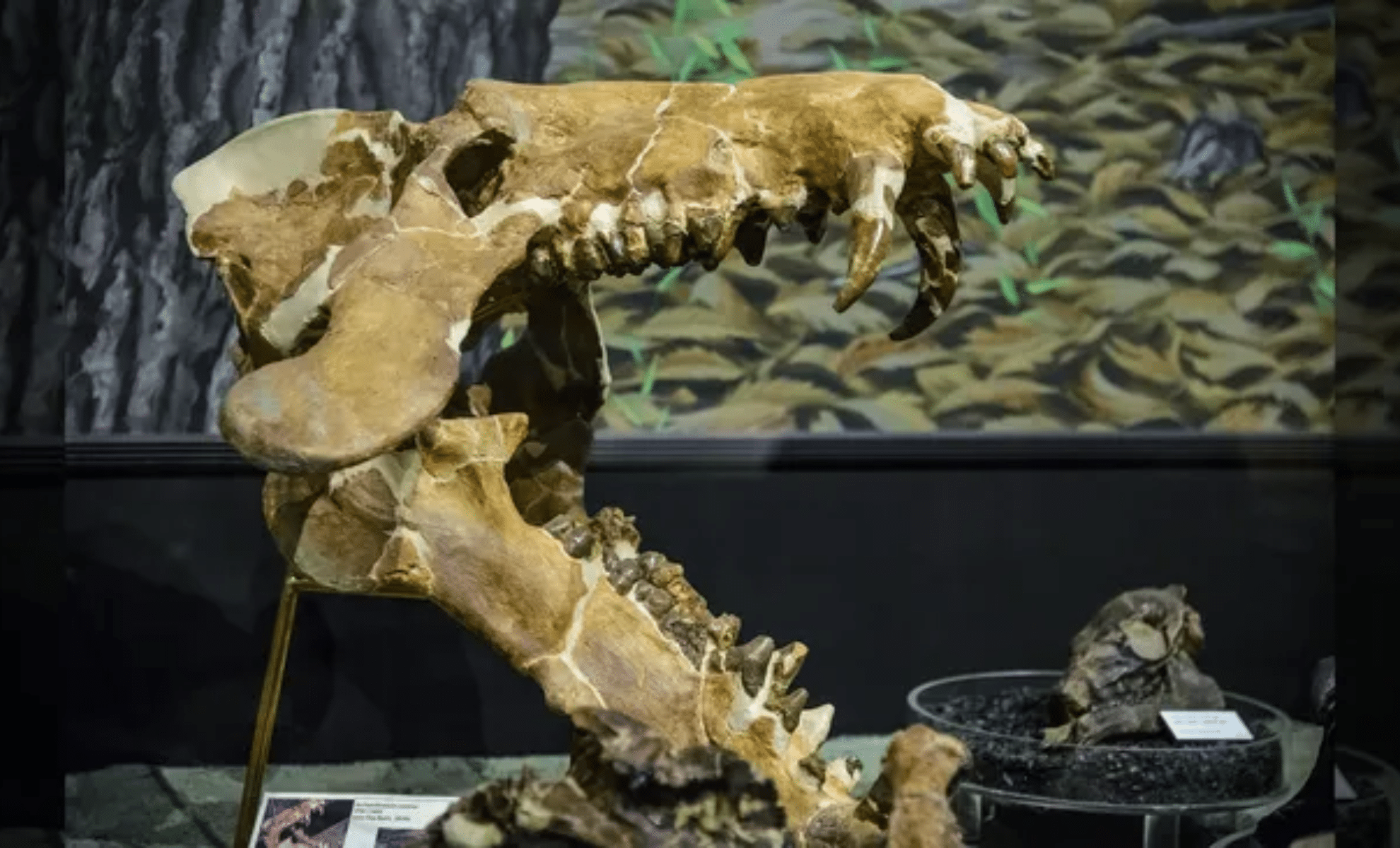
North America’s prehistoric landscape was once home to a peculiar creature known as Archaeotherium, or “hell pigs.” These massive, pig-like animals, which roamed the earth around 30 million years ago, have captivated paleontologists with their unusual feeding behaviors and significant size. Recent research sheds new light on their lifestyle, unveiling a complex relationship between size, diet, and ecological strategy.
The Archaeotherium: More Than Just a Nickname
Despite being dubbed “hell pigs,” Archaeotherium were more closely related to hippos and whales than modern pigs. Towering at nearly human-height on all fours and weighing over 2,000 pounds, these creatures sported massive heads, taking up about 30% of their body length. Yet, their intelligence, reflected in a brain-to-body mass ratio akin to reptiles, was surprisingly low. “Their heads were massive, but they had little tiny brain cases,” said Brynn Wooten of Vanderbilt University, highlighting the animal’s intriguing paradox.
Much like individuals in society who may be imposing in appearance yet lack the wisdom to match, the Archaeotherium invites reflection on the importance of inner value over outward size or strength. As Proverbs 16:18 reminds us, “Pride goes before destruction, and a haughty spirit before a fall.”
Discerning Feeding Strategies: The Role of Size
Recent findings reveal that larger Archaeotherium species possessed bone-crushing teeth, akin to the carnivorous strategies of modern lions and hyenas. “It’s really interesting that the large ones are capable of crunching bones,” noted Larisa DeSantis, a biological scientist at Vanderbilt. This adaptation suggests that they may have scoured the landscape for hard-to-access carcasses or fibrous vegetation, thereby competing effectively with smaller carnivores.
Incorporating a broader range of feeding options reflects a well-known biblical truth: adaptability is often a gift benefitting those who embrace it. As Ecclesiastes 3:1 states, “For everything there is a season, and a time for every matter under heaven.” Just as Ecclesiastes calls us to recognize and adapt to different seasons in our lives, this adaptability of Archaeotherium signifies the importance of being versatile in the face of challenges.
Smaller Species: Specialized Feeders
On the other hand, the smaller Archaeotherium species exhibited teeth designed for softer foods, indicating a more specific feeding strategy. Lacking bone-crushing wear patterns, these creatures likely thrived on plants and smaller prey. Wooten points out that we can’t expect these smaller species to have shared the same dietary habits as their larger relatives, emphasizing the diversity within a single genus.
This reminder of diversity extends just as poignantly into the human experience. The Bible teaches that each individual has been uniquely created with varied strengths and purposes. “For we are God’s handiwork, created in Christ Jesus to do good works,” (Ephesians 2:10), invites us to embrace our unique talents and callings, just as each Archaeotherium species adapted to its niche.
Paving the Way for Future Research
The ongoing research by Wooten and her colleagues aims to expand our understanding of these prehistoric creatures’ feeding behaviors using techniques like calcium isotope analysis. This exploration of complex feeding strategies challenges the notion that animals like Archaeotherium were confined to being mere scavengers or herbivores.
The parallels between adaptability in both nature and humanity encourage a fuller appreciation of God’s design. Just as Archaeotherium found ways to survive and thrive, we too can navigate our lives, making the most of our unique gifts in our respective ecosystems.
Conclusion: A Reflection on Adaptability and Community
In conclusion, the insights gained from studying Archaeotherium not only enrich our understanding of prehistoric ecosystems but also serve as a reflection on our unique roles within our communities today. God calls us to be adaptable, using our strengths for the greater good.
As you consider the lessons from these ancient creatures, think about how you might embrace your unique gifts to contribute positively to the world around you. Remember, Romans 12:4-5 tells us, “For just as each of us has one body with many members, and these members do not all have the same function, so in Christ we, though many, form one body, and each member belongs to all the others.” Here’s to honoring our differences and working together in harmony in our shared journey.
Explore and dig up answers yourself with our BGodInspired App. Be careful – each interaction is like a new treasure hunt… you can get lost for hours 🙂