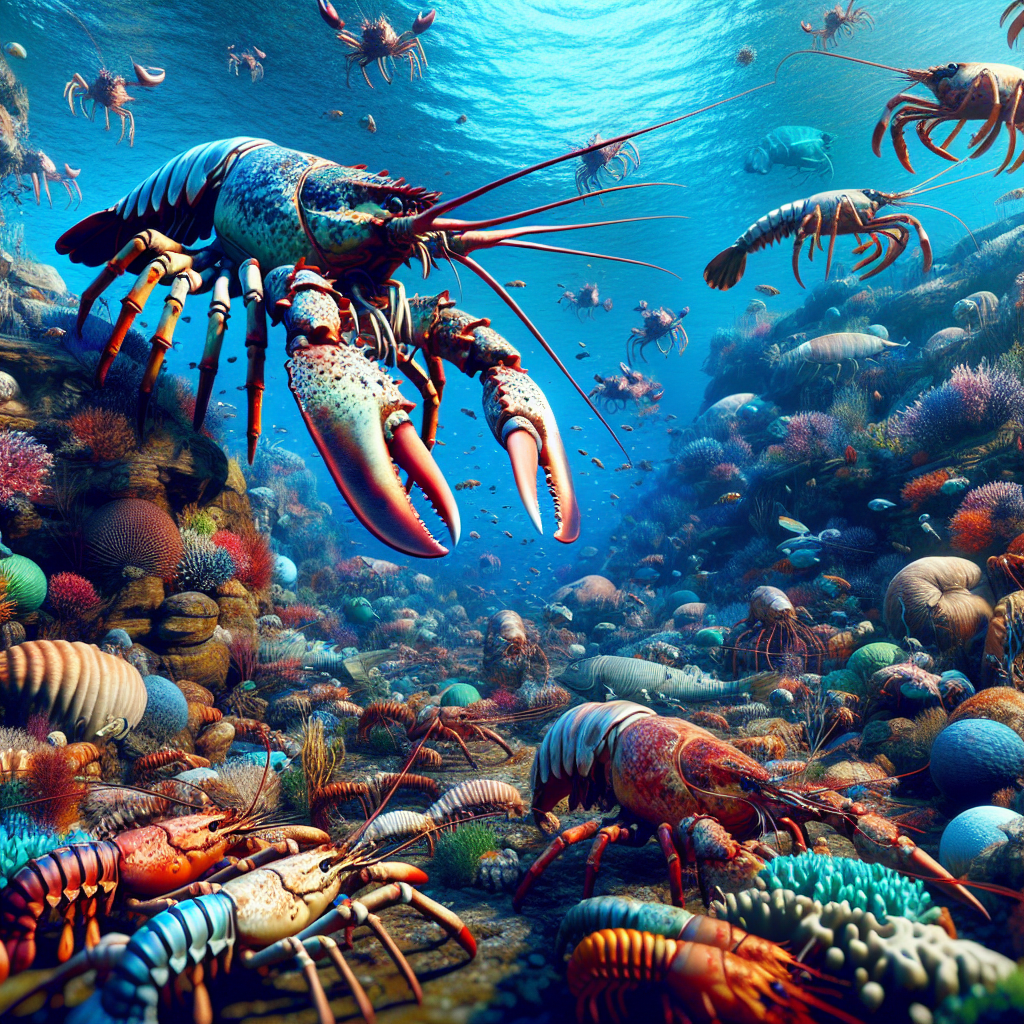
Elusive Giant: New Insights on the Supergiant Amphipod Alicella gigantea
In the depths of our oceans lies a remarkable creature often believed to be scarce due to its elusive nature: the supergiant amphipod Alicella gigantea. This impressive crustacean can grow up to 13.4 inches long, yet it has remained largely unseen by scientists for decades. Recent findings, however, suggest that this fascinating species may be far more common than previously thought.
According to new research from Dr. Paige J. Maroni of the University of Western Australia, A. gigantea has not been hiding as much as it is simply hard to observe. The study reveals that this giant amphipod exists in a vast network of ocean trenches and plains across various regions, including the Pacific, Atlantic, and Indian Oceans. For years, sightings were few, leading scientists to assume its populations were scattered and rare.
The Hidden Wealth of Marine Biodiversity
This revelation opens a window into how biodiversity functions in extreme environments. Amphipods, a diverse group of crustaceans that resemble shrimp, thrive in conditions that would keep many species at bay. They inhabit nearly every aquatic environment on Earth, including some of the deepest parts of the ocean. The hadal zones, which can exceed 29,000 feet, host incredible biodiversity that remains largely unexplored.
As we learn more about these deep-sea creatures, we’re reminded of biblical teachings about stewardship of the Earth’s resources. In Genesis 1:28, humans are called to "fill the earth and subdue it"—a reminder of our responsibility to cherish and care for all of God’s creations.
A Single Global Species
Unearthing genetic data from multiple expeditions indicates minimal genetic differences among A. gigantea populations. This suggests that the species successfully navigates vast ocean spaces, adapting to the harsh conditions with remarkable resilience. Scientists theorize that the cold, stable environments may slow evolutionary changes, reinforcing our understanding of deep-sea ecosystems.
This interconnectedness reflects a broader biblical message about unity and care. In 1 Corinthians 12:12, Paul speaks of the body being one yet having many parts, echoing the idea that every component, no matter how hidden or small, plays a vital role in the larger tapestry of life.
Significance of the Discovery
Understanding how A. gigantea interacts within its ecosystem is crucial for marine conservation efforts. While charismatic megafauna often attract attention, the importance of lesser-known species like the supergiant amphipod cannot be understated. They are integral to the nutrient cycles that maintain the health of our ocean ecosystems.
As stewards of the planet, we have a responsibility to pay attention to all forms of life. This call to awareness can be likened to the parable of the lost sheep in Luke 15:4-7, where even one lost creature is of immense value and worth seeking.
Takeaway
The discovery of Alicella gigantea challenges us to reflect on the importance of every part of creation, encouraging curiosity and exploration. As we deepen our understanding of the mysteries of our planet, let us be inspired to broaden our gaze beyond the obvious and appreciate the hidden marvels that exist all around us.
As we journey through life, let’s remember the wisdom of Proverbs 12:10: "A righteous man cares for the needs of his animal." Let this serve as a reminder to protect and value the diverse life forms that inhabit our world.
In contemplating this lesson, may we embrace the broader narrative of unity, stewardship, and wonder in the dynamic creation that surrounds us.
Explore and dig up answers yourself with our BGodInspired Bible Tools! Be careful – each interaction is like a new treasure hunt… you can get lost for hours 🙂