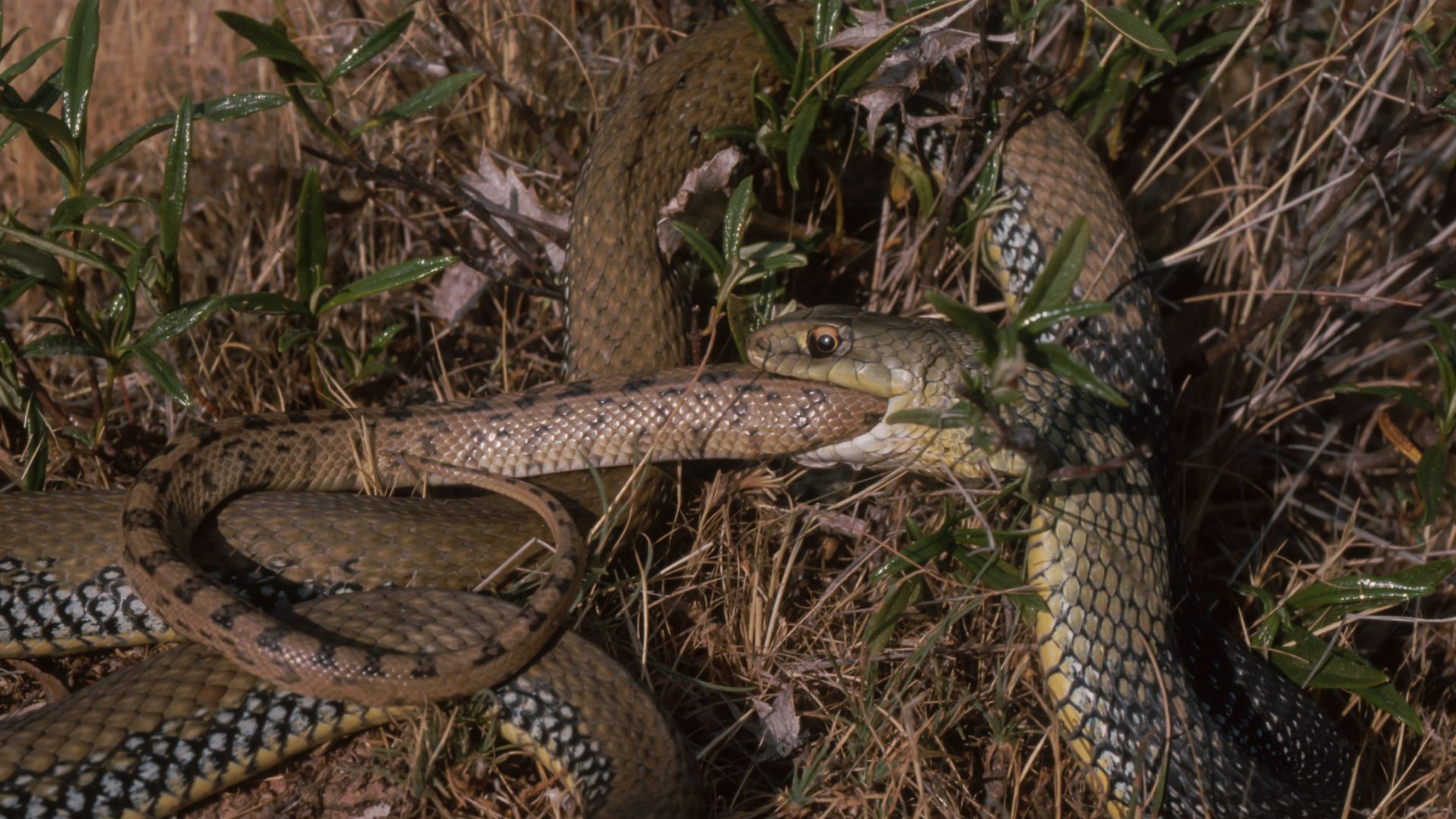
Snakes and Cannibalism: Nature’s Unlikely Strategy
Cannibalism, often viewed with horror and distaste in human society, emerges as a surprising survival strategy among snakes, highlighting the complexities of nature and the diverse ways organisms cope with environmental pressures. A recent study published in the journal Biological Reviews reveals that this behavior has independently evolved at least 11 times across various snake lineages, primarily as a response to stressors like food scarcity.
Researchers sifted through 500 reports, documenting instances of cannibalism across 207 snake species globally. They found that these behaviors occur in many contexts but often provide ecological benefits. “For us humans, we don’t think of cannibalism as something common – it’s something weird and disgusting,” said Bruna Falcão, lead author of the study. “But for snakes, it’s good for them; it’s good for their ecological fitness. … It’s strategic.”
This notion highlights a significant aspect of the animal kingdom: survival often necessitates behaviors that may seem unfathomable to us. Cannibalism is not confined to snakes; it’s a widespread phenomenon seen in other species like spiders and praying mantises. Scientists are revisiting previous assumptions that regarded cannibalism as maladaptive and are now investigating the evolutionary advantages it offers, particularly under resource limitations.
The study identified that cannibalism was most prevalent in families such as Colubridae, Viperidae, and Elapidae. Interestingly, about half of the documented cannibal snake species have generalized diets, suggesting that adaptability may play a crucial role in this behavior.
Reflecting on these findings, one cannot help but draw parallels to biblical teachings about survival, compassion, and community. In a world often painted with shades of competition and individualism, Jesus’ call to love our neighbors—as stated in Mark 12:31, “You shall love your neighbor as yourself”—reminds us of the essential value of community and the sanctity of life.
While the animal kingdom demonstrates an instinctual drive to survive, the challenge for humanity is to navigate our interactions with grace and consideration. In times of crisis or scarcity, one must remember the importance of empathy and support.
Consider this: as snakes adjust to survive in harsh environments, how can we better adapt to challenges while fostering compassion within our communities? The surprising study of cannibalism in snakes serves as a profound reminder of the necessity of adapting to our circumstances while keeping the values of kindness and love at the forefront.
In conclusion, let this exploration into the natural world encourage us to cultivate relationships that uplift and support one another. Amidst adversity, our ability to show compassion may very well be the path to thriving, not just surviving.
If you want to want to know more about this topic, check out BGodInspired.com or check out specific products/content we’ve created to answer the question at BGodInspired Solutions