
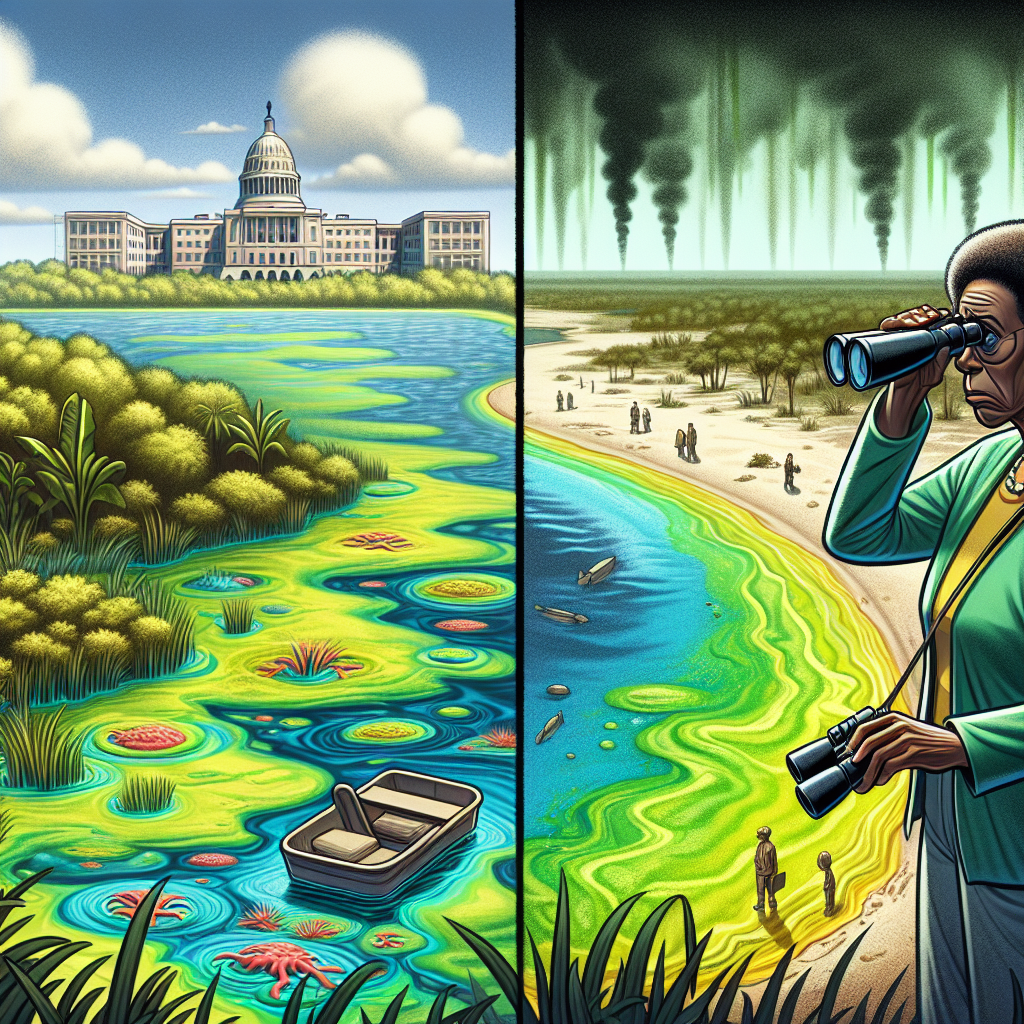
$14 Million Federal Funding for Algal Bloom “Nowhere Near Enough” Say Critics
In the wake of a catastrophic algal bloom affecting South Australian coastal communities, Greens senator Sarah Hanson-Young has voiced concerns that the recently announced $14 million federal funding is “nowhere near what will be needed” to address the crisis. The funding was unveiled by Environment Minister Murray Watt during his visit to witness firsthand the devastating impact of the toxic bloom, which has led to mass marine life fatalities along the state’s beaches.
Minister Watt described the bloom as “incredibly disturbing,” but refrained from declaring it a natural disaster, stating the event does not meet the criteria set out in the federal natural disaster framework. In light of this, Hanson-Young has called for a reevaluation of the definitions used to classify such events and announced plans to push for an inquiry into the disaster to scrutinize both federal and state government responses.
“South Australians have been crying out for action on this for weeks and months, so it’s good to see some federal movement,” Hanson-Young remarked. However, she emphasized that the proposed financial aid is insufficient for the needs on the ground.
The algal bloom, a result of the microalgae species karenia mikimotoi, was first detected off the Fleurieu Peninsula in March, rapidly expanding to a size nearing that of Kangaroo Island. This bloom has already traversed various local waters, impacting the Coorong wetlands and leading to the death of tens of thousands of marine animals.
With rising concerns over the bloom’s implications, Prime Minister Anthony Albanese defended the timing of the federal funding, indicating that the event primarily unfolds in state waters. “What is important is that there be a response,” he told ABC’s 7.30. The proposed funds are anticipated to assist with the cleanup of marine life, boost community awareness, and invest in scientific research.
While some, including Nationals leader David Littleproud, acknowledge the situation as significant, they propose a broadening of the definitions under which natural disasters are classified.
As this disaster unfolds, it invites a deeper reflection on our stewardship of the environment. The situation echoes biblical principles of responsibility and care for creation, as illustrated in Genesis 2:15: “The Lord God took the man and put him in the Garden of Eden to work it and take care of it.”
As the impact of climate change accelerates, the call for concerted action becomes increasingly urgent. Nature’s struggles remind us of the vulnerabilities inherent within our ecosystems and the necessity for compassionate stewardship.
In the face of adversity, let us foster a spirit of collaboration and support for those affected. Consider how we, too, can contribute to caring for our environment, mirroring the love and concern encapsulated within the teachings of Jesus. May we be inspired to advocate for responsible actions that honor both our communities and the natural world.
Takeaway: As we witness environmental crises, let’s unite in hope and action, recognizing our shared responsibility to nurture God’s creation. In doing so, we not only honor our environment but also reflect profound values of compassion and stewardship.
Explore and dig up answers yourself with our BGodInspired Bible Tools! Be careful – each interaction is like a new treasure hunt… you can get lost for hours 🙂

