Breakthrough in Nuclear Physics: Finnish Scientists Discover Heaviest Proton-Emitting Nucleus
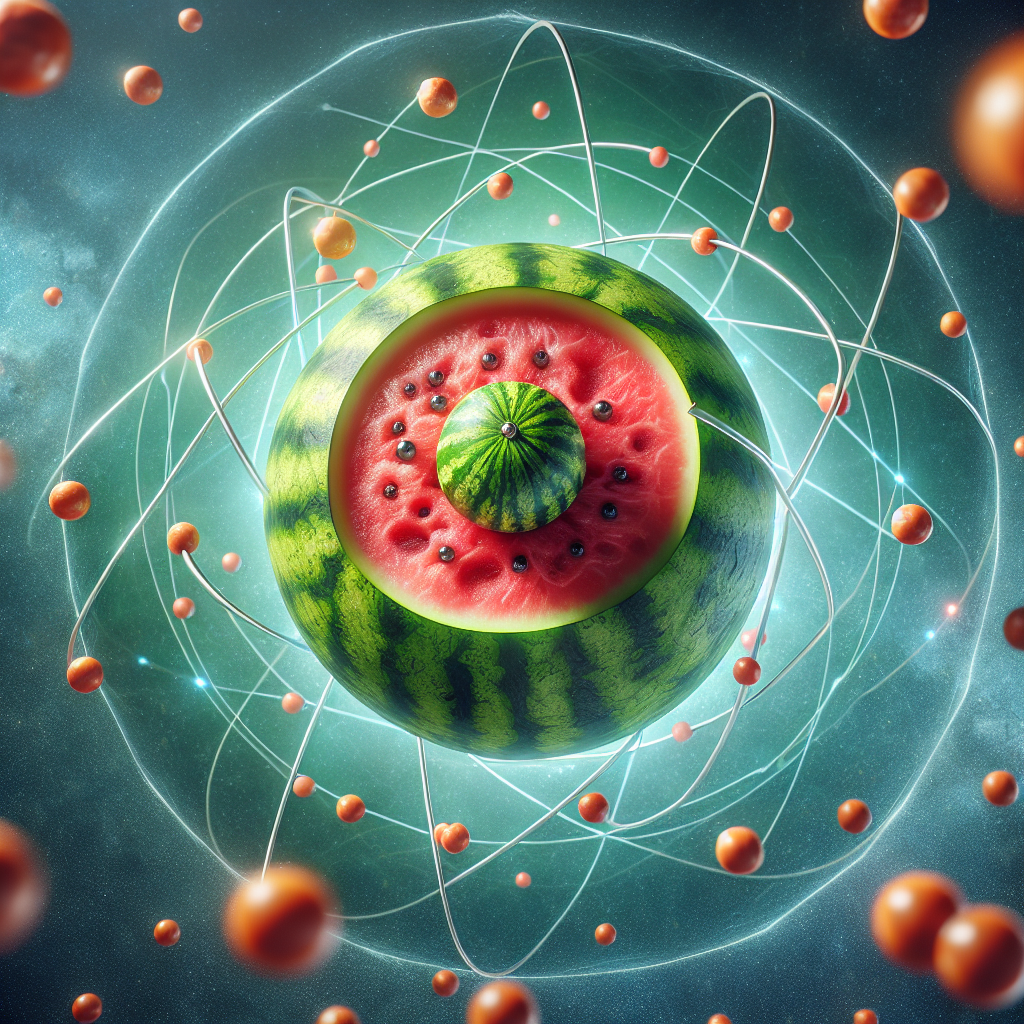
In a stunning development for nuclear physics, researchers at the University of Jyväskylä in Finland have identified the heaviest nucleus known to emit a proton, a rare and exciting find that opens new avenues for understanding atomic matter. Known as 188-astatine, this remarkable nucleus, intriguingly shaped like a “watermelon,” could have profound implications for the field.
Nuclear decay has long captivated scientists seeking to unravel the mysteries of atomic behavior. "Proton emission is a crucial form of radioactive decay," says Doctoral Researcher Henna Kokkonen, who spearheaded the study as part of her doctoral thesis. "This discovery not only sets a record but also hints at nuclear interactions never observed before.”
A Complex Quest in Exotic Nuclei
The newly identified isotope comprises 85 protons and 103 neutrons, marking it as the lightest isotope of astatine recorded to date. However, studying such exotic nuclei poses significant challenges due to their fleeting existence and the limited quantities in which they can be produced.
“This nucleus was created through a fusion-evaporation reaction using an 84Sr ion beam on a natural silver target,” explains Academy Research Fellow Kalle Auranen. “Our work involved a specialized detector setup, demonstrating the precision required to identify such complex atomic fragments.”
New Insights into Heavy Nuclei
Accompanying the experimental results, researchers expanded a theoretical model to interpret their findings. This model reveals the unique “watermelon shape” of the nucleus, suggesting a significant alteration in the binding energy of its valence proton. Kokkonen adds, “These properties hint at a previously unseen interaction within heavy nuclei, providing insights into the fundamental forces at play in atomic structures.”
A Journey of Discovery
This groundbreaking study marks the second significant discovery in Kokkonen’s academic journey, following her previous identification of the 190-astatine nucleus. Her work, recently published in Nature Communications, is not just a scientific milestone but a testament to the ongoing pursuit of knowledge and understanding. “Every experiment is challenging, yet it is rewarding to contribute to our understanding of matter and the universe," she reflects.
Connecting Science and Faith
As we marvel at these scientific advancements, it’s noteworthy to consider how they resonate with biblical principles. The pursuit of knowledge and understanding is deeply rooted in the idea of stewardship over creation. Proverbs 2:6 reminds us, "For the Lord gives wisdom; from his mouth come knowledge and understanding." This echoes the sentiment that our quest for understanding the universe aligns with a greater purpose of stewardship and respect for the intricate designs of creation.
An Encouraging Takeaway
The exploration of heavy nuclei like 188-astatine serves as a reminder of the beauty and complexity of God’s creation. As researchers continue to delve into the mysteries of atomic science, let it inspire us to embrace our own quest for knowledge, reflecting on how our efforts contribute to a deeper understanding of the universe’s design and our role within it.
In the spirit of curiosity and wonder, let us be encouraged to seek wisdom in all its forms, thereby enriching our understanding of the world around us and the divine principles that govern it.
Explore and dig up answers yourself with our BGodInspired App. Be careful – each interaction is like a new treasure hunt… you can get lost for hours 🙂