 0
0
 0
0
New Model Suggests Universe Will End in Big Crunch Within 33 Billion Years: A Cosmic Revelation
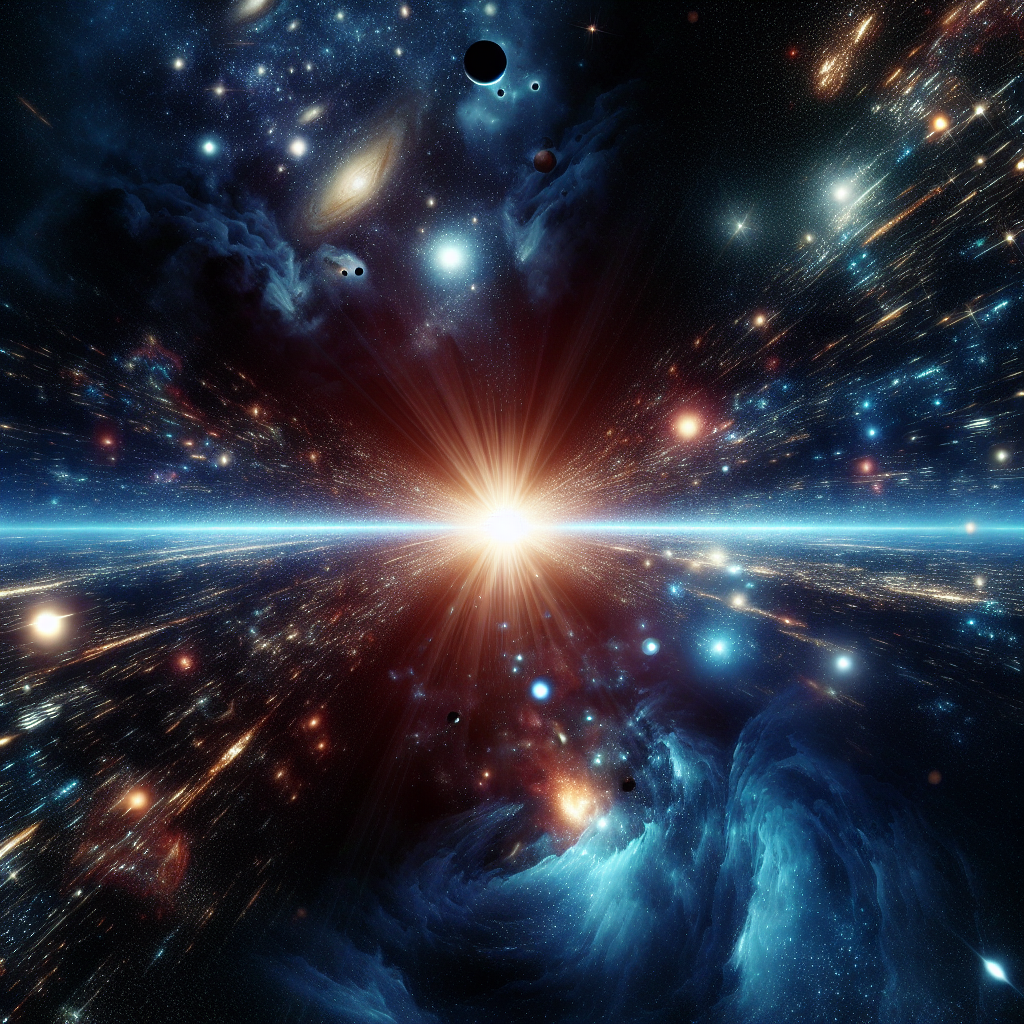
Recent discoveries in the realm of cosmology have sparked provocative debates, suggesting our Universe may not expand indefinitely as previously thought. Instead, it might face a definitive conclusion in the form of a "Big Crunch," according to new calculations that predict a finite lifespan of 33.3 billion years for the cosmos.
Currently, the Universe is 13.8 billion years old, indicating that we have less than 20 billion years remaining. In this new framework, physicists Hoang Nhan Luu, Yu-Cheng Qiu, and Henry Tye propose that for approximately 11 billion more years, the Universe will continue its expansion before gravitational forces pull it back, culminating in a singular, cataclysmic event.
"For the last 20 years, people believed that the cosmological constant is positive, and the universe will expand forever," Tye explained. "The new data seem to indicate that the cosmological constant is negative, and that the Universe will end in a Big Crunch."
The Science Behind the Big Crunch
Traditionally, the cosmological constant, introduced by Albert Einstein, described the expansion of the Universe. A positive value suggests perpetual expansion, whereas a negative value implies a gravitational pull strong enough to halt and eventually reverse this expansion.
Emerging evidence hints that dark energy, long assumed constant, may actually be evolving. Under this new model, a small negative cosmological constant coupled with an ultralight axion field could explain the Universe’s dynamics, transitioning it from expansion to eventual contraction and culminating in the Big Crunch. This phenomenon is likened to riding a bike uphill—the initial push of a tailwind gives way to slowing progress before an accelerated descent.
A Finite Cosmic Journey
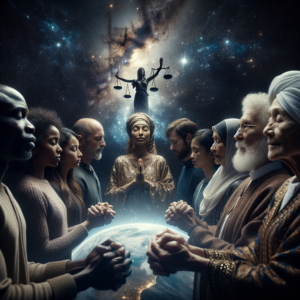
While the idea of an expanding universe has generally been comforting, the notion of a definitive end aligns with a biblical understanding of life’s cycles. Ecclesiastes 3:1 states, "To everything, there is a season, and a time for every matter under heaven." This passage not only acknowledges the beginnings and endings inherent in life but suggests that these transitions are part of a greater divine plan, inviting deeper reflection on our existence.
Yet, it’s important to note that these findings are not set in stone; more research is necessary to confirm whether dark energy is evolving. The overwhelming majority of current data still supports the understanding that the Universe is expanding.
An Invitation to Reflect
As we grapple with these cosmic revelations, they can serve as a reminder of the mysteries beyond our understanding. Just as the Universe’s fate remains a topic of inquiry and exploration, so too do our lives hold deeper meanings waiting to be uncovered.
In light of this, it’s an opportune moment for reflection. How do the beginnings and potential endings of our Universe inspire us to consider our own life journeys? Will we find hope and purpose in the cycles we experience, knowing that every ending can also serve as a new beginning?
Ultimately, regardless of the future of our Universe, we are encouraged to seek meaning in our quests for understanding—both scientifically and spiritually. How do you reconcile the mysteries of life with your own beliefs? Let this knowledge inspire curiosity and contemplation as we continue on our own paths of discovery.
Explore and dig up answers yourself with our BGodInspired App. Be careful – each interaction is like a new treasure hunt… you can get lost for hours 🙂