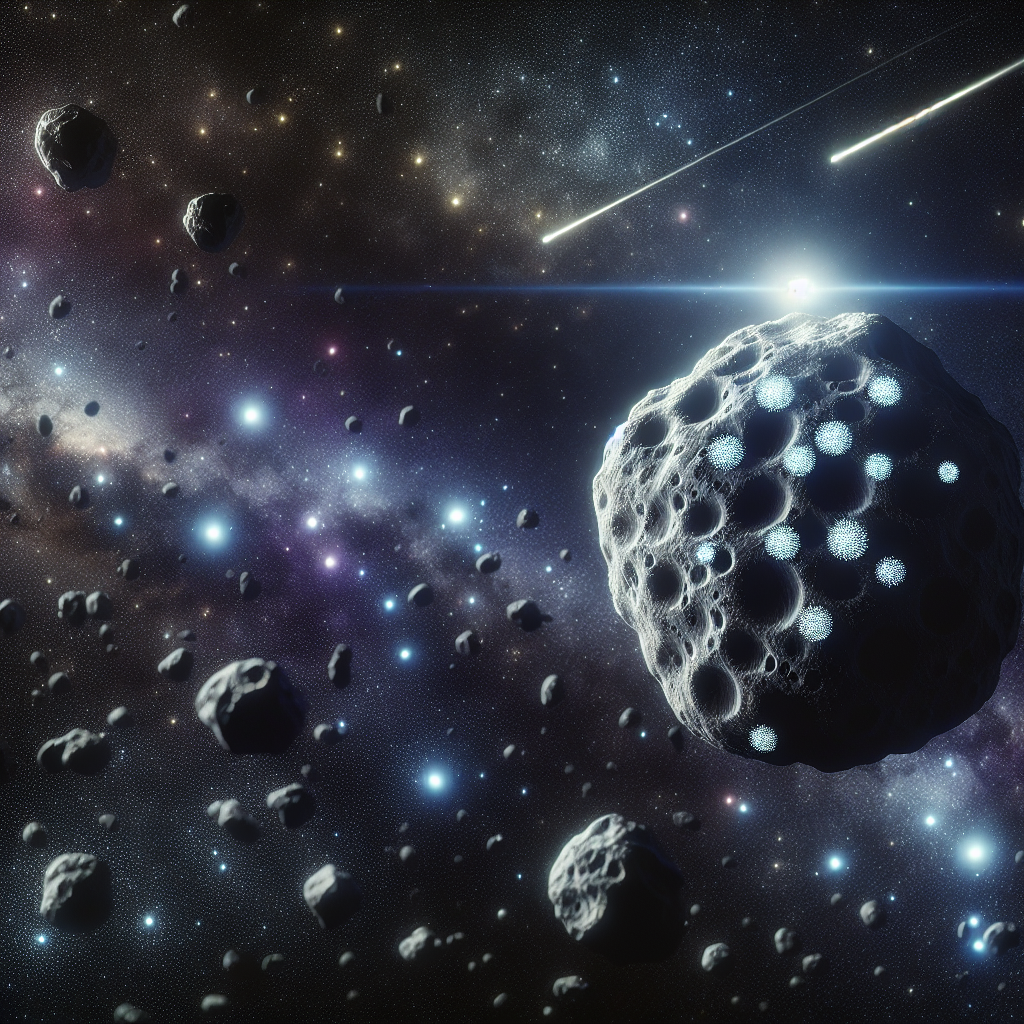
Discovering Life’s Cosmic Ingredients: Organics Found in Space Shed Light on Our Origins
In an astonishing exploration of the cosmos, scientists are uncovering a fascinating link between organic compounds found in space and the potential origins of life on Earth. Recent robotic missions have delved into the depths of comets and asteroids, revealing an abundance of intricate, carbon-based molecules that may hold the key to understanding life’s building blocks and our connection to the universe.
Unraveling the Mystery of Organics in Space
For decades, the study of organic molecules in space has hinted at the possibility that our biological chemistry may have roots far beyond our planet. Missions, such as the European Giotto spacecraft’s groundbreaking analysis of comet Halley in 1986, unveiled unexpected organic species, opening a Pandora’s box of questions regarding the origins of these compounds. Over the years, findings have bolstered the idea that organic molecules are scattered throughout the universe, from the elemental structures found in icy comets to the diverse compositions within asteroids.
As researchers analyze materials from missions like Japan’s Hayabusa2 and NASA’s OSIRIS-REx, they’ve discovered thousands of organic compounds, including essential amino acids, which are vital for life as we know it. Such discoveries radically shift our understanding of how life may have emerged, suggesting that the intricate chemistry required for life might not be confined to Earth’s atmosphere but could be part of a grander cosmic narrative.
Questions of Origin and the Cosmic Connection
The ongoing exploration raises profound questions about where these organic molecules originated. Were they birthed in the cold shadows of interstellar dust clouds or in the vibrant environments surrounding young stars? This inquiry resonates with a deeper spiritual reflection found in the book of Genesis, which reminds us that the creation of life is intertwined with divine intention. “Then God said, ‘Let us make humankind in our image, in our likeness…’” (Genesis 1:26, NIV). This verse invites us to ponder our origins in the context of a purposeful design.
Moreover, as we consider the vastness of the universe filled with potential cradle environments for life, we are reminded of the biblical principle that all of creation reflects God’s glory (Psalm 19:1). This connection between faith and science encourages us to approach discoveries with awe and humility, recognizing the divine hand behind the intricate complexities of life.
The Promise of Future Discoveries
As the search for life outside Earth continues, upcoming missions, including NASA’s Europa Clipper and the European Space Agency’s Juice mission, aim to uncover even more about the celestial formations that may house oceans beneath icy crusts or host life-sustaining compounds. These efforts kindle hope and curiosity about our place in the universe and invite us to engage with questions about existence that echo throughout human history.
In conclusion, the exploration of organic molecules in space not only expands our understanding of life’s potential origins but also invites reflection on our spiritual connectivity to the cosmos. As we marvel at these discoveries, let us remember an encouraging takeaway: "For I know the plans I have for you," declares the Lord, "plans to prosper you and not to harm you, plans to give you hope and a future" (Jeremiah 29:11, NIV).
This profound truth beckons us to appreciate the intricate beauty of creation and inspires us to seek understanding—not just of our scientific heritage but of our cherished spiritual journey. Let us remain curious about the mysteries of life, always reflecting on the broader narrative of existence in relation to the cosmos, and in light of divine purpose.
Explore and dig up answers yourself with our BGodInspired Bible Tools! Be careful – each interaction is like a new treasure hunt… you can get lost for hours 🙂