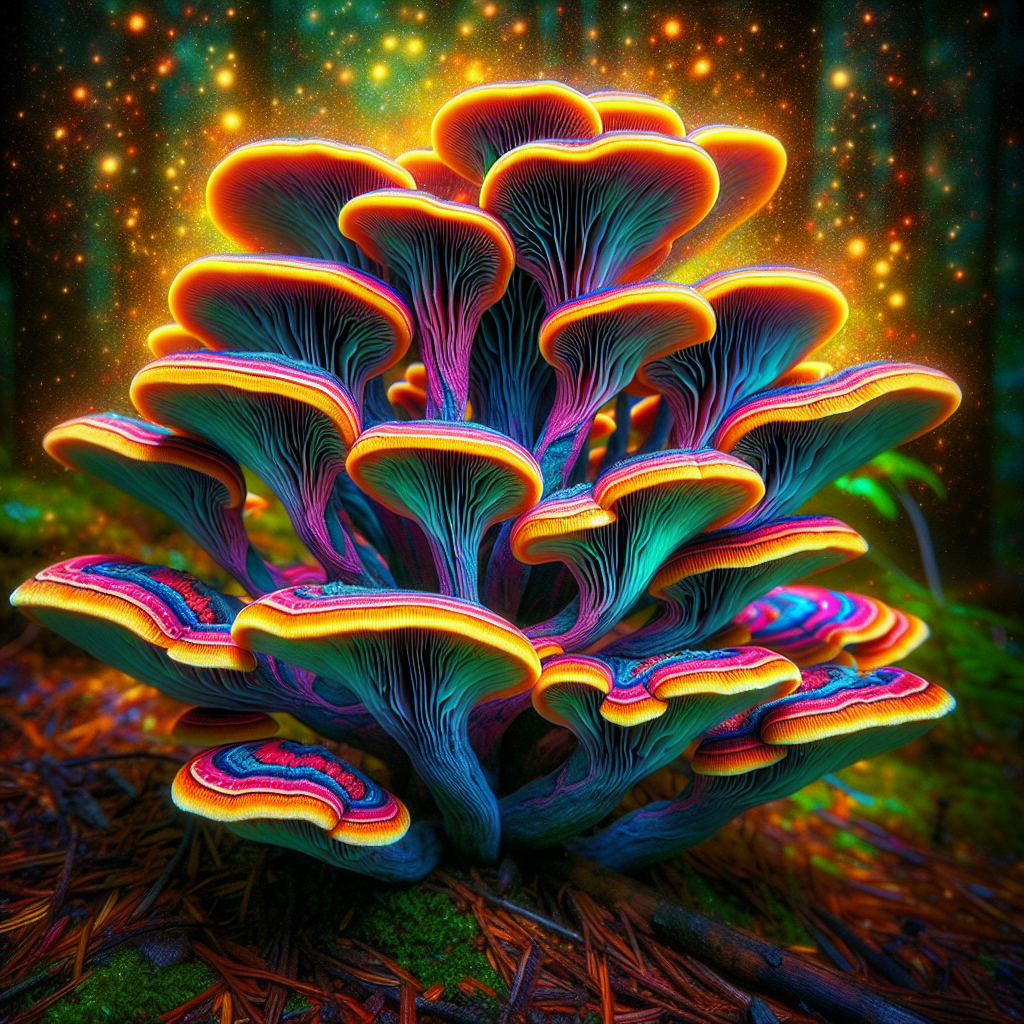
New Study Suggests Possible African Origins of Prolific Hallucinogenic Mushroom, Psilocybe cubensis
A groundbreaking study published on the biological sciences repository bioRxiv proposes that the much-discussed hallucinogenic mushroom Psilocybe cubensis, commonly known as "gold tops" or "cubes" in Australia, may trace its origins back to Africa. This mushroom is renowned worldwide for its psychoactive compound, psilocybin, which remains illegal in many regions, restricting comprehensive research into its lineage and dissemination.
The study, which awaits peer review, identifies a closely related species, tentatively named Psilocybe ochraceocentrata. Samples of this new species were collected from Zimbabwe and South Africa, and genetic analysis revealed that it diverged from a common ancestor of P. cubensis approximately 1.5 million years ago, akin to the relationship between chimpanzees and bonobos. Bryn Dentinger, a mycology curator at the Natural History Museum of Utah, highlights that understanding the closest wild relative to P. cubensis opens avenues for insight into the mushroom’s evolution and geographical spread.
As Psilocybe species are believed to have first appeared around 67 million years ago, their journey across continents is intriguing. The study posits that as ancient human species migrated out of Africa accompanied by large herbivores, mushroom spores might have traveled via these animals, potentially leading to the distribution of P. cubensis across the Americas, Asia, and Australasia long before European contact.
The ramifications of this discovery are not merely academic. If hybridization occurs between P. ochraceocentrata and P. cubensis, new therapeutic avenues for psilocybin could emerge—echoing a broader pursuit of understanding the healing potential of nature in line with biblical stewardship principles. Genesis 1:29 reminds us, “And God said, ‘Behold, I have given you every plant yielding seed that is on the face of all the earth, and every tree with seed in its fruit. You shall have them for food.’” This verse reflects God’s intention for humanity to engage with nature, discovering its benefits responsibly and ethically.
As we reflect on the study, it’s vital to consider the implications of how interconnected our ecosystems are. Just as the movements of ancient humans and animals shaped biological landscapes, our choices today determine how we interact with creation. In a world often marred by division and misunderstanding, we can take inspiration from the biblical call to stewardship, ensuring our actions towards nature adhere to principles of care and responsibility.
In closing, let us remain curious about the world around us and the divine wisdom embedded within it. As you ponder this new research, consider how we, too, navigate through life—seeking understanding, fostering connections, and embodying the love and care exemplified in the teachings of Jesus.
Explore and dig up answers yourself with our BGodInspired Bible Tools! Be careful – each interaction is like a new treasure hunt… you can get lost for hours 🙂