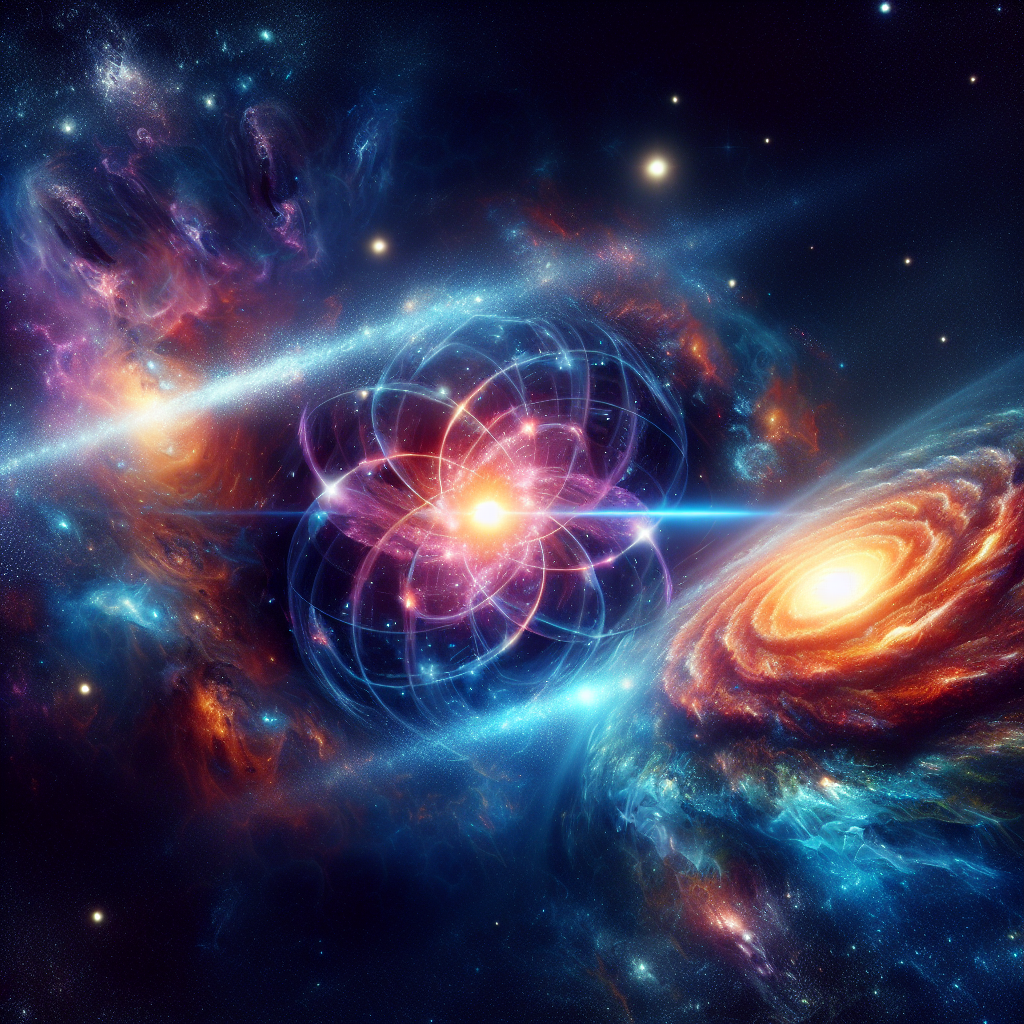
New Study Challenges the Big Bang Theory: Gravitational Waves as Key Players in Cosmic Formation
In a groundbreaking revelation, scientists from Spain and Italy have proposed a radical shift in our understanding of the universe’s origins, suggesting that gravitational waves, rather than the traditionally accepted inflation theory, may have shaped the cosmos. This theoretical model, published in the journal Physical Review Research, posits that these ripples in spacetime played a pivotal role not only in the universe’s birth but also in the formation of galaxies, stars, and potentially life itself.
Rethinking Cosmic Origins
How did this inquiry into the cosmos’ beginnings come about? Researchers embarked on a series of elaborate computer simulations aimed at testing alternatives to the inflation theory, which suggests an extraordinary rapid expansion of the universe in its first moments. This model, while popular, has become increasingly complex and debated among scientists.
A Fresh Perspective on Gravitational Waves
The new study offers a simplified approach by placing gravitational waves at the forefront of cosmic creation. These waves, first predicted by Albert Einstein over a century ago, could explain the structure of the universe without relying on speculative elements. Dr. Raúl Jiménez, a co-author of the study, emphasizes this verifiable approach, stating, "What makes this proposal exciting is its simplicity and verifiability."
The researchers suggest that incorporating gravitational waves within the framework of De Sitter space—a mathematical model linked to the cosmos’ structure—provides a more coherent understanding of the universe’s formation.
The Mystery Continues
As the quest for understanding the universe’s origins continues, the implications of this new model could resonate well beyond scientific curiosity. Just as scientists strive to uncover the truths of our physical world, believers often reflect on the spiritual dimensions of creation.
The mystery of the cosmos echoes themes found in the Bible, which encourages exploration and wonder about the created world. In Psalm 19:1, it is written: "The heavens declare the glory of God; the skies proclaim the work of his hands." This verse invites us to consider not only the scientific explanations of cosmic phenomena but also the transcendent purposes behind them.
Searching for Answers
The universe’s origins, much like life itself, remain one of humanity’s greatest mysteries. While we may marvel at the discoveries revealed through research, the advancement of knowledge also offers an opportunity for spiritual reflection. Is it possible that our pursuit of understanding the universe ties us closer to understanding ourselves and our Creator?
As research continues to challenge established theories, let us approach the unknown with curiosity and faith. Scientists and believers alike can share in the excitement of discovery and the profound connection to something greater.
In the spirit of exploration, let us embrace the words of Jesus, inviting us to seek and allow our inquiries to lead us toward deeper truths. This journey reminds us that in our quest for knowledge, we find not just answers but also purpose.
Encouragement for the Journey
In your reflections, consider how the pursuit of understanding, whether in science or spirituality, can intertwine and enrich your life. Keep questioning, keep exploring, and remember, as we expand our awareness of the cosmos, we may find ourselves leaning into the larger narrative of connectedness and wonder that life presents.
Final Thoughts: The search for explanations—be it scientific or spiritual—is a journey worth taking. We might not have all the answers now, but every exploration is a step closer to deeper understanding and appreciation of our place in the universe.
Explore and dig up answers yourself with our BGodInspired App. Be careful – each interaction is like a new treasure hunt… you can get lost for hours 🙂