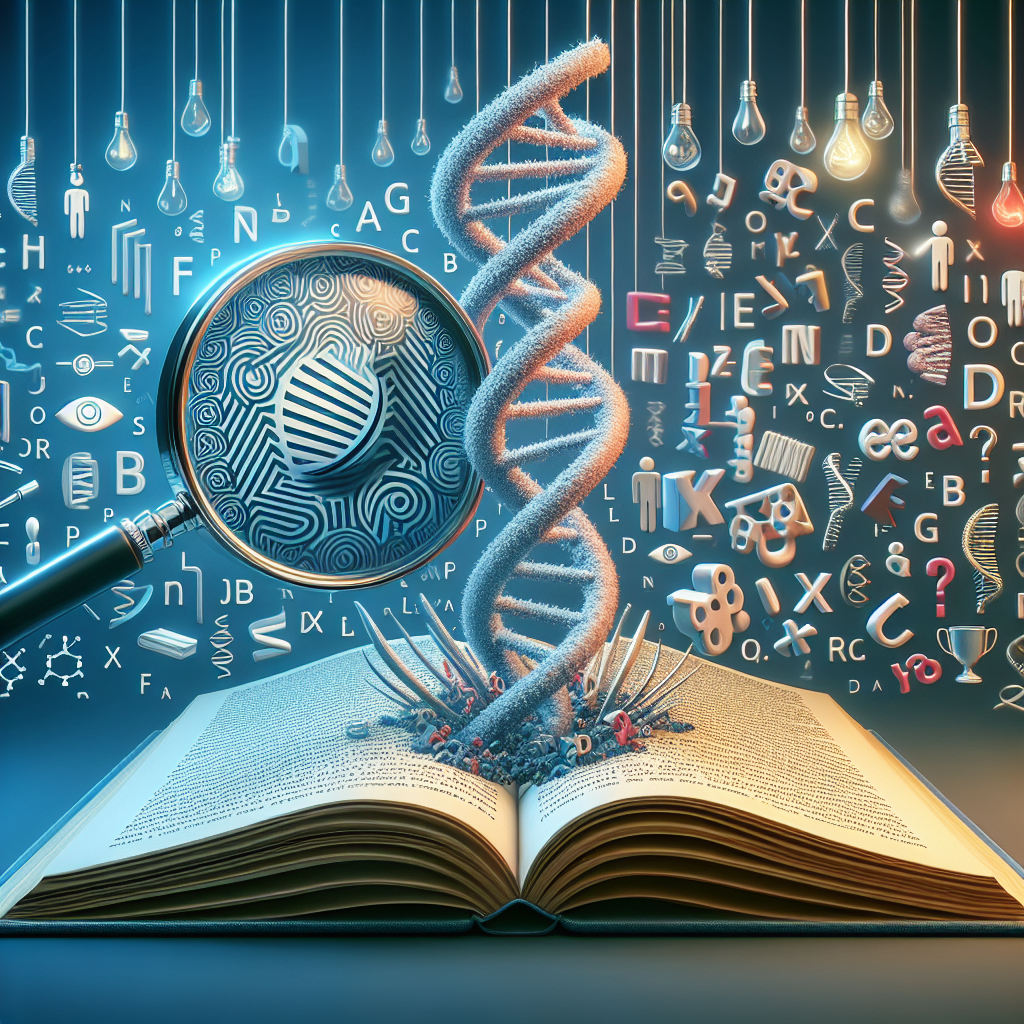
Groundbreaking Genetic Study on Dyslexia Unveils New Insights
Edinburgh, Scotland – In an unprecedented collaboration among researchers from the University of Edinburgh, the Max Planck Institute for Psycholinguistics, and various other institutions, a pioneering genetic study has brought renewed hope for understanding dyslexia. Published in Translational Psychiatry, this study identifies new areas of DNA associated with dyslexia, marking a significant advancement in the field of neurodevelopmental disorders.
Dyslexia, which affects an estimated 5–10% of the population globally, often poses challenges in reading and writing that can stem from genetic predispositions. Historically perceived as a complex condition rooted in both hereditary and environmental factors, researchers have struggled to identify specific genetic variants until now.
The Pursuit of Understanding
“I believe we can learn a lot from gaining insights into the biological basis of dyslexia,” says Hayley Mountford, Research Fellow at the University of Edinburgh’s School of Psychology. The research clarifies how certain genetic loci relate to the early stages of brain development, offering a more comprehensive understanding of the condition and its genetic foundations.
In the deepest recesses of our DNA lies not just the blueprint for our physical traits but also the challenges we may face. The findings reveal 80 regions linked to dyslexia, of which 36 are new discoveries. This enhances our understanding of the intricate genetic architecture responsible for reading-related abilities.
Illuminating the Mind
As the study unfolds, it illustrates the importance of supportive communities and the love for one another that Jesus emphasized: “Love your neighbor as yourself” (Mark 12:31, NIV). Just as we are all made in God’s image, our unique challenges can serve as common ground for empathy, understanding, and mutual support.
With the emergence of such research, the stigma surrounding dyslexia may begin to dissipate. By shedding light on the condition’s biological processes, society can foster an environment where those affected are viewed with compassion rather than misunderstanding.
A Pathway Forward
The researchers utilized data from over 1.2 million individuals, allowing them to analyze genetic information that could potentially predict reading difficulties. While the polygenic index they developed only explains a modest 4.7% of variance in reading ability, it represents a meaningful step toward early identification and intervention.
“By learning from our genetic makeup, we can cultivate a more supportive framework to help those who struggle,” Mountford reflects. This approach resonates with Proverbs 18:15, which states, “The mind of the prudent acquires knowledge, and the ear of the wise seeks knowledge” (NIV). In seeking to understand the complexities of dyslexia, we draw closer to understanding the breadth of human experience and the love inherent in our ability to uplift one another.
An Encouraging Takeaway
As we reflect on the findings of this study, let’s remember that every individual, with their distinct strengths and weaknesses, contributes to the beautiful tapestry of humanity. The genetic variations that lead to challenges like dyslexia do not diminish one’s worth or potential.
In conclusion, this research invites us to approach those with learning difficulties with love, support, and understanding, recognizing that within every challenge lies an opportunity for relationship and growth. Let us continue striving to learn and grow together, embodying the timeless values of compassion and community.
Explore and dig up answers yourself with our BGodInspired App. Be careful – each interaction is like a new treasure hunt… you can get lost for hours 🙂