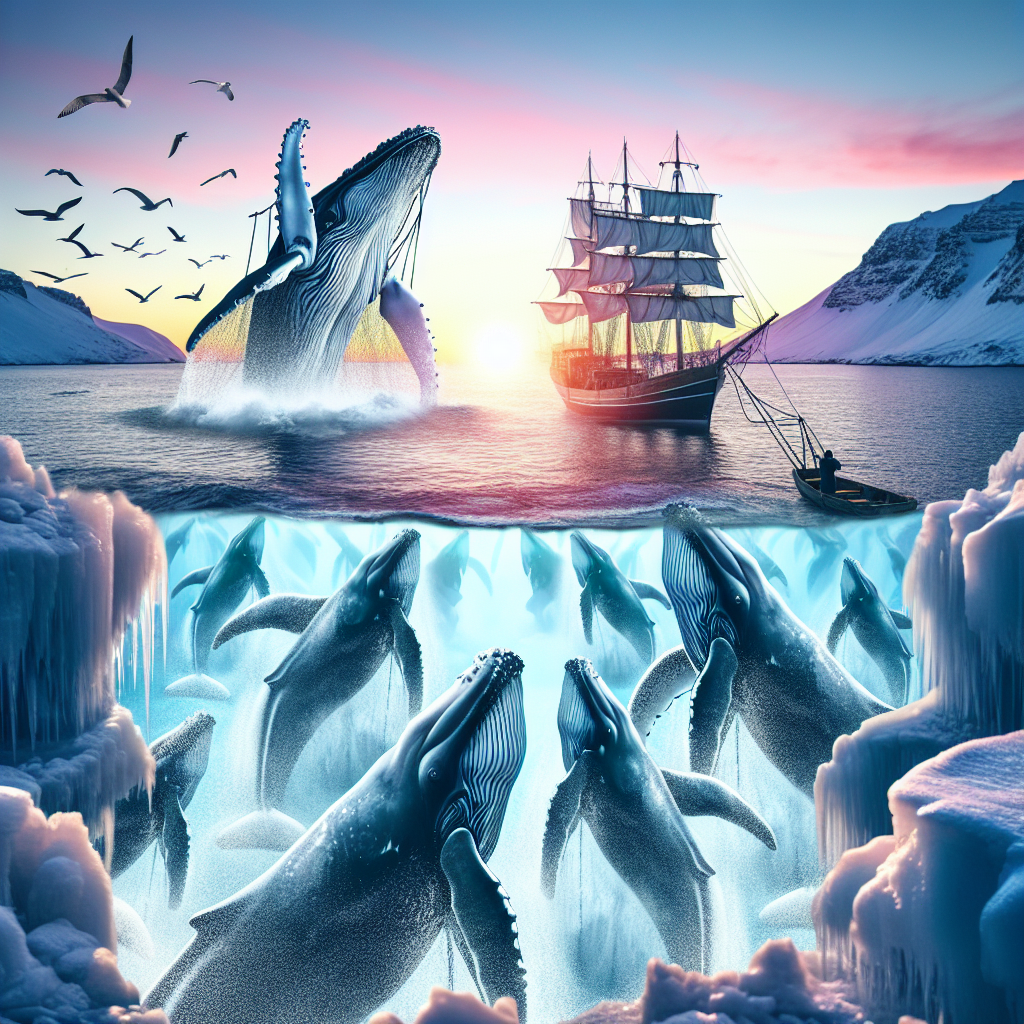
Iceland Resumes Controversial Whale Hunting for Five Years Amid Welfare Concerns
In a bold decision that has sparked widespread debate, Iceland’s outgoing conservative government has authorized whale hunting for the next five years, despite strong opposition from animal welfare and environmental groups. The new permits allow for the capture of 209 fin whales and 217 minke whales during the annual whaling season, which runs from June to September. This decision places Iceland among just three nations—alongside Japan and Norway—that continue to permit whaling for meat, blubber, and oil.
While animal rights advocates express grave concerns over the methods used in such hunts, the government justified the permits, citing a need for "some predictability" within the industry. The regulations were purportedly established based on advice, with set limits intended to ensure sustainability. Notably, Iceland’s most recent whaling season, which lasted only three weeks, resulted in the deaths of 24 fin whales, well below the allotted quota.
However, the decision follows a turbulent 2023 for Icelandic whaling, marked by a two-month suspension of the practice after an inquiry revealed that explosive harpoons were inflicting prolonged suffering on the whales—raising serious questions about animal welfare in the industry. Such practices are at odds with the biblical principle found in Proverbs 12:10, which states, “The righteous care for the needs of their animals.” This verse calls attention to the moral obligation to treat all living beings with compassion and respect.
As outcry against the renewed permits continues, environmental advocates, including Sharon Livermore from the International Fund for Animal Welfare, criticized the government’s decision as rushed and influenced by a powerful few, stating, "This government should simply be holding the fort but instead it has made a highly controversial and rushed decision." Iceland’s ruling Independence Party has recently faced electoral defeat, with the centre-left Social Democratic Alliance set to take power.
The governing notice asserts that the allowable catch aligns with ecological sustainability and is backed by research from Norway’s Fisheries Agency, which emphasizes a precautionary approach. However, questions linger about the ethical implications of whaling practices that seemingly contradict the value of protecting God’s creation.
As we reflect on this complex issue, it invites us to consider our responsibilities as stewards of the earth. The situation reminds us of Jesus’ teachings on compassion and care. In a world increasingly faced with moral dilemmas regarding the treatment of animals and the environment, we are called to act justly and show mercy, remembering that every creature holds intrinsic value in God’s creation.
Ultimately, this ongoing discourse serves as an opportunity for introspection and action. As we ponder the implications of Iceland’s whaling decision, let it inspire us to advocate for compassion and sustainable practices in all areas of life, guided by the principles of care and justice.
Explore and dig up answers yourself with our BGodInspired Bible Tools! Be careful – each interaction is like a new treasure hunt… you can get lost for hours 🙂