 0
0
 0
0
Unraveling the Giant: New Insights into Anacondas’ Origins and Gigantism
Venezuelan Fossils Reveal Secrets of the World’s Largest Snakes
Not a lot is known about the origins of anacondas (Eunectes) and how they reached such colossal sizes. While fascinating, the limited fossil record of this semi-aquatic group underscores the mystery surrounding their evolution. Their habitat—hot, humid environments—leads to rapid decay of remains and acidic soils that dissolve bones, making it difficult for scientists to piece together their past.
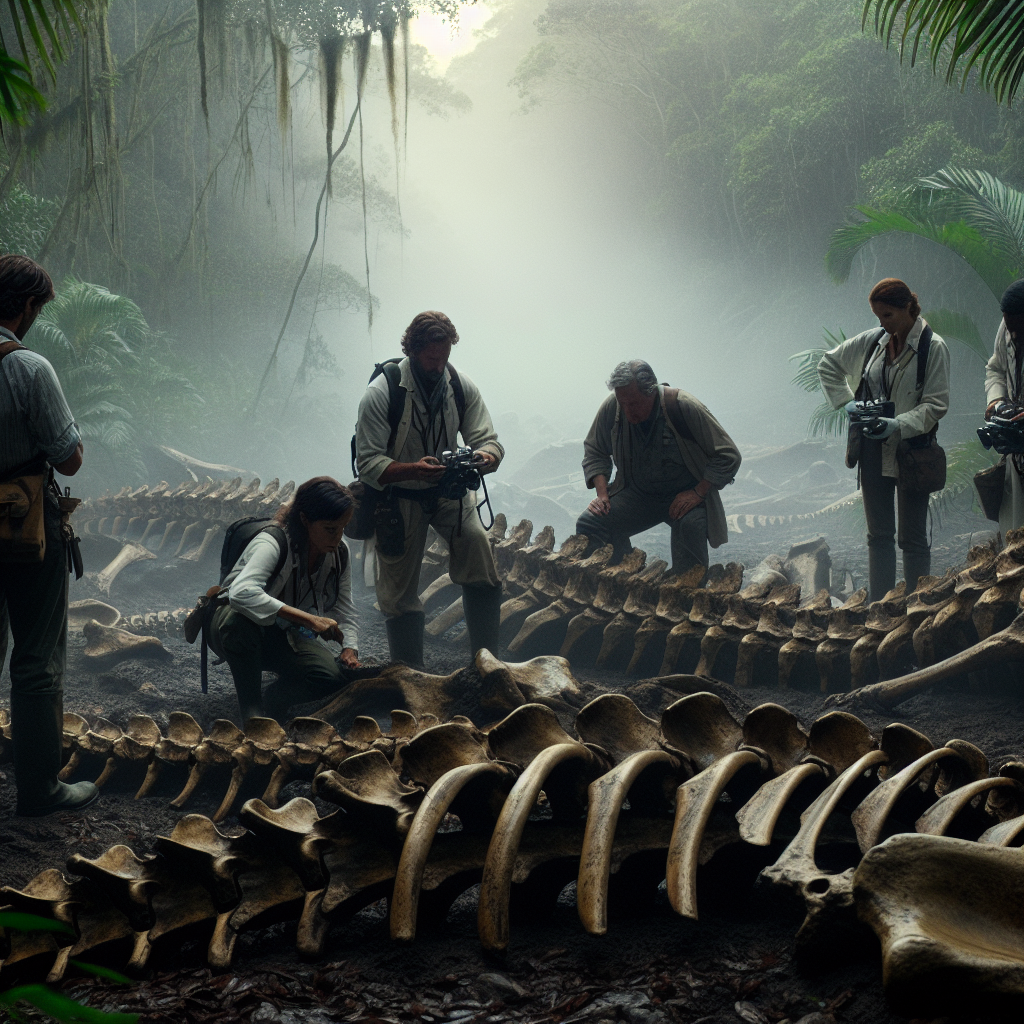
However, a breakthrough has emerged from Urumaco, in the far northwestern corner of Venezuela, where a rich trove of fossils has been discovered. Recent research led by a team from the University of Cambridge examined 183 fossilized vertebrae from at least 32 distinct anacondas, revealing that these ancient giants reached their maximum size approximately 12.4 million years ago during the Middle Miocene.

Credit: Jorge Carrillo-Briceño
The researchers utilized a combination of fossil measurements and a method called ‘ancestral state reconstruction’ to estimate that these early anacondas measured around 5.2 meters in length. Interestingly, the modern green anaconda, which is a descendant of these ancient creatures, averages between 4-5 meters, with larger individuals likely residing in remote parts of tropical South America.
“By measuring the fossils, we found that anacondas evolved a large body size shortly after they appeared in tropical South America, and their size hasn’t changed since,” explains Andrés Alfonso-Rojas, a PhD candidate in zoology at the University of Cambridge.
Unlike other prehistoric reptiles that reached giant proportions only to face extinction, anacondas have not only survived but remained massive. This raises an intriguing question: what allowed them to thrive when other giants perished?
Interestingly, many reptiles, including the colossal 12-meter-long caiman Purussaurus and the 3.2-meter-long freshwater turtle Stupendemys, reached their peak sizes during the Miocene but could not withstand the cooling climate that followed. Anacondas, however, maintained their large sizes despite environmental changes, suggesting a unique adaptation.
Alfonso-Rojas reflects, “The origin of gigantism in anacondas may have been driven by increased temperatures during the Miocene and the presence of a diverse wetland ecosystem rich in prey.” Yet, the mystery persists as to why they continued to flourish in size when others diminished.
This ongoing research offers a promising glimpse into the history of these remarkable animals and highlights a broader principle: the resilience and adaptability of God’s creations. As it is written in Genesis 1:24-25, “And God said, ‘Let the earth bring forth living creatures according to their kinds: livestock and creeping things and beasts of the earth according to their kinds.’ And it was so. And God made the beasts of the earth according to their kinds.”
The ability of anacondas to thrive through changing conditions serves as a reflection of resilience, a trait we can all aspire to embody in our own lives.
As we ponder these magnificent creatures and their incredible adaptations, let us also remember the importance of perseverance and faith in the face of life’s challenges. Just as the anacondas have survived through millions of years, so too can we find strength and hope in our own journeys.
In pursuit of understanding both the science and the deeper spiritual lessons, may we reflect on the interconnectedness of life and the wonders of creation.
Explore and dig up answers yourself with our BGodInspired App. Be careful – each interaction is like a new treasure hunt… you can get lost for hours 🙂