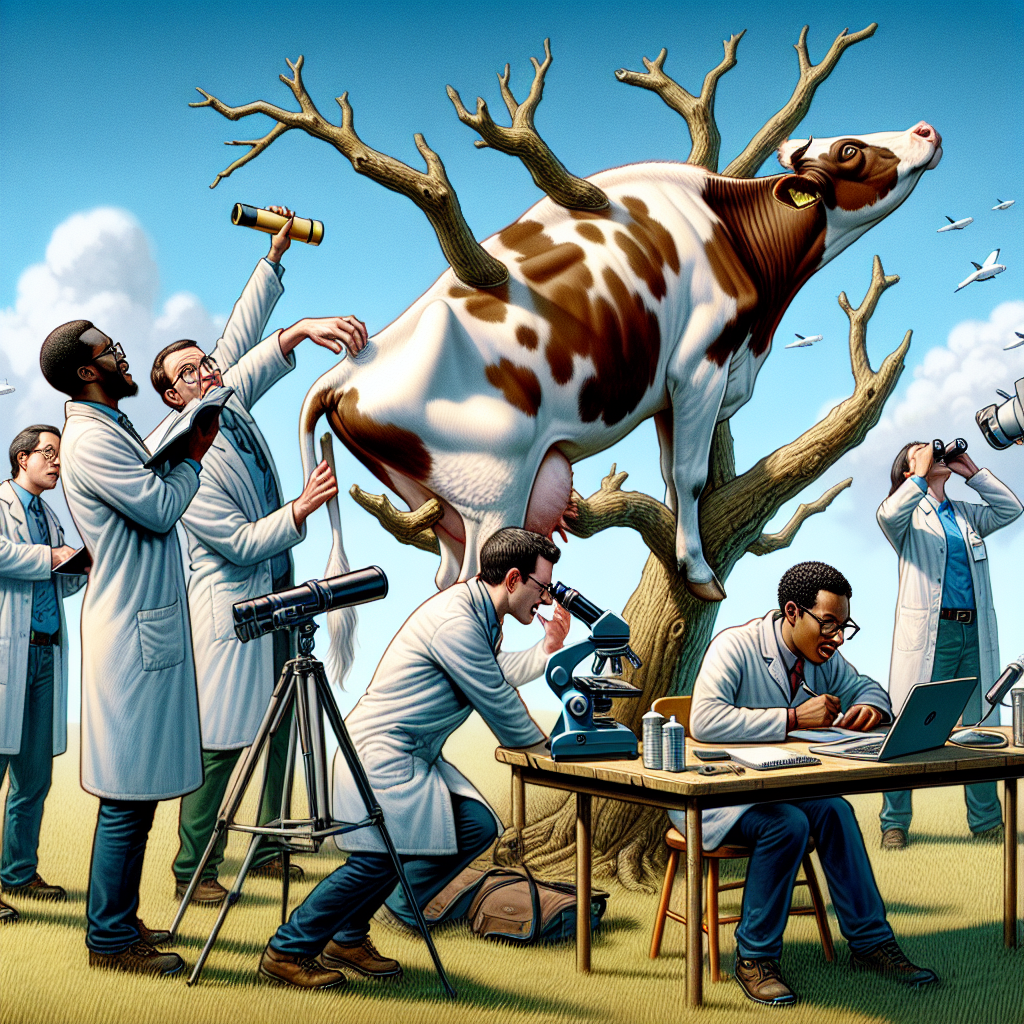
Cattle Intelligence Rethought: Veronika the Cow Demonstrates Tool Use
In a remarkable discovery that challenges our understanding of animal intelligence, scientists are reevaluating the cognitive capabilities of cattle after an Austrian cow named Veronika showcased her unique ability to use tools. This behavior, previously undocumented in livestock, raises intriguing questions about the complexity of non-human creatures, shedding light on God’s creation and the intelligence embedded within it.
Witgar Wiegele, an organic farmer and baker from Nötsch im Gailtal, first noted Veronika’s ingenuity when she began employing sticks to scratch various parts of her body. His observations revealed more than just playful behavior; Veronika showed a remarkable capacity for recognizing family members’ voices and responding to them enthusiastically. Wiegele reflects on Veronika’s character, stating, “how much we could learn from animals: patience, calmness, contentment, and gentleness.” This connection mirrors biblical teachings about the value of simplicity and presence in the moment, echoing Jesus’ admonition to “consider the lilies,” who thrive without toil (Matthew 6:28-29).
The intrigue surrounding Veronika’s behavior reached biologists at the University of Veterinary Medicine in Vienna, who quickly recognized the importance of this breakthrough. Dr. Antonio Osuna Mascaró and his colleague Alice Auersperg set out to study Veronika’s tool use further. Through rigorous testing, they confirmed that Veronika could not only pick up a broom but also adeptly wield it for scratching—switching between its bristled and smooth ends depending on the specific itch. This nuanced understanding of tool use is rare, with multi-purpose functionality previously only observed in chimpanzees.
As the researchers compiled their findings, it became clear that this cow was not just acting out of instinct but demonstrated a level of cognitive sophistication previously underestimated in cattle. The significance of recognizing such intelligence can lead us to reflect on Proverbs 12:10, which states, “The righteous care for the needs of their animals.” In this light, it’s essential to approach all creatures with respect and curiosity, acknowledging their inherent worth and potential.
Veronika’s remarkable abilities have sparked discussions of what this may mean for our perception of farm animals and their capacities. While the researchers do not suggest that tool-using cows will become the norm, Osuna Mascaró emphasizes the need to reframe our understanding of cattle intelligence: “We have ignored this fact for thousands of years.”
As we ponder these revelations, they prompt a deeper reflection on the stewardship of God’s creatures and the wisdom we can glean from them. Veronika may not represent a new breed of super-cow, but her skills illustrate a profound truth: intelligence may exist in forms we have yet to appreciate fully.
In an age where innovation is often ascribed solely to human ingenuity, let us remember the biblical principle that wisdom and understanding can come from unexpected sources. As we embrace a sense of curiosity and humility, may we, like Veronika, find new ways to navigate our own journeys.
Take a moment to ponder this: How can observing the world around us, including its creatures, inspire us to be more insightful and compassionate in our daily lives? Let the story of Veronika remind us that every part of creation has a purpose and teaches us valuable lessons about patience, care, and the beauty of God’s design.
If you want to want to know more about this topic, check out BGodInspired.com or check out specific products/content we’ve created to answer the question at BGodInspired Solutions