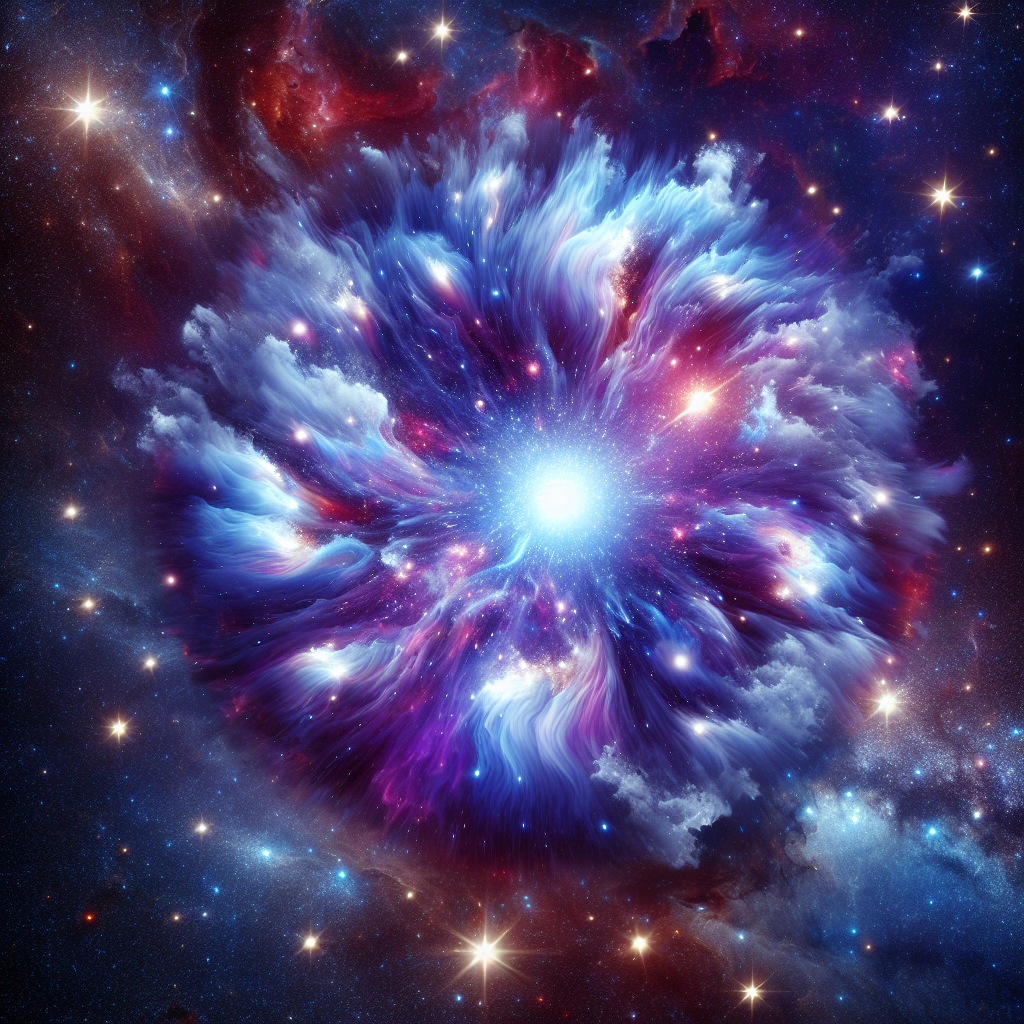
Astronomers Unveil Remarkable Discovery: Low-Luminosity Supernova SN 2024abfl in NGC 2146
In an exciting leap for astronomical research, scientists have recently identified a rare celestial phenomenon: SN 2024abfl, a low-luminosity Type IIP supernova located in the galaxy NGC 2146. This significant discovery provides fresh insights into stellar explosions, enhancing our understanding of the universe’s grand tapestry. The research, spearheaded by Xiaohan Chen from the Chinese Academy of Sciences, offers a range of new perspectives on stellar evolution and the cosmic impact of supernovae on their host galaxies.
Understanding Type IIP Supernovae: The Stellar Fireworks
Supernovae are among the most spectacular and energetic events in the universe, classified based on their spectral properties. Type II supernovae, which include subtypes like Type IIP, are essential in understanding how stars evolve. The striking feature of Type IIP supernovae is their prolonged plateau phase, where brightness remains relatively steady for an extended duration. This phase can last up to 100 days—an invaluable period for astronomers seeking to understand the mechanisms of these cosmic explosions.
The Unfolding Story of SN 2024abfl
First observed on November 15, 2024, in NGC 2146, SN 2024abfl emerged with an apparent magnitude of 17.5, distinguishing itself as a relatively dim event compared to typical Type IIP supernovae. Characterized by its extended plateau phase but much lower absolute magnitude (around −15 mag), this supernova provides new evidence that even less luminous stars can result in impactful eruptions, widening the understanding of stellar lifecycles.
The Progenitor Star: A Glimpse into the Past
One of the standout findings of the study is the identification of SN 2024abfl’s potential progenitor—a red supergiant star estimated to have a mass between 9 to 12 solar masses. This challenges the longstanding assumption that only massive stars (those over 15 solar masses) lead to significant Type IIP supernovae, presenting a fascinating alternative narrative regarding stellar evolution.
An Extended Plateau: The Unusual Characteristics of SN 2024abfl
The plateau phase of SN 2024abfl lasted for an unprecedented 126.5 days, suggesting a thicker outer envelope from which the star exploded. This characteristic allows scientists to explore the intricacies of the explosion in greater depth, especially given this supernova’s uniquely low luminosity.
Spectroscopic Revelations: Dynamics at Play
Spectroscopic data revealed that SN 2024abfl showed slower ejecta velocities than typically expected. Such variations underscore the complexity of supernova mechanisms, raising questions about the dynamics of its progenitor star and the surrounding environment.
The Heart of the Explosion: Lower Energy and Nickel-56 Mass
In one of the most intriguing aspects of this discovery, researchers found that the energy output from SN 2024abfl was significantly lower than that of its more luminous counterparts. The estimated mass of nickel-56 produced was about 0.009 solar masses, hinting at a less energetic demise, possibly reflective of the progenitor star’s lower initial mass.
Reflecting on the Larger Picture
This discovery of SN 2024abfl, situated in light years of cosmic distance, is a reminder of the divine orchestration of the universe. Just as we learn about the life cycles of stars through their death—a reflection of persistence and transformation—so too can we find messages in our lives about renewal and hope.
As the Bible says in 2 Corinthians 5:17: “Therefore, if anyone is in Christ, the new creation has come: The old has gone, the new is here!”
This verse serves to inspire us to embrace change and recognize that even in moments of perceived dimness—like the low luminosity of SN 2024abfl—there lies an opportunity for something beautiful and transformative.
Final Thoughts
As we explore the cosmos through powerful telescopes and advanced data analysis, we unknowingly partake in a quest for knowledge that intertwines with timeless truths found in scripture. The discovery of SN 2024abfl beckons us to reflect on life’s cycles and the broader processes of renewal and creation—inviting each of us to look for meaning in our own transformations.
If you want to want to know more about this topic, check out BGodInspired.com or check out specific products/content we’ve created to answer the question at BGodInspired Solutions