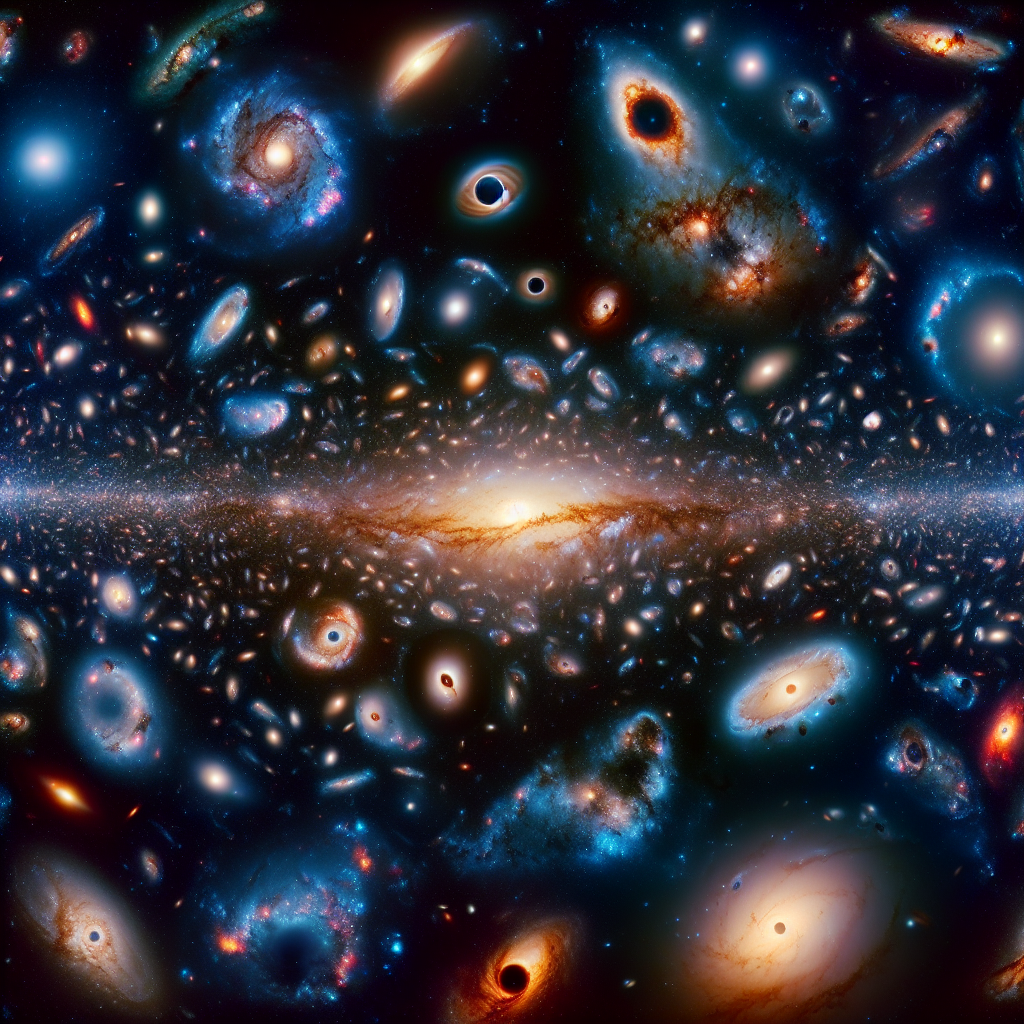
Astronomers Uncover More Active Black Holes in Dwarf Galaxies Than Previously Thought
Phoenix, Arizona — Revelations about the universe continue to illuminate our understanding of the cosmos, as a new study presented at the 247th meeting of the American Astronomical Society has challenged long-held beliefs about dwarf galaxies’ centers. Researchers from the Harvard & Smithsonian Center for Astrophysics and the University of North Carolina at Chapel Hill delivered exciting findings, shedding light on the presence of Active Galactic Nuclei (AGN)—or quasars—in these smaller galaxies.
For decades, quasars have captivated astronomers, with their immense energy stemming from Supermassive Black Holes (SMBHs) that outshine entire galaxies. However, recent findings suggest that many dwarf galaxies, unlike their larger counterparts, might not house these powerful black holes, sparking the need for an extensive reevaluation of their characteristics.
The team’s groundbreaking census examined over 8,000 nearby galaxies, employing cutting-edge imaging techniques across multiple wavelengths—from optical to X-ray—to identify black hole activity. Past data indicated that approximately 1% of dwarf galaxies hosted AGNs. In stark contrast, this latest investigation suggests the figure could be as high as 2-5%, revealing that active black holes are more prevalent in dwarf galaxies than earlier studies proposed.
"Understanding why AGNs show an increased presence among galaxies similar in size to the Milky Way is crucial," said Mugdha Polimera, lead author of the study. "It reflects something significant changing between dwarf and transitional galaxies."
This increase in AGN activity contributes not only to our comprehension of black hole dynamics but also engages with themes of growth and transformation found in both cosmic and spiritual contexts. Just as the study of galaxies reveals complexity and interconnection, so too does the pursuit of personal development and community engagement echo biblical principles. Jesus reminds us of the transformative power of faith and unity in Matthew 18:20: "For where two or three gather in my name, there am I with them."
Moreover, the researchers encountered challenges in filtering out the blinding glare from star formation, which previously obscured evidence of black holes. In a similar vein, life often presents distractions that can obscure significant truths. Just as these astronomers sought clarity in the cosmos, individuals are encouraged to seek spiritual clarity amid the noise of everyday life.
There remains a margin of uncertainty around these findings, highlighting the ongoing nature of exploration and understanding. Sheila J. Kannappan, co-author of the study, emphasized the importance of discernment in astrophysical research. She remarked that uncovering these hidden giants could significantly impact our comprehension of galaxy formation. "These results are essential for testing models of black hole origins and their role in shaping galaxies," she noted.
As astronomers continue to refine their techniques and measurements, they offer not just a clearer picture of AGN incidence but also an inspiring reminder of our own potential for growth. As we delve deeper into both the universe and our personal lives, the opportunity to emerge changed and evolved remains ever-present.
In closing, the study of our universe fosters curiosity and wonder, urging us to ponder our origins and connections. Reflecting on the excitement of these discoveries invites readers to examine their own journey, embracing transformation and illumination in both celestial and spiritual realms. Let us approach our lives with the same inquisitiveness that drives scientific discovery, maintaining hope and excitement for the journey ahead.
If you want to want to know more about this topic, check out BGodInspired.com or check out specific products/content we’ve created to answer the question at BGodInspired Solutions