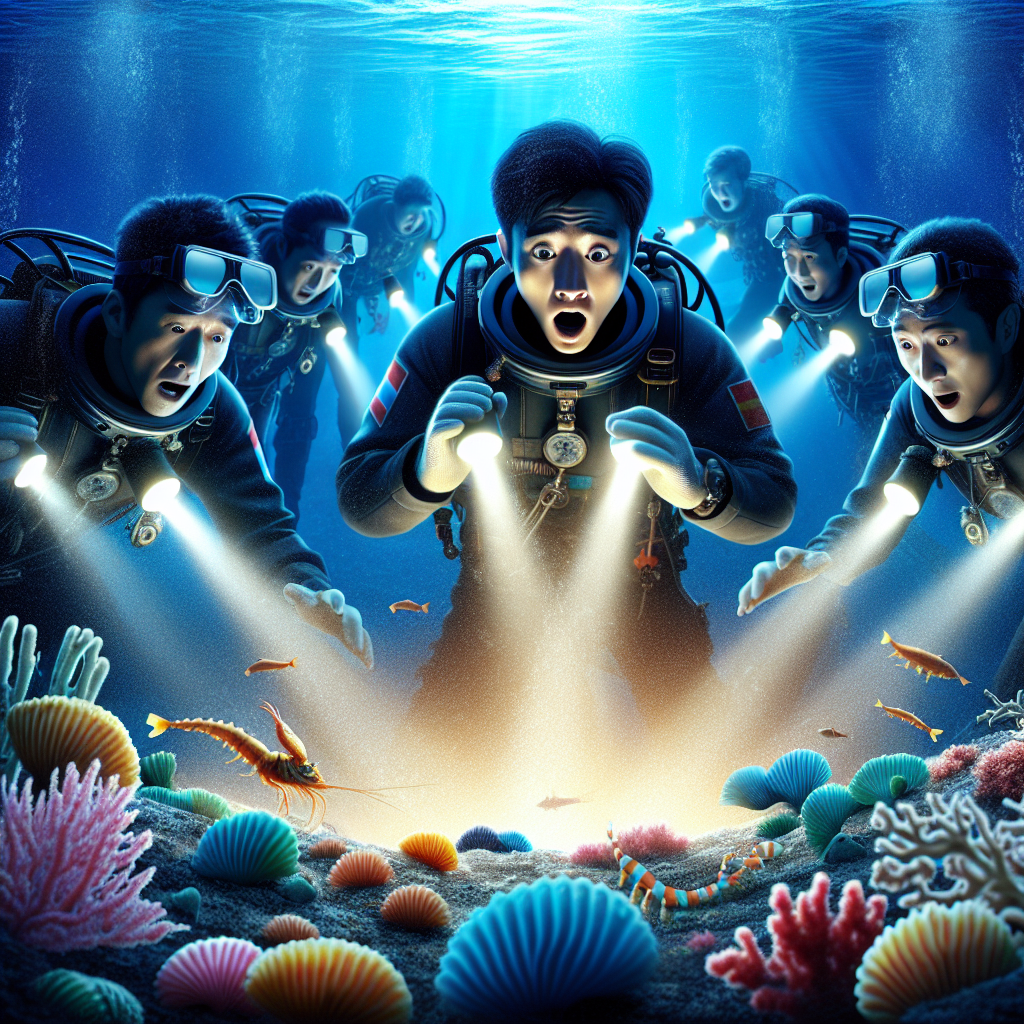
Chinese Researchers Uncover Vibrant Ecosystem 10 Kilometers Below the Pacific Ocean
In a groundbreaking discovery, Chinese researchers have unearthed a thriving ecosystem residing 10 kilometers beneath the Pacific Ocean, challenging long-held assumptions about life in extreme depths. This vibrant life forms a stark contrast to the barren, lifeless seafloor that scientists long believed characterized such crushing depths.
For years, deep-sea ecosystems, particularly in the Pacific’s trenches, remained shrouded in mystery. Conventional wisdom held that only microorganisms could withstand the extreme conditions. However, a recent study published in Nature reveals that life in the Kuril-Kamchatka Trench, one of the ocean’s most profound areas, can flourish in ways previously unimaginable.
An Ocean Journey Off the Beaten Path
A team of Chinese scientists embarked on a remarkable expedition aboard the Fendouzhe submersible, exploring depths of over 10,500 meters. Initial expectations were low, as they anticipated encountering only a few microorganisms in an environment characterized by near-total darkness and immense pressure. What they discovered, however, exceeded all expectations: a bustling ecosystem populated by tube worms, mollusks, and sea cucumbers, some stretching over a foot in length.
These creatures thrive where pressure is over 1,000 times that of sea level, in a domain previously thought devoid of life. The sustainability of these communities hinges on a process known as chemosynthesis. "These communities are sustained by hydrogen sulfide-rich and methane-rich fluids that are transported along faults traversing deep sediment layers in trenches," the researchers noted.
The Chemistry of Life in the Abyss
In this profound abyss, sunlight plays no role; life survives instead through chemosynthesis. Bacteria utilize chemicals like methane and hydrogen sulfide leaking from the ocean floor to generate energy. This extraordinary adaptation highlights a remarkable resilience, illustrating that life can exist even in environments deemed inhospitable.
The implications of this discovery extend beyond Earth. Scientists believe that these deep-sea ecosystems provide valuable insights into how life could potentially thrive in extreme environments elsewhere in our solar system, such as the moons Europa and Enceladus.
Environmental Concerns Amid Scientific Wonder
As deep-sea mining for rare minerals gains momentum, experts express growing concerns about the potential impact on these delicate ecosystems. The researchers caution that mining the ocean floor could inflict lasting damage on these unique communities, which have developed in isolation for eons. They are among the oldest biological systems on Earth, flourishing without sunlight and relying on the ocean’s chemical interplay.
In reflecting on these incredible revelations, we might consider the words of Psalm 104:25: “There is the sea, vast and spacious, teeming with creatures beyond number—living things both large and small.” This verse serves as a reminder of the fierce yet fragile beauty of creation, inviting us to appreciate the intricacies of life in all its forms.
Encouraging Takeaway
The discovery of life in the darkest depths of the ocean not only expands our understanding of biology but also encourages a broader reflection on the resilience of creation. Just as these ecosystems thrive in extreme conditions, so too can we find strength and hope in our own challenging circumstances. Let this discovery inspire us to marvel at the wonders of creation and remind us to care for our environment with the reverence it deserves. In doing so, we can cherish the interconnectedness of all life and nurture a spirit of stewardship, fostering harmony with the world around us.
If you want to want to know more about this topic, check out BGodInspired.com or check out specific products/content we’ve created to answer the question at BGodInspired Solutions