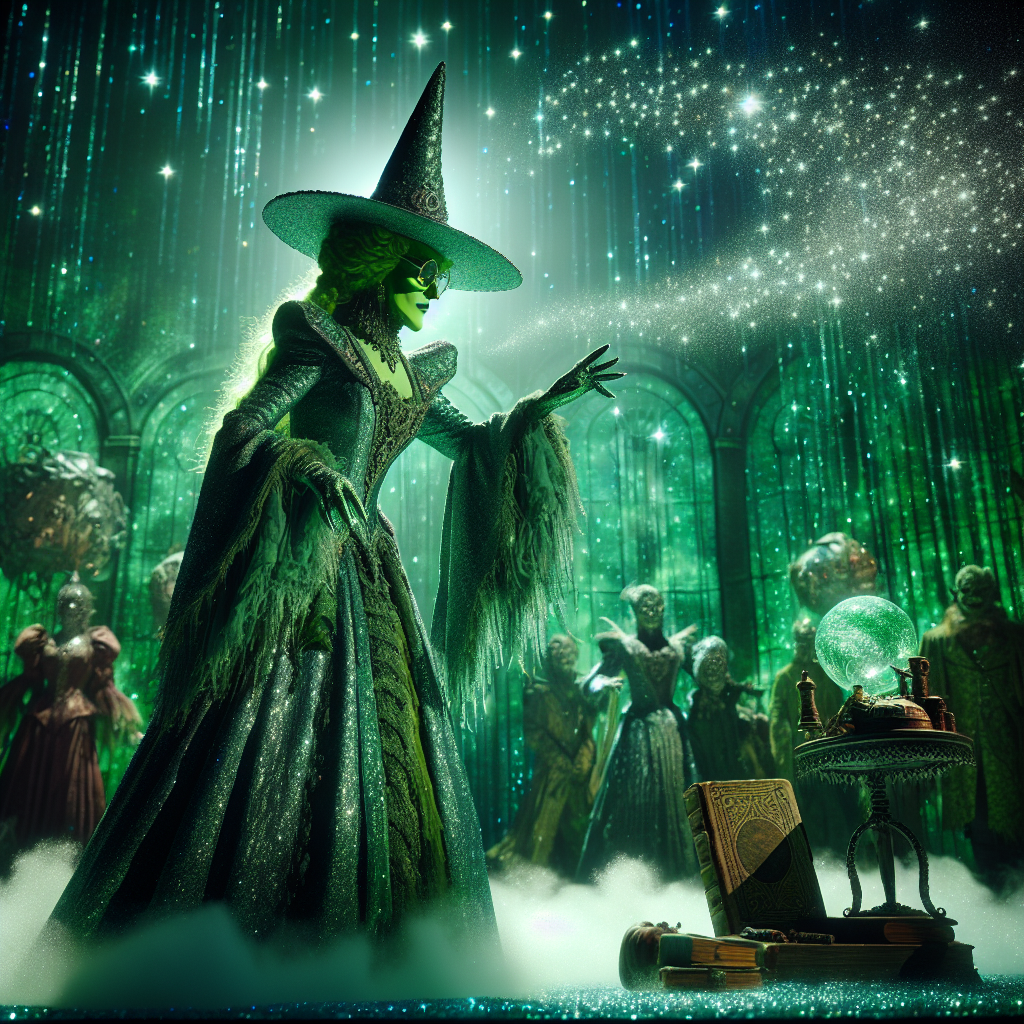
Controversy Surrounds ‘Wicked’ Film Release: BBFC Issues Trigger Warning for Discrimination Against Green Characters
In a recent move that has stirred debate across various social media platforms, the British Board of Film Classification (BBFC) has provided a warning for the upcoming film adaptation of the beloved musical “Wicked.” The alert notifies viewers that the film includes scenes of discrimination against characters with green skin, particularly highlighting Elphaba, the misunderstood protagonist who is often labeled the “Wicked Witch.” This precaution aims to prepare audiences for potentially upsetting depictions of mistreatment based on skin color.
The BBFC emphasizes on its website, “Seeing beloved characters being mistreated, especially when Elphaba’s skin color is used to demonize her, may be upsetting and poignant for some audiences.” Such warnings, though seemingly well-intentioned, have led to a mixed reception. Some critics argue that the move reflects a growing trend of political correctness that oversensitizes audiences to content they consider harmless. Sociology professor Frank Furedi, speaking to the Daily Mail, dismisses the classification as “living on planet Bonkers,” suggesting it trivializes genuine societal issues.
This controversy raises a broader question about societal sensitivity and its implications for artistic expression. While it is crucial to protect individuals from distressing content, especially in films marketed towards younger audiences, it also invites us to examine how we engage with challenging themes. Art often reflects reality – including the realities of prejudice and discrimination. The Bible teaches us in Galatians 6:2 to “bear one another’s burdens, and so fulfill the law of Christ.” This principle encourages empathy and understanding towards others’ experiences, even if they seem distant from our own.
As the discussion unfolds around “Wicked,” we can consider how these depictions align with Christ’s teachings of love, acceptance, and compassion. In a world where differences exist, everyone—regardless of their skin color, magical abilities, or backgrounds—deserves respect and kindness. This film, while controversial, may serve as a catalyst for deeper conversations about tolerance and understanding among audiences.
As viewers prepare to experience the trials of Elphaba, it is an opportune moment to reflect on our own responses to discomfort in narratives. Are we engaging with the pain of others? Are we considering how our actions and expressions may impact those around us?
In the spirit of encouragement, let’s remember Romans 15:1, which urges the strong to bear with the failings of the weak and not to please ourselves. As we navigate the complexities of modern storytelling, may we embody the principles of compassion that guide us towards unity and understanding.
Explore and dig up answers yourself with our BGodInspired Bible Tools! Be careful – each interaction is like a new treasure hunt… you can get lost for hours 🙂