 0
0
 0
0
Federal Judge to Decide on Restraining Order Against National Guard Deployment in Portland
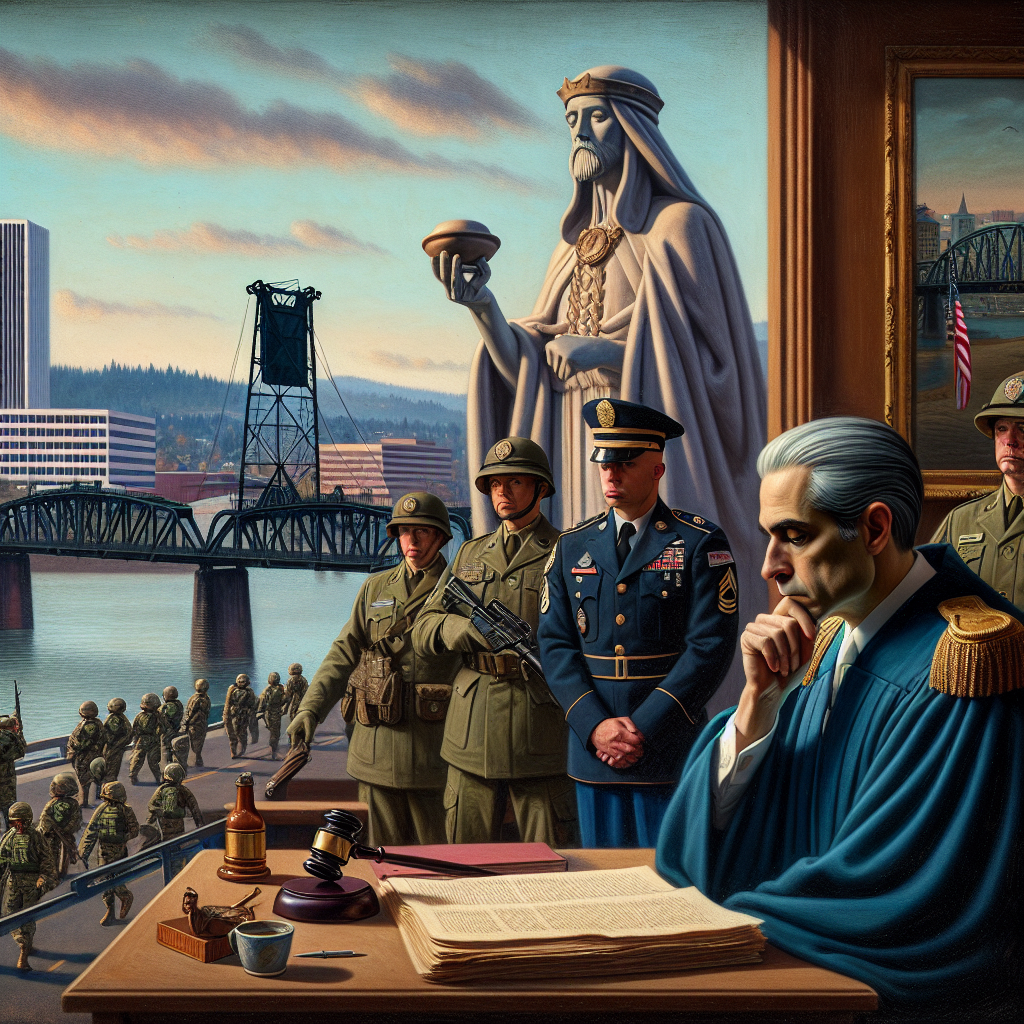
PORTLAND, Ore. (KPTV) — A federal judge is set to make a crucial decision regarding the deployment of National Guard troops to Portland, weighing the implications for local governance and public safety. On Friday, Judge Karin Immergut heard arguments about whether to grant a temporary restraining order requested by Oregon’s Attorney General Dan Rayfield, who filed a lawsuit against the Trump administration after plans for troop deployment were announced.
The judge is expected to issue a written order either Friday night or Saturday, as the city and state seek to maintain the status quo while the case is litigated. At the heart of the case lies whether President Trump properly invoked Title 10 of U.S. law, which allows for federalizing National Guard troops under specific conditions, such as responding to rebellion or when regular forces are deemed inadequate.
As this legal drama unfolds, it reflects a broader concern about the balance of power and the governance of communities—similar to the importance of wise stewardship emphasized in Scripture. As noted in Romans 13:1, “Let everyone be subject to the governing authorities, for there is no authority except that which God has established.” The legal arguments in this case echo the biblical principles of justice and accountability that are crucial in governance.
The court has raised two pivotal questions: Does the court or the plaintiffs have the standing to intervene, and have the conditions for invoking Title 10 been met? These inquiries represent a microcosm of the struggle between local authority and federal intervention, which can have profound implications for community trust and cooperation.
The assembled court includes notable figures like Mayor Keith Wilson and Portland City Attorney Robert Taylor, reflecting the local stakes involved. The absence of Attorney General Rayfield drew attention, yet underscores the varied roles individuals play in navigating complex governance issues.
Though it may be tempting to view this situation solely through a lens of partisanship, one can also glean a significant spiritual lesson about community and the pursuit of justice. Biblical teachings often emphasize the necessity of dialogue and reconciliation rather than division, echoing Jesus’ call to love one another (John 13:34).
As we await the judge’s decision, it invites contemplation on how our actions can align with values of peace and cooperation, aiming for outcomes that serve the greater good. In times of uncertainty, may we remember the encouragement found in Philippians 4:6-7, which teaches not to be anxious, but to bring our concerns in prayer and petition.
Let this moment serve as an opportunity for reflection on the ways we can foster understanding and collaboration within our communities, recognizing that the pursuit of justice and peace is a shared responsibility. The legal outcomes may be significant, but our commitment to embodying love, compassion, and understanding must remain our true guiding principles.
Explore and dig up answers yourself with our BGodInspired App. Be careful – each interaction is like a new treasure hunt… you can get lost for hours 🙂