Title: The Last Notes of Resilience: Anita Lasker-Wallfisch’s Survival Through Music in Auschwitz
By [Author Name]
Anita Lasker-Wallfisch’s story is a testimony to the resilience of the human spirit amidst unimaginable horrors. At 99 years old, she stands as the last surviving member of the Women’s Orchestra of Auschwitz, a group that defied the heart of darkness with the power of music. This remarkable narrative, punctuated by both tragedy and survival, invites us to reflect on profound truths of humanity, faith, and forgiveness.
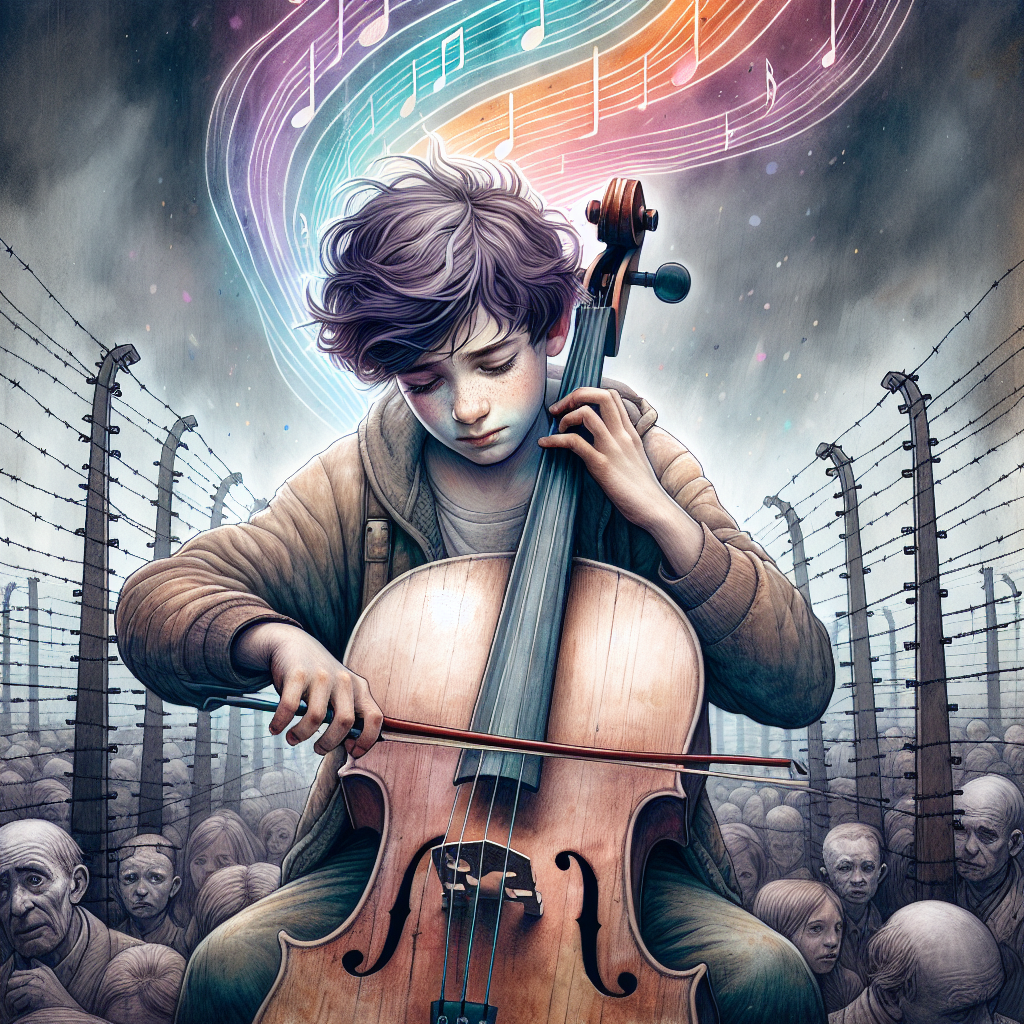
On January 27, 1945, Soviet troops liberated Auschwitz, where Lasker, a Jewish teenager, had fought for her life as a cellist in the camp’s orchestra—an unexpected twist of fate that spared her from the grim fate of many others. “Music was played to accompany the most terrible things,” she recounted, illustrating how her talent provided a temporary escape from the surrounding brutality.
In an interview conducted with the BBC shortly after the liberation of the Bergen-Belsen death camp in April 1945, Lasker poignantly expressed the fear that the world would not believe the atrocities witnessed in Auschwitz. Her memories detail the systematic cruelty faced by new arrivals at the camp, a grim sorting process where lives were weighed against a simple directive: "To the right was life; to the left, the chimney."
Throughout her narrative, Lasker’s observations resonate deeply with the biblical principle of love and respect for human dignity, as illustrated in Matthew 22:39: "You shall love your neighbor as yourself." In the darkest of times, the semblance of kindness, as experienced through music, offered a glimpse into the love that is deeply embedded in the human condition.
Arriving at Auschwitz, Lasker’s declaration that she played the cello unexpectedly altered her life’s trajectory. Her position within the orchestra allowed her a chance to escape the death camps’ horrors. Guided by the conductress, Alma Rosé, a commanding yet dignified presence, the orchestra strived for excellence in their limited repertoire, binding the women in a shared pursuit of survival—a reminder that even in the most dire situations, a communal spirit can be a lifeline.
Lasker’s time at Auschwitz culminated in a harrowing transfer to Bergen-Belsen, where conditions were brutal, with starvation and disease claiming countless lives. Yet, the arrival of British troops heralded her liberation, an experience she regarded as miraculous. “Another week and we probably wouldn’t have made it," she reflected.
After the war, Lasker eventually settled in Britain, forging a successful career as a musician while raising a family. Despite years of wrestling with her painful past, her journey towards forgiveness is noteworthy. With time and reflection, she embraced opportunities to return to Germany, encouraging dialogue and understanding instead of hate—a choice resonating with the teachings of Jesus, who urged us to let go of bitterness and strive for reconciliation.
In an age marked by division, Lasker’s life speaks to the heart of biblical teachings that encourage us to rise above challenges and foster connections rooted in compassion and understanding. “Hate is poison,” she remarked, emphasizing that allowing anger to take root only harms ourselves.
As we ponder Anita Lasker-Wallfisch’s extraordinary story, we are invited to reflect on our own capacity for love and forgiveness. It serves as a poignant reminder of Paul’s words in Romans 12:21: “Do not be overcome by evil, but overcome evil with good.”
Let her journey inspire us to build bridges instead of walls and to extend grace where it is most challenging. In a world that often models conflict, her narrative of hope is a testament to the transformative power of love, urging us to nurture the light within ourselves and others.
Takeaway: In remembering those who have suffered while fostering peace and understanding, we illuminate the path toward a better tomorrow.
Explore and dig up answers yourself with our BGodInspired Bible Tools! Be careful – each interaction is like a new treasure hunt… you can get lost for hours 🙂