 0
0
 0
0
U.S. Treasury to Halt Penny Production Amid Rising Costs
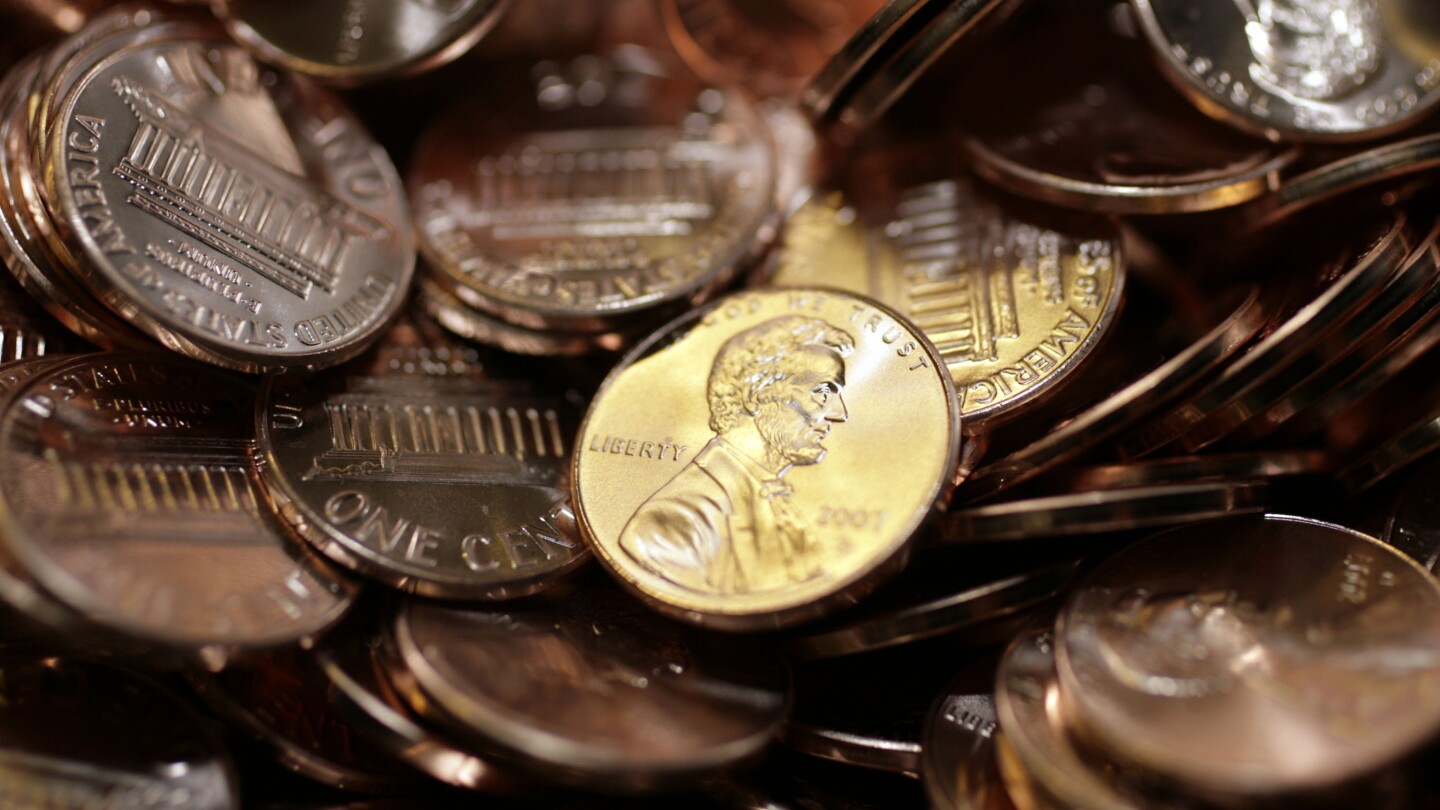
WASHINGTON (AP) — In a significant shift, the Trump administration has announced it will cease production of the penny, a move that reflects changing economic realities. The U.S. Mint has placed its final order for penny blanks, with plans to stop producing the coin once that stock is depleted. The decision comes as production costs have surged by over 20% in 2024, prompting leaders within the Treasury to reassess the coin’s place in everyday transactions.
By halting penny production, the Treasury anticipates savings of approximately $56 million annually on material costs. A Treasury Department official, speaking anonymously, elaborated on the decision, emphasizing the coin’s financial impracticality. President Trump underscored this sentiment earlier this year, stating, "For far too long the United States has minted pennies which literally cost us more than 2 cents. This is so wasteful!"
A Time of Reflection
Currently, roughly 114 billion pennies circulate in the U.S., valued at $1.14 billion, though their everyday utility is dwindling. While some advocate for the penny’s continuation, citing its role in charitable donations, others support the government’s decision based on fiscal prudence. The production cost per penny is now nearly 4 cents, a stark contrast to coins like the nickel, which costs about 14 cents to mint.
In the broader context of financial stewardship, this decision prompts us to consider principles highlighted throughout scripture. Jesus taught on the importance of wise management of resources, as reflected in Luke 14:28: “For which of you, desiring to build a tower, does not first sit down and count the cost, whether he has enough to complete it?” The halting of penny production serves as a reminder for both individuals and institutions to evaluate the value and efficacy of what they choose to maintain.
Legislative Challenges Ahead
Although the Treasury’s decision marks a significant pivot, Congress has the power to solidify this change into law. Past attempts to eliminate the penny have stalled, and two bipartisan bills have recently been introduced with this goal. Experts suggest that if the penny is phased out, it should come with provisions that encourage rounding prices to eliminate demand for lower denominations.
As Jay Zagorsky, a Boston University professor, points out, simply removing the penny without addressing the nickel’s production costs could lead to additional financial burdens, highlighting the need for comprehensive fiscal strategy.
An Invitation to Reflect
Beyond the logistics, the conversation surrounding the penny’s fate invites us to reflect on broader spiritual and economic lessons. It challenges us to consider what we hold onto out of tradition versus what may no longer serve our greater good. Just as the penny’s elimination may symbolize a necessary shift in economic sensibility, we too are called to examine our lives and let go of practices that no longer reflect God’s calling for stewardship.
As we navigate these changes, let’s remember to count the cost, embrace wisdom, and create space for new opportunities, understanding that each decision we make reflects our values and priorities. In navigating financial challenges, we can draw strength from the idea that good stewardship honors the resources we are entrusted with.
In all things, may we be guided by the principle found in Proverbs 21:20: “The wise store up choice food and olive oil, but fools gulp theirs down.” As we reflect on the fate of the penny, let us strive for wisdom in managing our resources—both financial and spiritual.
Explore and dig up answers yourself with our BGodInspired Bible Tools! Be careful – each interaction is like a new treasure hunt… you can get lost for hours 🙂