Penny Production Ends: States Search for Cash Solutions Amid Rounding Debate
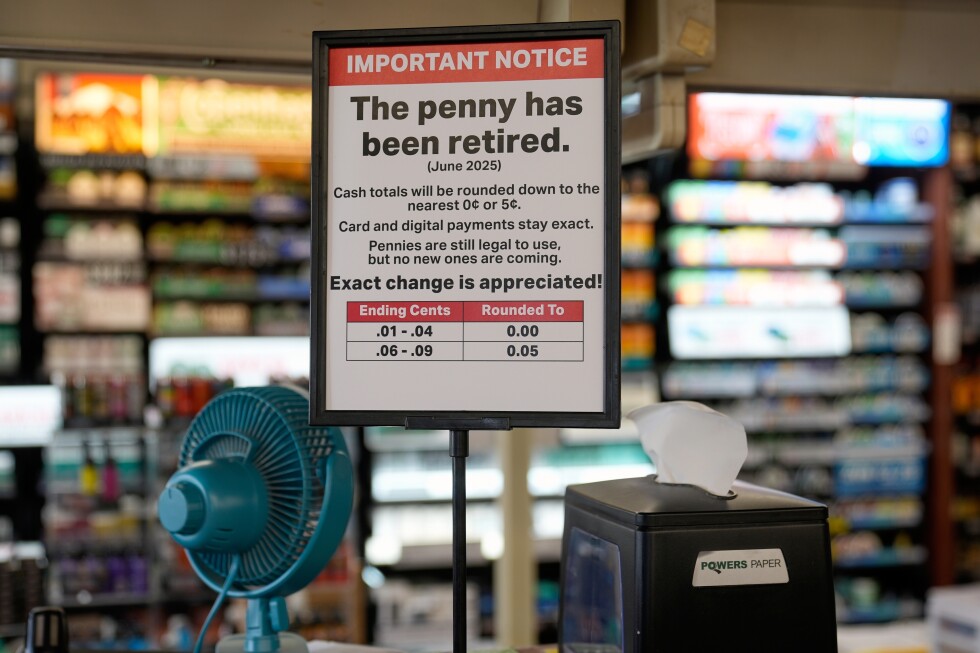
Months after the United States halted production of its 1-cent coins, states are stepping in with solutions to ease the transition to a penny-free cash landscape. This move follows President Donald Trump’s announcement last year deeming penny production wasteful, given the rising cost of producing these coins which amounted to 3.7 cents each in 2024. The policy shift has prompted a national conversation about cash transactions and the practicality of handling smaller amounts in a cashless society.
With an estimated 114 billion pennies still in circulation, the U.S. Treasury has committed to maintaining these coins in circulation for as long as possible, while mandating their acceptance as payment. Yet, as summer brought about a penny shortage, businesses and consumers grappled with the challenge of making exact change.
Rounding Solutions Under Debate
To simplify cash transactions, symmetrical rounding is emerging as a solution. This method dictates that values ending in 1, 2, 6, or 7 cents round down, while those ending in 3, 4, 8, or 9 round up. The intention is to streamline cash payments by rounding to the nearest nickel. U.S. Representative Lisa McClain from Michigan has pushed for federal legislation to standardize this rounding approach across the nation, avoiding a disjointed array of state regulations. However, the proposed bill has yet to be voted on.
Meanwhile, states such as Arizona, Florida, Oregon, Tennessee, Virginia, and Washington have advanced their bills aimed at providing clearer rounding guidelines. Indiana recently enacted a law allowing businesses to choose how they round cash transactions, reflecting the diverse approaches states are adopting in response to the penny cessation.
Consumer Reactions and Economic Implications
As cash usage has dwindled in favor of digital transactions, approximately 80% of U.S. adults have reportedly used cash in the past year, particularly those within older age groups or lower-income households. The Treasury assures consumers that the rounding process should statistically balance out, impacting pricing minimally. Nonetheless, research indicates that transactions may skew towards rounding up more often than down, potentially leading to cumulative losses for consumers.
The fairness of rounding practices has sparked debates among consumers. Social media reflects mixed feelings, with some citizens feeling inaccurately charged, even for small amounts. For example, Connecticut resident Nikki Capozzo-Hennessy shared her experience of receiving three cents back after rounding down on a grocery purchase—a small gain that could echo in the collective purchasing landscape.
Reflecting on the principle of fairness from a biblical perspective, one might consider the words of Proverbs 11:1: “The LORD abhors dishonest scales, but accurate weights find favor with him.” This reminder underscores the importance of equity in our transactions, even in the minutiae of everyday payments.
Looking Towards Future Currency Solutions
Beyond pennies, the cessation of their production may lead to increased demand for nickels, which pose their own production challenges, costing nearly 14 cents each in 2024. Proposed legislation could permit adjustments to the composition of nickels to cut production costs.
As Americans navigate this evolving financial landscape, it’s crucial to engage with these changes thoughtfully. While the elimination of pennies might seem insignificant, it prompts deeper contemplation on fairness, honesty, and our economic interactions.
In a world where financial matters can often lead to division or misunderstanding, let us embrace the teachings of compassion and integrity. As you reflect on this situation, consider how even small acts of fairness can have a significant impact on community trust and cohesion. Remember, as always, every small act counts.
An Encouraging Takeaway
In this changing financial landscape, let’s adopt a spirit of generosity and understanding in our transactions. Whether it’s pennies saved or spent, what matters is the integrity of our hearts. Let these shifts inspire us to reflect on Jesus’ teaching of caring for each other in our daily lives—after all, every act of kindness, no matter how small, resonates well beyond the surface.
If you want to want to know more about this topic, check out BGodInspired.com or check out specific products/content we’ve created to answer the question at BGodInspired Solutions