Australian Dollar Slumps Amid Economic Concerns; Global Currency Markets React
By Kevin Buckland
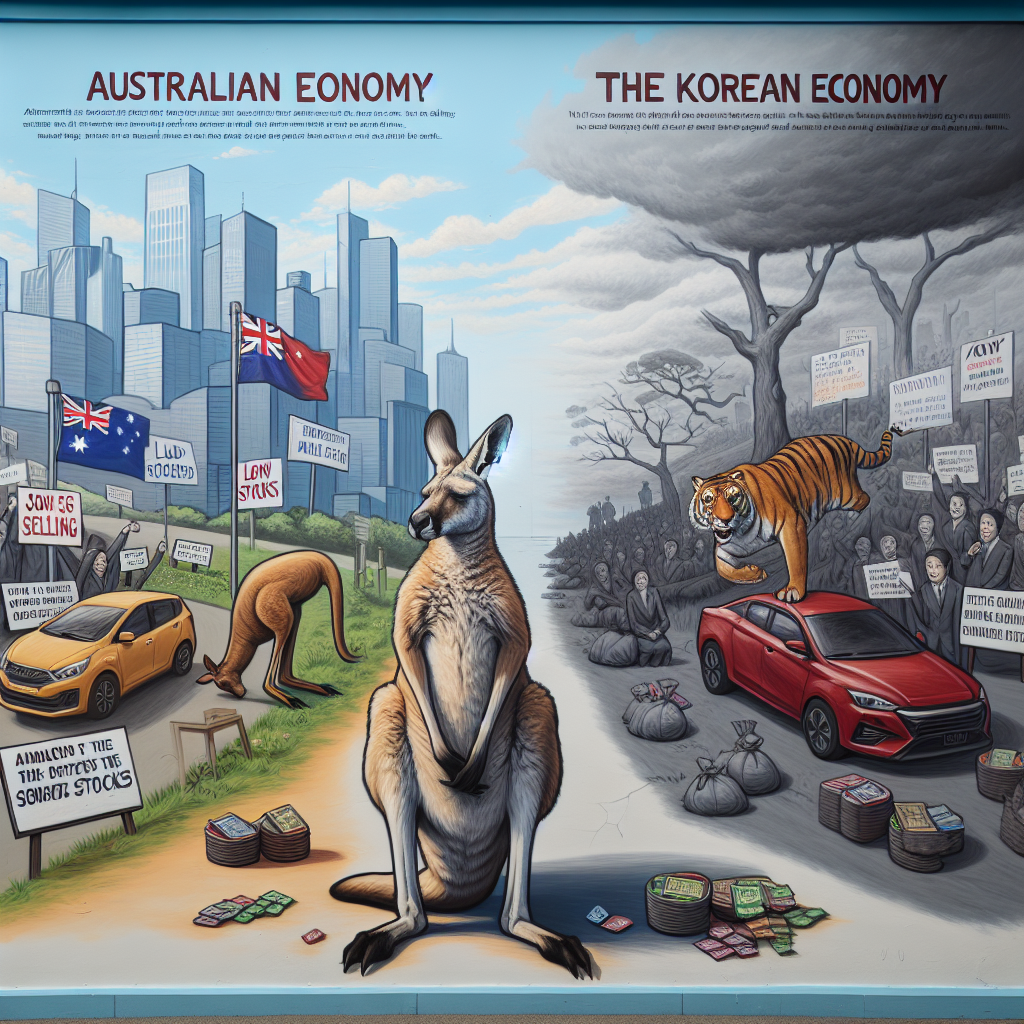
Tokyo (Reuters) – The Australian dollar plummeted to a four-month low on Wednesday, driven down by disappointing economic growth figures that intensified speculation about potential interest rate cuts in the near future. Conversely, South Korea’s won began to stabilize after the country’s government overturned an unexpected martial law declaration.
In another corner of Asia, the Chinese yuan sought to recover from a year-long low as the People’s Bank of China set a stronger official trading band for the currency, signifying its efforts to bolster economic confidence.
Meanwhile, the U.S. dollar found its footing, regaining ground from a three-week low against the yen, as traders awaited more critical labor market data that could influence Federal Reserve policy decisions. Despite significant political turmoil in France, the euro managed to hold above recent two-year lows, though lawmakers prepared to vote on no-confidence motions expected to trigger a government collapse.
As for the Australian dollar, it saw a sharp decline—dipping as much as 1.22% to reach $0.6408 before slightly rebounding to $0.6434. The latest economic report revealed that Australia’s economy experienced its slowest annual growth since the pandemic in the third quarter, leading markets to almost entirely price in a rate cut by next April, raising expectations from 73% to a robust 96%. "The main takeaway from the September update is that an expected tentative recovery in private demand has not formed," stated Pat Bustamente, Senior Economist at Westpac.
Critically, this economic downturn reflects the biblical principle of stewardship—as detailed in Luke 12:48: "To whom much is given, much will be required." As nations grapple with their economic responsibilities, the importance of wise and compassionate leadership cannot be overstated, resonating with the call for accountability and care for all, especially the vulnerable.
While the Australian market struggled, South Korea’s won experienced fluctuations after the reversal of martial law imposed by President Yoon Suk Yeol. The currency stabilized at 1,413.80 per dollar, recovering from significant losses driven by political instability. Analysts noted potential interventions from the country’s central bank to buffer the won’s volatility.
In the midst of economic uncertainties, the U.S. dollar index rose by 0.09% to 106.42, driven by improved job openings data, suggesting underlying economic resilience. However, as traders gear up for Friday’s essential payroll data release and a private payrolls report set for later Wednesday, the sense of anticipation looms large.
From a spiritual standpoint, these fluctuations in global currencies remind us of the inherent instability of earthly treasures and securities. Matthew 6:19-20 advises, "Do not store up for yourselves treasures on earth… but store up for yourselves treasures in heaven." Ultimately, as we navigate through financial storms and uncertainties, we’re invited to build our faith on the eternal rather than the temporary.
In conclusion, while currency markets respond to economic indicators and political shifts, it is imperative to reflect on the values that guide our decisions and stewardship. As we consider the broader implications of these developments, let them appeal to our better nature, reminding us to support one another in times of uncertainty. Through prayer and solidarity, let us facilitate hope and resilience within our communities.
Explore and dig up answers yourself with our BGodInspired Bible Tools! Be careful – each interaction is like a new treasure hunt… you can get lost for hours 🙂