 0
0
 0
0
Hostage Release Video Raises Global Concerns Over Humanitarian Crisis in Gaza
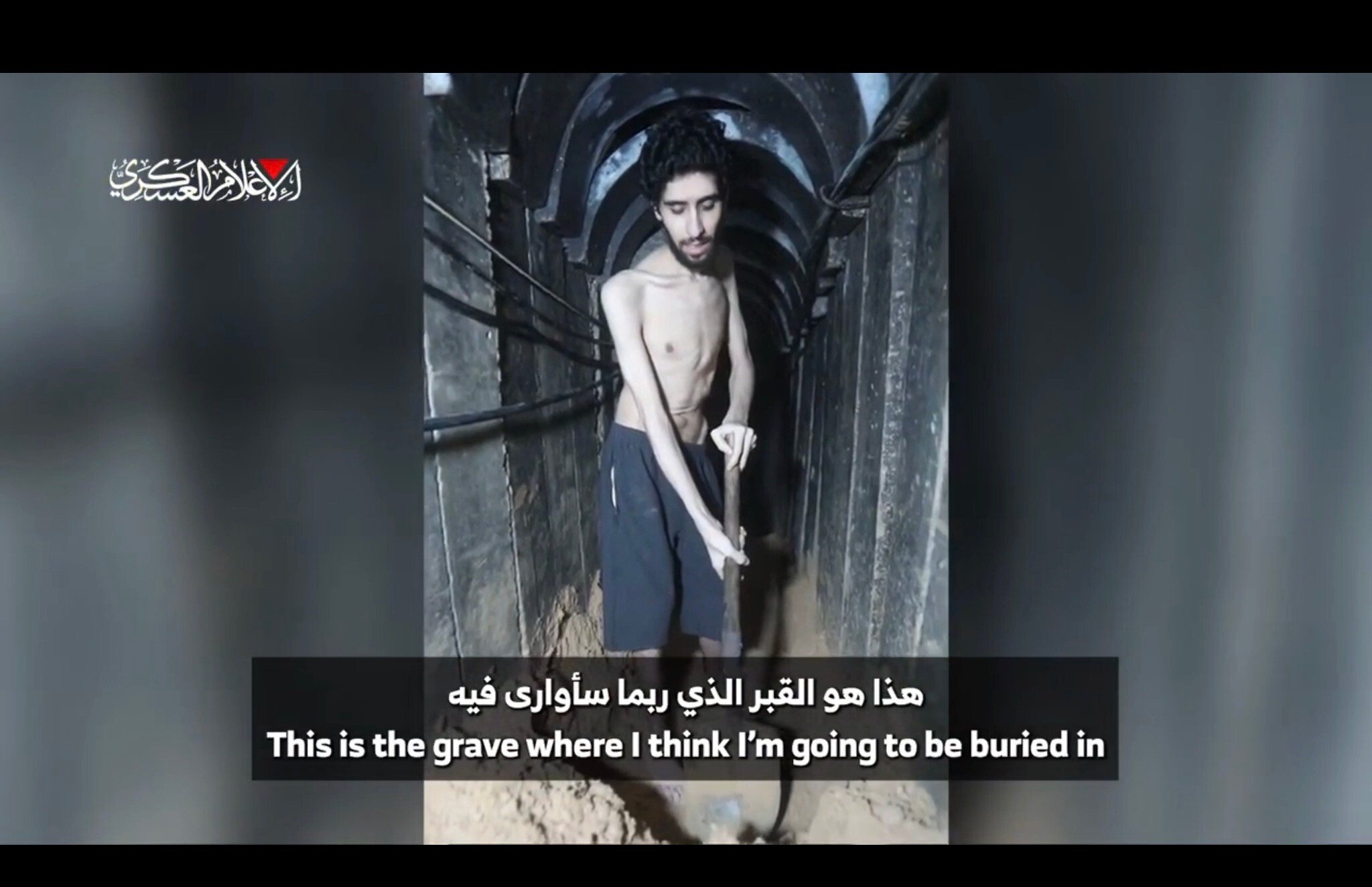
In a distressing video released by the Hamas terror group, hostage Evyatar David appeared visibly emaciated and weak—raising alarms regarding the humanitarian condition of hostages in Gaza. His family has reported that the footage confirms their fears he is being deliberately starved during his captivity, showcasing the stark reality of his grinding situation.
The video, released on Saturday, features David speaking in a frail voice, reportedly coerced by his captors to deliver specific remarks. One particularly jarring moment shows him digging what he fears will be his own grave, a haunting metaphor for his diminishing hope. David lamented, “I haven’t eaten for a few days,” asserting that his diet is limited primarily to lentils and beans. “I feel completely abandoned,” he expressed, addressing Israeli Prime Minister Benjamin Netanyahu, indicating the psychological toll of his captivity.
These developments come as U.S. Special Envoy Steve Witkoff visited Israel to offer support to families of the hostages. He emphasized that the U.S. is pursuing a comprehensive ceasefire and hostage agreement rather than piecemeal negotiations. This approach aims to alleviate suffering for both hostages and the residents of Gaza, yet faces significant challenges.
As tensions escalate, hundreds gathered in Tel Aviv’s Hostages Square to demand effective solutions and share their despair. Family members have erected a barbed-wire protest camp, symbolizing their loved ones’ captivity and drawing attention to the dire humanitarian conditions. Matan Zangauker’s mother poignantly stated, “Our children are undergoing a Holocaust,” emphasizing the urgency and gravity of the situation.
The videos’ distressing imagery reinforces ongoing accusations concerning the starvation of hostages and civilians in Gaza, further complicating the narrative. Israeli officials maintain that the allegations of starvation are manipulative propaganda, asserting that hostages’ captors are not lacking in provisions.
In times of distress, scripture brings a beacon of hope amidst despair. Matthew 25:40 states, “Whatever you did for one of the least of these brothers and sisters of mine, you did for me." This verse invites us to reflect on the inherent dignity and worth of all individuals, urging us to empathize with their suffering and contribute to a culture of compassion.
The broader takeaway from this situation challenge us all to consider how we, as a society, respond to humanitarian crises. As discussions about hostages and aid continue, it’s crucial to prioritize compassion over division, engaging in dialogue and action that seeks peace and restoration. Let us take this opportunity to reflect on the deeper spiritual implications of our actions and choices in the face of global crises. Each of us has a role to play in fostering understanding, healing, and ultimately, hope.
Explore and dig up answers yourself with our BGodInspired Bible Tools! Be careful – each interaction is like a new treasure hunt… you can get lost for hours 🙂