 0
0
 0
0
You know the feeling. Something ends — a diagnosis, a job, a relationship, a season you thought would look one way and didn’t — and then… nothing. No verdict. No next chapter. Just a long, quiet stretch where you’re not sure if anything is actually happening at all.
Most of us have lived at least one version of that in-between. It’s not the crisis itself that wears you down. It’s the silence after it — the not-knowing what comes next.
Here’s something that might surprise you: Jesus lived through that exact kind of silence too. Between the cross on Friday and the empty tomb on Sunday morning, there’s a day the Bible almost never talks about directly — and yet a handful of verses, tucked into one of Paul’s letters, quietly answer a question people have been asking for two thousand years: where was Jesus for three days?
Where Was Jesus for Three Days? What Ephesians 4:9 Actually Says
The question sounds simple. The Gospels tell us Jesus died on the cross Friday afternoon, was buried before sundown, and rose again early Sunday morning. But what happened in between — where was Jesus for those three days, in whatever sense a person can “be” somewhere after death — isn’t spelled out in a tidy paragraph anywhere in Matthew, Mark, Luke, or John.
The clearest hint comes from a letter Paul wrote to a church in Ephesus, years after the resurrection. In the middle of explaining why Jesus gives His followers gifts and callings, Paul pauses to make a point about Jesus’s own journey:
“Now that he ascended, what is it but that he also descended first into the lower parts of the earth? He that descended is the same also that ascended up far above all heavens, that he might fill all things.” (Ephesians 4:9-10, KJV)
Paul isn’t writing a travel itinerary. He’s making a theological point — the same Jesus who ascended to the highest place first went to the lowest place. But that phrase, “the lower parts of the earth,” has fascinated readers for centuries, because it seems to say something real about where Jesus actually was during those three days.
The Descent Before the Rise
Paul isn’t the only New Testament writer who hints at this. Peter, writing to a scattered, suffering church, drops an even more specific detail:
“For Christ also hath once suffered for sins, the just for the unjust, that he might bring us to God, being put to death in the flesh, but quickened by the Spirit: By which also he went and preached unto the spirits in prison.” (1 Peter 3:18-19, KJV)
Put Paul’s “lower parts of the earth” next to Peter’s “he went and preached unto the spirits in prison,” and you can see why, for most of church history, Christians have believed something happened in that gap — that Jesus wasn’t simply absent for three days, He was somewhere, doing something.
This idea is old enough to be written into one of the earliest summaries of Christian belief, the Apostles’ Creed, which includes the line “he descended into hell” right between “was crucified, dead, and buried” and “the third day he rose again.” Bible scholars have debated the details for two thousand years — whether “hell” here means the realm of the dead in general (what the Old Testament calls Sheol) or something more specific, and exactly who Jesus preached to and why. Good, faithful people land in different places on the fine points.
But here’s what almost everyone agrees on, and it’s the part that matters most: Jesus’s story didn’t skip from “dead” straight to “alive” like flipping a switch. There was a real gap. A real descent. A real period where, by every outward appearance, nothing was happening — no light, no victory, no visible sign that anything was about to change.
What Holy Saturday Was Actually Like
Christians have a name for that middle day: Holy Saturday. It’s the quietest day on the entire church calendar, and it’s quiet on purpose, because that’s exactly what it was.
Think about what the people who loved Jesus actually experienced that day. His mother. His closest friends. The women who had followed Him for years. As far as they knew, it was over. They weren’t waiting for a resurrection — they didn’t know one was coming. They were just sitting in loss, in silence, in a Sabbath they had to keep even while their world had collapsed.
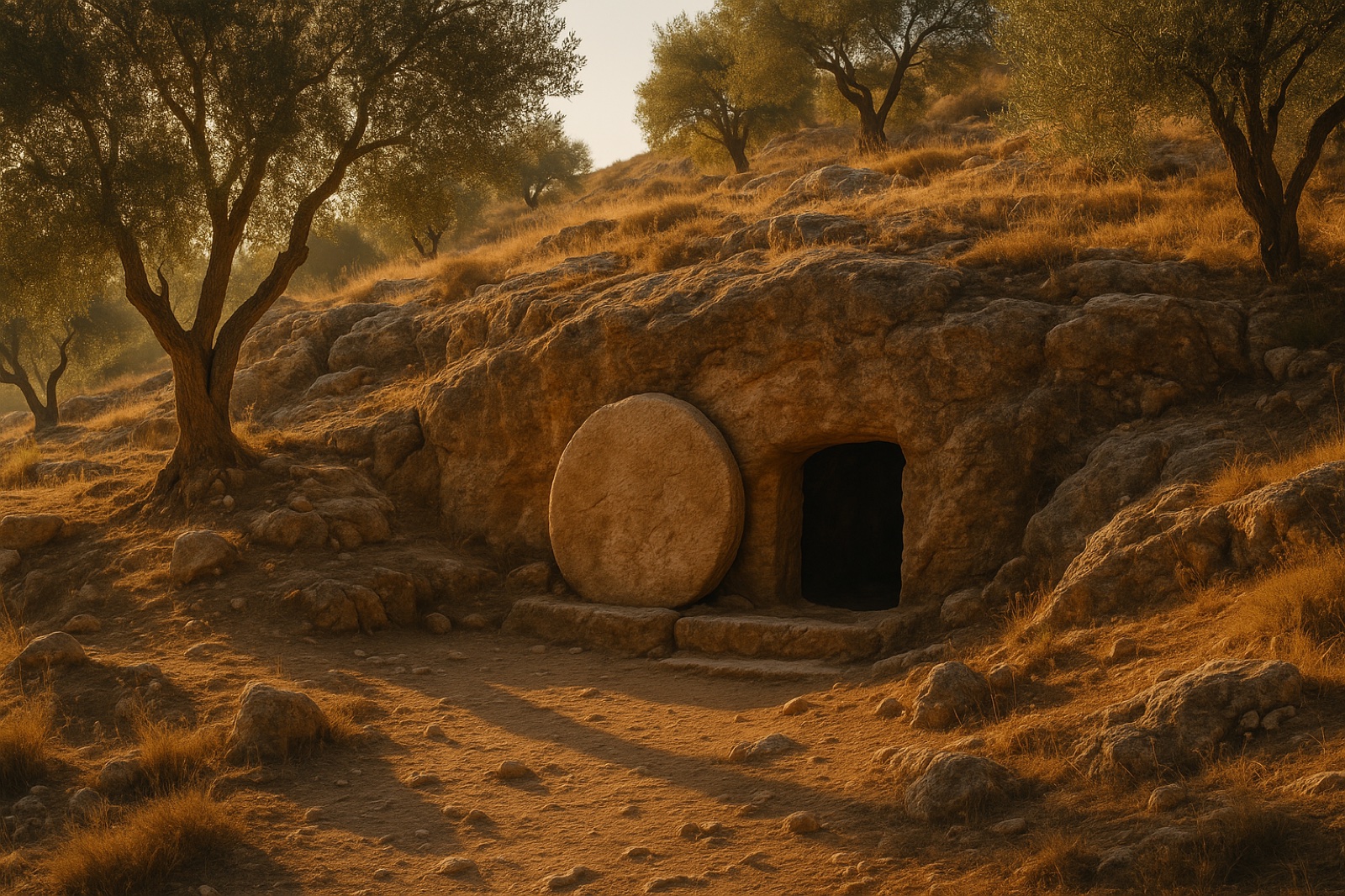
And Jesus — in whatever sense scripture is describing in Ephesians 4:9 and 1 Peter 3:19 — was in the deepest, most hidden place a person can go. Not visibly triumphant. Not yet risen. Descended.
That’s the part we tend to rush past when we tell the Easter story. We go from the cross straight to the empty tomb, because we already know how it ends. But the people living it didn’t get to skip Saturday. Neither, in a strange and real way, did Jesus.
The Turn: Your Own Silent Saturday
Here’s what changes when you actually sit with this: your own unresolved season — the one where you don’t have an answer yet, where the door hasn’t opened yet, where you’re stuck in the waiting with no explanation — isn’t proof that God has gone quiet on you.
It might just be your Saturday. Scripture is full of these stretches — Noah waiting on a boat, the Israelites waiting forty years in the wilderness, David waiting years between being anointed king and actually sitting on the throne. Waiting isn’t a glitch in the story God tells — it’s part of nearly every story God tells.
Jesus didn’t avoid the silence. He went through the deepest version of it there is — death itself, the lowest parts of the earth — before Sunday ever came. That means when you’re in a stretch of life where nothing visible is happening and you don’t know why, you’re not in a place Jesus is unfamiliar with. In fact, the Bible’s own definition of patience isn’t passive waiting — it’s staying under real pressure without giving up. That’s exactly what Holy Saturday asked of everyone who lived through it, and it’s exactly what your own waiting season is asking of you.
That’s what “God is near” actually means here. Not that God fixes the waiting instantly. Not that the silence isn’t real. But that you are not waiting alone, and you are not waiting outside of where God has already been. If you’re not sure how close God actually feels to you right now, this short assessment can help you find your honest starting point.
And Sunday came. It always does — maybe not on the timeline you’d choose, and maybe not looking the way you expected. But the same power that turned Saturday’s silence into Sunday’s empty tomb is not finished with your story either.
What to Do With This Today
You don’t need a theology degree to apply this. Try one of these before the day is out:
- Name your Saturday. In one sentence, write down what you’re actually waiting on God for right now. Not the polished version — the honest one. Naming it out loud, or on paper, is the first step out of pretending it isn’t there.
- Read Ephesians 4:9-10 twice. Read it once for what it says about Jesus. Then read it again, slowly, with your own waiting season in the back of your mind.
- Reach out to someone in their own “Saturday.” Think of one person you know who’s in a hard, unresolved in-between right now. Send them a short text today — not advice, just: “You’re not walking through this alone.” Let them borrow the truth you just read.
A Few Questions Worth Sitting With
Take a few minutes with these, either in a journal or just in your own head:
- What does “waiting” actually feel like in your body right now — not what you think it’s supposed to feel like?
- Where have you quietly assumed God’s silence meant God’s absence?
- What would change if you believed something real was happening in your waiting, even though you can’t see it yet?
A Prayer for the Waiting
God, I don’t always know what to do with the silence. Sometimes it feels like You’ve gone quiet on me, and I don’t understand why this season is taking so long. Help me remember that You were never a stranger to waiting — that You walked through the deepest silence there has ever been before Sunday ever came. I don’t need every answer today. I just need to know You’re near, even here, even now. Amen.
One Question for You
Do you think Holy Saturday gets skipped over too fast in how we usually tell the Easter story — jumping straight from the cross to the empty tomb? We’d love to hear your take in the comments.
Share This
- “I never thought about it this way: Jesus didn’t skip the waiting. He lived it. #HolySaturday”
- “Where was Jesus for three days? Turns out the Bible says more about it than I ever noticed. Ephesians 4:9 hits different now.”
- “If Jesus went through a silent, unresolved waiting season and it wasn’t the end of His story… maybe mine isn’t either.”
Questions People Ask
Where does the Bible say Jesus was for three days between His death and resurrection?
The Bible doesn’t give a single verse that spells it out plainly, but Ephesians 4:9-10 and 1 Peter 3:18-19 both point to Jesus descending to “the lower parts of the earth” and to “the spirits in prison” before His resurrection on the third day.
What does “the lower parts of the earth” mean in Ephesians 4:9?
Most Bible scholars read it as a reference to the realm of the dead — the place all people went after death in ancient Jewish understanding — meaning Jesus fully experienced death itself, not just its outward appearance.
Did Jesus go to hell after He died?
It depends on what “hell” means. The Apostles’ Creed’s line “he descended into hell” is closer to the old idea of Sheol, the general realm of the dead, rather than the place of eternal punishment — though Christians have debated the exact details for centuries.
What is Holy Saturday?
Holy Saturday is the day between Good Friday, when Jesus was crucified, and Easter Sunday, when He rose. It’s the quietest day in the Christian calendar, marking the time Jesus’s body was in the tomb and His followers were left in grief and uncertainty.
Why do Ephesians 4:9 and 1 Peter 3:18-20 get connected so often?
Both passages describe Jesus going somewhere — “the lower parts of the earth” in Ephesians, “spirits in prison” in 1 Peter — in the time between His death and resurrection, so readers naturally read them together as pieces of the same picture.