 0
0
 0
0
You’ve probably seen the quote. Maybe on a coffee mug, maybe in a caption under a sunset photo, maybe stitched onto a pillow in a Christian bookstore: “There is no pit so deep that God’s love is not deeper still.” It sounds like something you’d say to a friend going through a rough breakup or a hard year. Comforting. Safe. A little generic.
Here’s what almost nobody mentions when they share it: those words were first spoken inside one of the worst places a human being has ever stood — a Nazi concentration camp — by a woman who would be dead within weeks of saying them.
Once you know where the line actually came from, it stops sounding like a nice sentiment. It becomes a claim someone tested at the very bottom, and it held.
The Family Who Hid People Behind a Wall
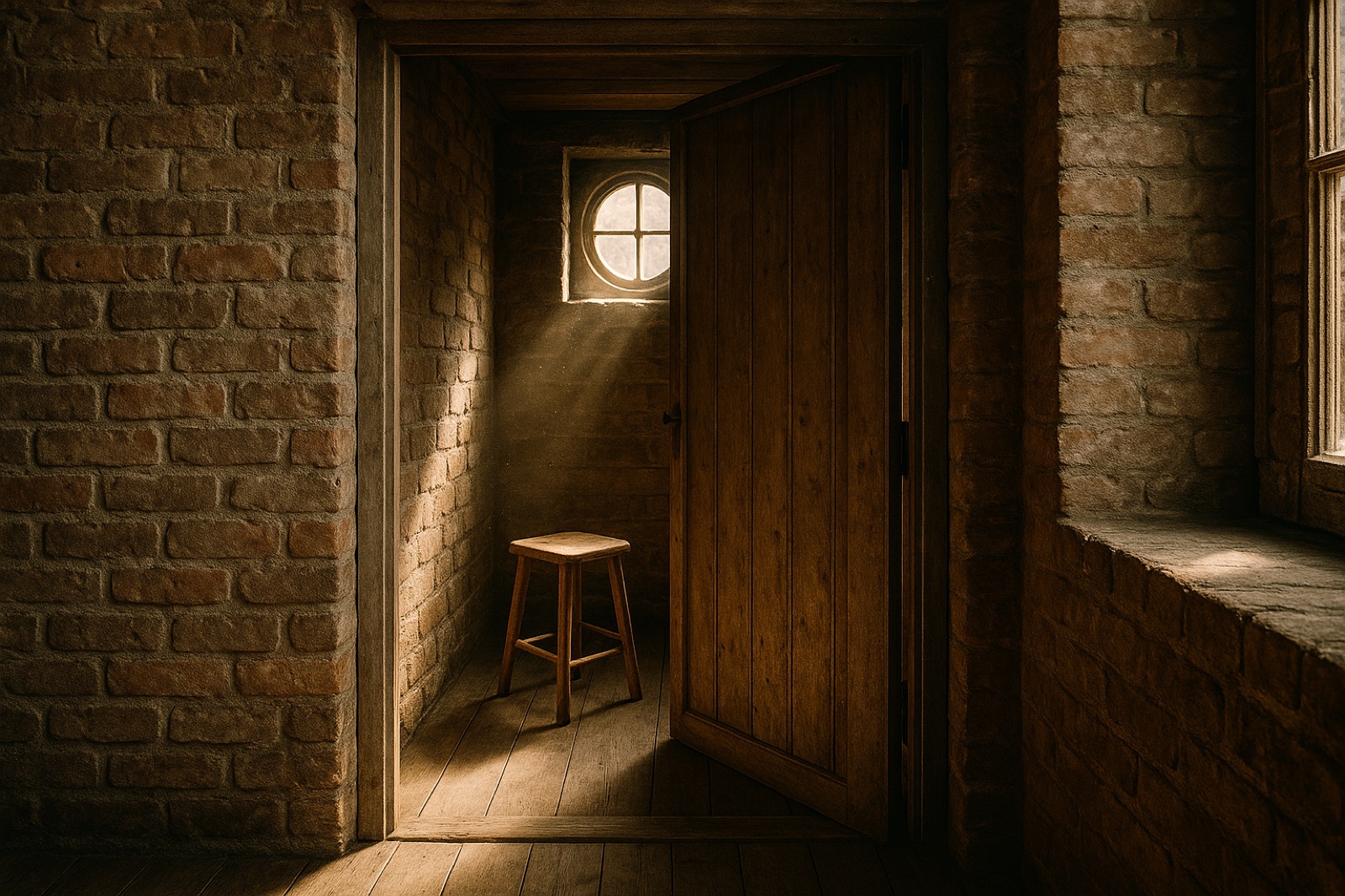
Corrie ten Boom grew up in Haarlem, Netherlands, in her family’s watch shop — the kind of place where the same family had repaired clocks for three generations. When the Nazis occupied the Netherlands and began rounding up Jewish neighbors, the ten Booms did something dangerous and simple: they built a hidden room, barely big enough to stand in, behind a false wall in Corrie’s own bedroom. For nearly two years they sheltered Jewish refugees and members of the Dutch resistance there, feeding them and moving them to safety when they could.
In February 1944, an informant turned them in. The Gestapo raided the house. The people hiding that day escaped through the secret room and survived — the ten Booms had built it well. But Corrie, her sister Betsie, and their elderly father were arrested. Corrie and Betsie were eventually transported to Ravensbrück, a concentration camp in Germany built specifically for women.
Where “No Pit So Deep” Was Actually Spoken
Ravensbrück was overcrowded, flea-infested, and brutal. Corrie and Betsie were assigned to the same barracks, sleeping on filthy straw, watched by guards who beat prisoners without provocation. It was there, not in a quiet moment of reflection back home, that the line was first spoken.
Corrie wrote later that she struggled with something specific: could God’s love really reach the guards themselves? Not the prisoners suffering under them — the guards doing the suffering to others. It’s one thing to believe God is close to the person in pain. It’s a much harder thing to believe His love reaches the person causing it. Betsie, weaker in body than Corrie by that point but somehow not weaker in conviction, is the one who answered: there is no pit so deep, that He is not deeper still.
She wasn’t reciting a verse. She was describing what she currently believed to be true, from inside a place built to make that belief look foolish. Betsie ten Boom died in Ravensbrück that December — one of the camp’s countless quiet deaths. Corrie was released days later, by a clerical error, she always said, not mercy — just before the women her age were scheduled to be killed. She carried her sister’s sentence out of that camp and repeated it in sermons, books, and interviews across the world for the next thirty-eight years, until people started calling it “her” quote. It was hers by then. But it was tested first in her sister’s mouth, in the one place on earth where it had the least right to be true.
The Older Version of the Same Line
Betsie ten Boom wasn’t the first person to test that idea in an actual pit. Centuries earlier, the prophet Jeremiah was lowered by ropes into a real one — an empty cistern used as a prison, no water in it, only thick mud at the bottom. “So Jeremiah sunk in the mire,” the account says plainly (Jeremiah 38:6). No metaphor. He was left there to die of exposure or starvation, whichever came first.
Jeremiah survived that pit, and what he wrote afterward, in Lamentations, reads like the same testimony from a different century: “I called upon thy name, O LORD, out of the low dungeon… Thou drewest near in the day that I called upon thee: thou saidst, Fear not” (Lamentations 3:55, 57). He didn’t say God removed the pit before He arrived. He said God drew near while Jeremiah was still in it — down in the mud, not calling encouragement from the rim above.
That’s the actual claim underneath both stories, one from around 587 BC and one from 1944: God doesn’t wait at the edge of the pit for you to climb out. He goes down into the mud first.
What Gets Lost When the Quote Becomes a Caption
Here’s the part that changes how you should read it. The quote isn’t saying “your bad day isn’t that bad, look how much worse Ravensbrück was.” That comparison would actually miss the whole point, and it would be a little cruel besides. Betsie wasn’t ranking pits. She was testing a floor — is there a bottom to how far God’s love reaches, or isn’t there? — and she tested it at the worst depth either she or Corrie could imagine.
If the floor held there, in a barracks with guards and typhus and no way out, it holds for whatever you’re actually in right now. A diagnosis you haven’t told your coworkers about. A marriage going quiet in the same house. A habit you can’t say out loud yet, even in prayer. The kind of exhaustion that looks fine from the outside while everything underneath is quietly cracking. You don’t need your pit to qualify by depth. Betsie already ran that test so you wouldn’t have to wonder if yours counts.
No pit is deep enough to out-reach God’s love.
3 Things to Do With This Today
- Name your actual pit in one sentence, in writing. Not the version you’d give if someone asked how you’re doing at church. The real one. Nobody has to read it but you.
- Read Lamentations 3:55-58 out loud, once, slowly. Say “I called upon thy name, O LORD” as your own sentence, not Jeremiah’s. Notice it doesn’t say the pit disappeared — it says God drew near inside it.
- Tell one person you trust that you’re in something hard right now. Not the whole story if you’re not ready. Just the fact of it. Betsie needed Corrie to hear her doubt spoken out loud before the answer could land. Yours might work the same way.
If waiting on God in silence feels familiar, Habakkuk went through his own version of this — years without an answer, and a decision about what to do with the waiting anyway. And if what you’re carrying shows up more at 3 a.m. than in daylight, Job’s sleepless nights are worth a read too.
A Prayer for Whatever Pit You’re In
God, I don’t want to pretend this is smaller than it is. It’s heavy, and some days I don’t know if you can even hear me from down here. But Betsie believed you could reach the bottom of a concentration camp, and I have never been anywhere close to that deep. So I’m calling up anyway, even before I feel you answer. Meet me here, in the mud, before you ever pull me out. Amen.
One Question Worth Sitting With
Do you think it’s harder to actually believe “God is deeper than this” before you’ve survived your worst moment, or after? Tell us which one is true for you in the comments below.
Share This
- Learned today that the line “there is no pit so deep” wasn’t written as a comforting caption. It was tested by a woman inside a concentration camp, weeks before she died there. That changes how I read it.
- I keep forgetting my pit isn’t too deep for God to reach. Somebody already believed that from inside Ravensbrück. I think I can believe it from here.
- No pit is deep enough to out-reach God’s love. Someone tested that from the worst place on earth. I’m testing it from mine.
Common Questions
Did Corrie ten Boom actually say “there is no pit so deep”?
The line is remembered as Corrie ten Boom’s because she repeated it for decades in her books and sermons after WWII, but in her memoir The Hiding Place, it’s her sister Betsie who speaks it first — inside Ravensbrück concentration camp, in response to Corrie’s doubt that God’s love could reach even the guards.
What happened to Betsie ten Boom?
Betsie ten Boom died in Ravensbrück concentration camp in December 1944, worn down by illness and the camp’s brutal conditions. Corrie was released just days later, due to a clerical error, shortly before the women in her age group were scheduled to be killed.
What was “the hiding place”?
The Hiding Place was a small secret room built behind a false wall in Corrie ten Boom’s bedroom in Haarlem, Netherlands. Her family used it to shelter Jewish refugees and Dutch resistance members from the Nazis for almost two years before being betrayed and arrested in 1944.
What does the Bible say about being in a “pit”?
The prophet Jeremiah was literally lowered into an empty cistern and left to sink in the mud (Jeremiah 38:6). Afterward he wrote that God drew near to him while he was still down there, not after he climbed out (Lamentations 3:55-58) — a pit that God enters rather than one He simply watches from above.
How do I actually believe God is with me in my own hard season?
Start smaller than “believe it always.” Name the actual thing you’re facing in one honest sentence, read Jeremiah’s words as your own, and tell one trusted person what’s really going on. Belief usually grows from those three small, specific actions more than from trying to feel certain all at once.