 0
0
 0
0
Finding Peace Amidst Nighttime Anxiety: A Christian’s Guide to Conquering Sleeplessness After 50
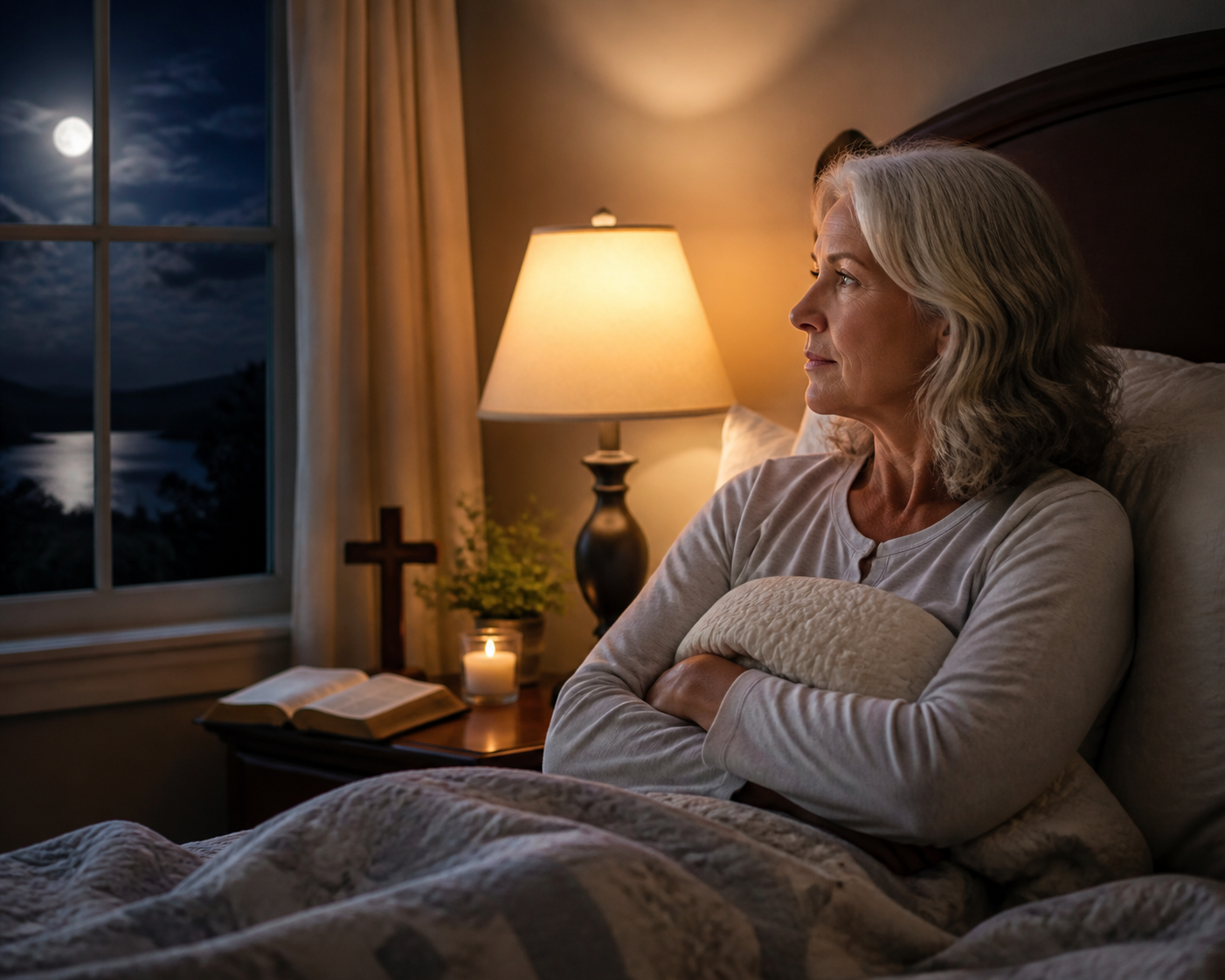
Ever find yourself lying awake at night, heart racing and thoughts spiraling out of control? You’re not alone. Nighttime can feel like an uninvited guest—a time when worries over finances, family, and purpose seem to loom larger than life. It’s not just a minor inconvenience; it eats at your energy, looms over your day, and frays your sense of peace.
It’s easy to feel isolated in this struggle, especially when faith doesn’t seem to ease the burden. You’ve prayed, asked for clarity, and maybe even tried to be grateful amidst the chaos—but those racing thoughts still flicker like a faulty light bulb in the dark. You just want to close your eyes and sleep peacefully, and yet, here you are, wrestling with anxiety.
Embracing the Tension
Life after 50 can bring a unique set of challenges, and it’s often accompanied by a brew of concerns: aging, health, family dynamics, or the loss of purpose. The world can feel overwhelmingly loud during those late-night hours, and it’s in that silence we can hear our thoughts more clearly—yet, sometimes, too clearly.
This is where we start to dig. We might remember the words from 1 Peter 5:7 that tell us to cast our cares on Him because He cares for us. But if you’re anything like me, simply remembering that verse doesn’t always quiet the mind. It’s one thing to know God cares; it’s another to feel it in the core of your being.
So what does it truly mean to ‘cast our cares’? It’s a call to action, but it’s also a heart posture. Taking a moment to release control is hard, especially when the mind refuses to cooperate. Catching yourself in the whirlwind of thoughts isn’t easy; it takes practice and patience.
A Different Perspective
What if we viewed nighttime anxiety not just as a problem to solve, but as an opportunity to embrace? During the stillness of the night, God invites us to connect with Him on a deeper level. Instead of fighting against sleeplessness, we could shift our approach and invite peace in.
Instead of asking God to remove our anxious thoughts, we could ask Him to guide us through them. Philippians 4:6-7 encourages us to bring our worries to Him and instead, receive His peace—His peace that surpasses all understanding.
Imagine approaching those restless hours as sacred time. When thoughts flood in, rather than dismissing them or feeling ashamed, we greet them with a prayer. “Lord, this worry is heavy; I need your help to carry it.” It reframes our anxious hearts and directs our focus to the One who holds our tomorrows.
Bringing It Home
We don’t have to wrestle with anxiety alone. Sometimes, it takes a little practical wisdom alongside spiritual truth to find that peace you seek. Here are a few steps you can take in the next few minutes:
-
Settle into Stillness: Find a cozy spot (even if it’s just a comfortable chair). Close your eyes and spend a few moments breathing deeply. With each exhale, imagine letting go of one worry.
-
Write It Down: Keep a notepad by your bedside. When thoughts race, jot them down. This helps to clear your mind and vocalize what’s troubling you.
-
Scripture Meditation: Choose a verse that resonates with you—like 1 Peter 5:7—and meditate on it before bed. Let it wash over you as you turn off the lights.
A Closing Conversation with God
So, God, here I am, feeling anxious and restless. I know I’m meant to trust you, yet my thoughts keep circling. I ask for your peace to settle over my heart tonight. Help me hand over my worries, one by one. I need your comfort to fill the space where anxiety wants to sit. Thank you for being my refuge. Amen.
Journaling Prompts
- What feelings arise when you think about your nighttime anxieties?
- How have your worries shifted since turning 50?
- When have you felt God’s peace during a turbulent moment?
Actions to Take
- Find a quiet spot for five minutes today and practice deep breathing.
- Jot down three worries before bedtime tonight and lay them at God’s feet.
- Select a calming bedtime routine—like reading or gentle stretching—and commit to it this week.
Discussion Question
How do you typically cope with nighttime anxiety? Let me know in the comments.
Social Share Posts
-
"Tired of sleepless nights filled with anxiety? I just found some peace in the chaos! Check out this article on conquering nighttime worries after 50: https://bgodinspired.com/index.php/health-and-wellness/finding-peace-amidst-nighttime-anxiety-a-christians-guide-to-conquering-sleeplessness-after-50/ #PeaceInTheNight"
-
"God cares for us, but it’s hard to remember that when the mind races at night. Let’s explore how to find peace amidst anxiety: https://bgodinspired.com/index.php/health-and-wellness/finding-peace-amidst-nighttime-anxiety-a-christians-guide-to-conquering-sleeplessness-after-50/ #FaithAndWellness"
-
"Finding peace after 50 isn’t just about sleep; it’s about a heart posture. Discover how to approach nighttime anxiety in a fresh way: https://bgodinspired.com/index.php/health-and-wellness/finding-peace-amidst-nighttime-anxiety-a-christians-guide-to-conquering-sleeplessness-after-50/ #FaithJourney"
Let’s take this journey together, one calming breath at a time.
If nighttime anxiety or racing thoughts are keeping you from rest, the free guide “Why Your Mind Won’t Slow Down At Night” was written specifically for Christians 50+ who want practical, faith-grounded support. Download it free: Why Your Mind Won’t Slow Down At Night
If positive Biblical wisdom matters to you, I’d love your support of the mission
Q&A about feeling alone in the dark
I feel really alone in the dark at night; what does the Bible say about loneliness?
God understands our loneliness, as even Jesus experienced deep sorrow and isolation before His crucifixion (Matthew 26:38). In those moments, remember that He promises to never leave us nor forsake us (Hebrews 13:5). Lean on prayer during those dark times, allowing His presence to bring comfort.
How can I cope with feeling alone when I know God is with me?
Trusting in God’s presence can be challenging when feelings of loneliness overwhelm us. In Matthew 28:20, Jesus assures us that He is with us always, even to the end of the age. Practicing gratitude by reminding yourself of God’s consistent faithfulness can help shift your perspective.
Is it wrong to feel scared and lonely in the dark, even with faith?
Feeling scared or lonely is a human experience, and it doesn’t negate your faith. Jesus often encouraged His followers not to fear (John 14:27), reflecting that it’s natural to feel fear but vital to focus on His peace. Bringing your fears to Him in prayer can help transform those feelings into reassurance.
How can I find comfort in Scripture when I’m feeling alone and afraid?
Reading the Psalms can offer profound comfort, as many verses express feelings of fear and loneliness, yet end in declarations of faith in God’s goodness (Psalm 34:18). Jesus invites us to cast our burdens on Him (Matthew 11:28-30), and meditating on His words can provide strength and hope during your darkest nights.