 0
0
 0
0
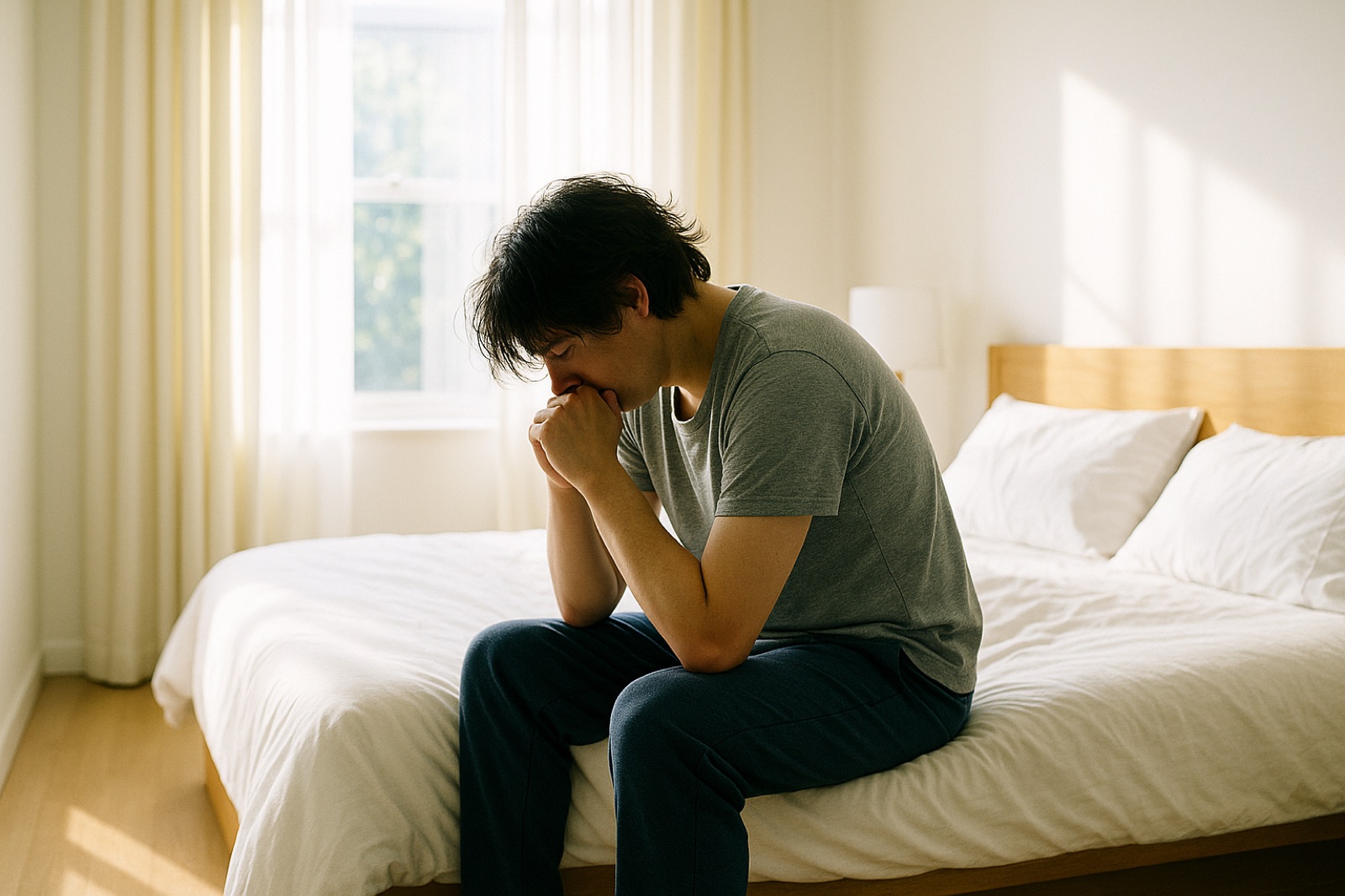
It’s 2:14 a.m. and you already know how this goes. You weren’t even thinking about anything scary when you closed your eyes — but somewhere between the ceiling fan’s hum and the neighbor’s dog barking twice, your mind found the one thought it wanted: what if something happens? To your health. To your kids. To the job that feels shakier than it did last year. The dark has a way of making every “what if” sound like a certainty.
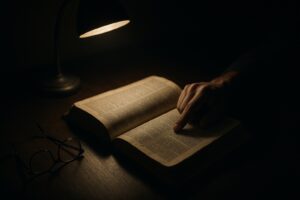
So you lie there. Still. Rigid. Doing the thing so many of us do at 2 a.m. — reaching for a verse the way you’d reach for a nightlight. Psalm 91 gets recited a lot in moments like this, almost like a formula: say the right words, and the fear has to leave. But if you’ve ever finished reciting it and still felt your heart pounding in the dark, you know the formula doesn’t always work the way it’s marketed.
What if Psalm 91 was never meant to be a spell you say correctly? What if it’s an invitation to actually rest somewhere — not a password to unlock protection, but a place to go when the night gets loud?
What Psalm 91 Actually Says, Slowly
“He that dwelleth in the secret place of the most High shall abide under the shadow of the Almighty. I will say of the LORD, He is my refuge and my fortress: my God; in him will I trust” (Psalm 91:1-2, KJV).
Picture where this psalm comes from. This isn’t written for people with climate control and deadbolts. This is written for people who lived exposed — shepherds, travelers, families in unwalled villages, soldiers on watch. In that world, “the secret place” and “the shadow of the Almighty” weren’t poetic abstractions. They were physical realities. A traveler caught in the open desert at midday didn’t survive by willpower; he survived by finding the cleft of a rock, the narrow shadow cast by a cliff face, the one sliver of shade that meant the difference between collapse and survival. “Shadow” here isn’t decoration. It’s shelter you can feel on your skin. “Fortress” carried the same weight. A fortress wasn’t a symbol of safety — it was where you physically ran when raiders were spotted on the ridge. These words describe somewhere you go, not something you say.
Then the psalm gets specific about what kept people up at night in the ancient world too: “Thou shalt not be afraid for the terror by night; nor for the arrow that flieth by day” (Psalm 91:5). Night terror, in that time, was not abstract anxiety — it was the real fear of raiders who attacked under cover of darkness, of wild animals that hunted at night, of sickness that seemed to strike households while they slept. The “arrow that flieth by day” was ambush warfare, sudden and visible. Together, the verse covers both kinds of fear humans have always carried: the fear we can’t see coming, and the fear we can see coming and still can’t stop.
Which is exactly why this psalm has been prayed over sickbeds, spoken at gravesides, and whispered into pillows for thousands of years. Jewish tradition has long treated Psalm 91 as a psalm for protection at night specifically — a passage generations have turned to right before sleep, when the body is at its most vulnerable and the mind is at its loudest. You are not the first person to need these words at 2 a.m. You are joining a very long line of the tired and the afraid.
The Turn: This Was Never a Formula
Here’s the detail that changes everything, and it’s sitting right in the first word of the psalm: dwelleth. The Hebrew word behind it, yashab, doesn’t mean “recite” or “invoke.” It means to sit down. To settle. To remain. It’s the same word used for someone moving into a house to actually live there — not visiting, not passing through, not saying a magic phrase at the door and leaving. That’s not the language of a formula. A formula is something you perform once, correctly, and then the effect is triggered. Dwelling is not a performance — it’s a posture. It’s staying somewhere.
So when fear shows up at 2 a.m. and the instinct is to say the verse fast and hope it works like a charm, the psalm is quietly correcting that instinct. It was never asking you to get the words right. It’s inviting you to actually stay — to settle your attention, however briefly, in the nearness of God, rather than in the spiral of what-ifs. The protection described here isn’t a transaction you complete by reciting correctly. It’s a relationship you lean into, especially in the exact moment you feel least safe. That’s the difference between gripping a verse like a weapon and actually resting in a presence. One is exhausting. The other is what the psalm was describing the whole time.
You don’t need the right words to be safe tonight. You need to stop gripping and start staying.
A 5-Minute Meditation for Right Now
You don’t have to wait until morning to put this into practice. If you’re reading this at night, with your heart still racing, try this — right where you are, right now:
- Minute 1 — Name it out loud, quietly. Whisper the actual fear. Not “I’m anxious” — the specific thing. “I’m afraid of the biopsy results.” “I’m afraid I can’t pay rent.” Vague fear festers in the dark; naming it starts to drain its power.
- Minute 2 — Read verse 1 slowly, three times. Not to unlock anything. Just to let the picture form: a shadow, a shelter, somewhere to stand. Let your body actually notice you’re safe in this bed, in this room, right now.
- Minute 3 — Breathe with the fortress image. Inhale for four counts thinking “he is my refuge.” Exhale for four counts thinking “my fortress.” Do this five times. This isn’t a trick — it’s what dwelling actually feels like in your body.
- Minute 4 — Stay, don’t perform. Resist the urge to recite anything else. Just remain quiet in God’s presence the way you’d sit quietly next to a friend who already knows what’s wrong. You don’t have to explain it again.
- Minute 5 — Hand it over, specifically. Say the fear’s name once more, and this time add: “This is Yours tonight.” Not as a magic release valve — as an honest handoff to Someone who is already there.
This is worth pairing with a wider look at your nights, not just this one. If tonight is part of a longer pattern, these seven ways to calm racing thoughts at night go deeper into building a nightly rhythm, not just a one-night rescue.
2 Actions to Take
- Tonight, before you turn off the light: write the specific fear on a sticky note or in your phone’s notes app, then write “Psalm 91:2 — my refuge” underneath it. Keep it on your nightstand. When fear wakes you again, you read it instead of spiraling fresh.
- Tomorrow morning: read this piece on facing morning dread with Psalm 91 — it picks up exactly where tonight leaves off, so the practice doesn’t stop when the sun comes up.
Journal It Out
- What’s the actual, specific fear that’s been showing up at night lately — not the general feeling, but the real sentence underneath it?
- When you picture “the shadow of the Almighty,” what does it look like for you? A place, a memory, a feeling of being covered?
- What would it look like this week to “dwell” instead of just reciting — to actually stay in God’s presence a little longer than usual?
A Prayer for Tonight
God, I’m tired of gripping these words like they’re the only thing keeping me safe. Tonight I just want to stay near You instead of performing my way through this fear. You already know what’s keeping me up — I don’t have to explain it again. Be the shadow over me right now, the actual shelter, not just a phrase I say. Help me settle instead of spiral. Amen.
Let’s Talk About It
Do you think most of us treat Bible verses more like formulas to recite correctly, or like an actual place to rest? Tell us in the comments — we’d love to hear how you’ve experienced this difference.
Share This
- “I keep learning that Psalm 91 was never a spell — it’s an invitation to actually stay somewhere safe. Big difference at 2 a.m.”
- “Dwelling isn’t reciting. It’s staying. That one word changed how I read Psalm 91 tonight.”
- “You don’t need the right words to be safe tonight. You need to stop gripping and start staying. — reading about Psalm 91 differently today.”
Questions People Ask About Psalm 91 and Nighttime Fear
Is it okay to recite Psalm 91 every night before bed?
Yes — there’s a long history of exactly this practice. The key is to let it be a way of settling into God’s presence rather than a performance you’re afraid to get wrong. There’s no “correct” number of times to say it for it to count.
Why does fear always feel worse at night?
Darkness removes visual distraction and quiets the world around you, which means your mind has nothing to compete with the fear for attention. Psalm 91 was written into a world that understood this — verse 5 names “the terror by night” specifically, as its own category of fear, separate from daytime dangers.
What does “the secret place of the most High” mean?
In the psalm’s original desert setting, it likely evokes a literal hidden shelter — a cleft in a rock or a shaded overhang used for real physical protection from heat, predators, or raiders. Spiritually, it points to the practice of settling into an ongoing closeness with God rather than a one-time refuge you visit once.
Does praying Psalm 91 mean bad things won’t happen to me?
The psalm isn’t a guarantee against hardship — it’s a promise of God’s nearness inside hardship. The invitation is to dwell in that nearness continually, not to treat the words as a shield that makes fear impossible.
What’s a good way to use this if I wake up afraid in the middle of the night, not just at bedtime?
The same 5-minute meditation works at 2 a.m. as it does at 10 p.m. Name the specific fear, read the verse slowly, breathe with the imagery, stay quiet in God’s presence, then hand the fear over by name. It’s not about the clock — it’s about the posture.