 0
0
 0
0
You’re at a wedding reception, glass of wine in your hand, when someone leans over and says, “Wait — I thought you were the church person.” You laugh it off, but the question sits with you longer than you’d like to admit. Is this actually okay? You’ve heard both sides your whole life — the youth pastor who said alcohol was off-limits, full stop, and the relative who quotes “wine gladdens the heart” like it settles the whole thing. Almost nobody ever showed you the actual story that started this conversation two thousand years ago. So let’s go there.
The Wedding Where Jesus Made 150 Gallons of Wine
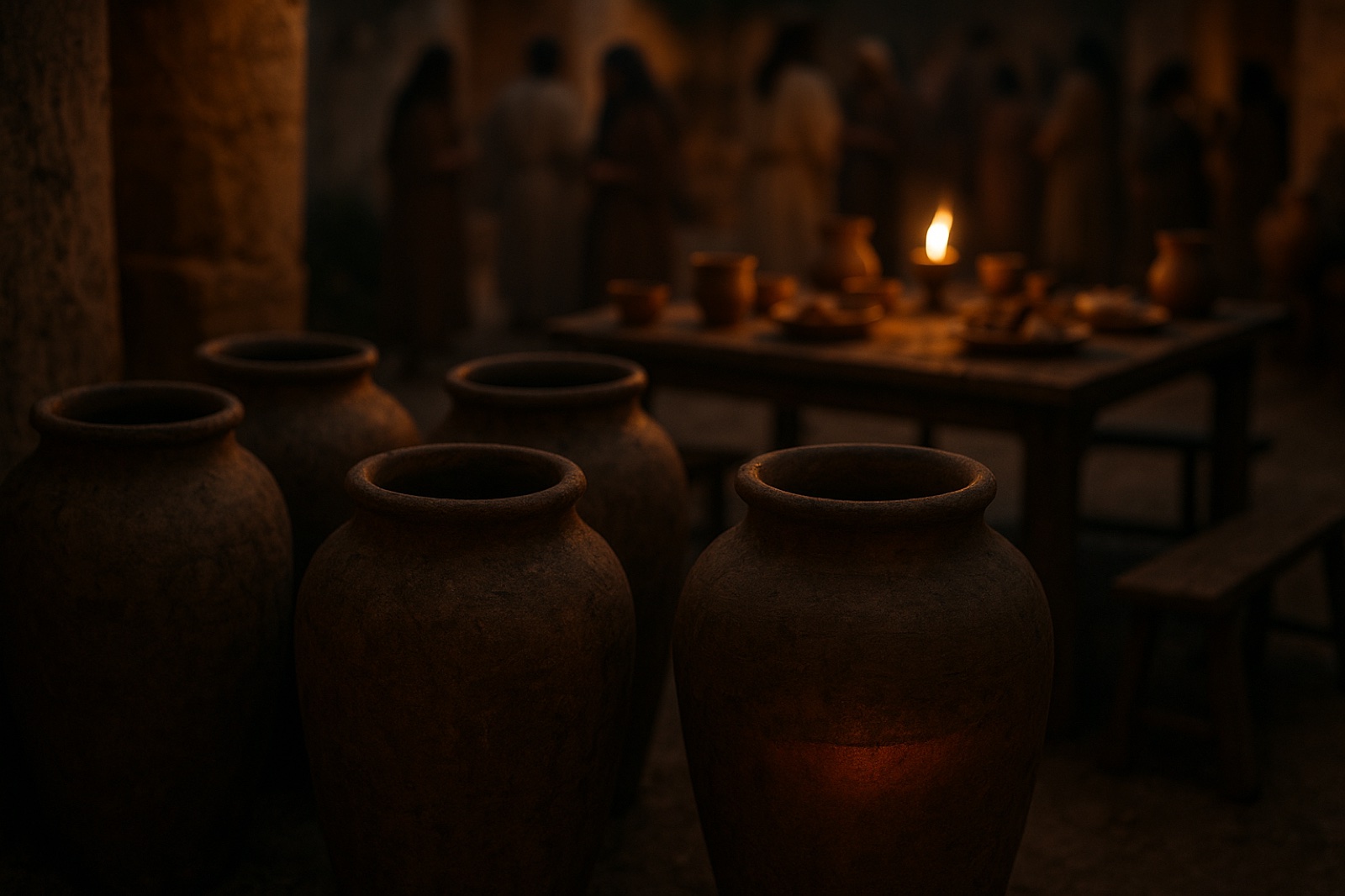
It’s John 2, and it’s Jesus’s very first public miracle — not a healing, not a sermon, a wedding. Weddings in first-century Galilee could run for days, and running out of wine wasn’t a minor hiccup. It was a lasting social disgrace for the host family. So when the wine runs dry, Mary turns to her son. Jesus tells the servants to fill six stone jars with water — each one holding roughly 20 to 30 gallons, somewhere around 150 gallons total — and when it’s drawn out, it’s wine. Not just wine. The best wine anyone at that party had tasted all night. The master of the banquet, who has no idea what just happened, pulls the bridegroom aside and says it plainly: “Every man at the beginning doth set forth good wine; and when men have well drunk, then that which is worse: but thou hast kept the good wine until now” (John 2:10, KJV).
Read that again. Jesus’s first recorded miracle wasn’t rescuing someone from disaster in some dramatic, life-or-death sense. It was making a party better. That’s worth sitting with before we go any further.
The Word Nobody Tells You About
Here’s the detail that gets left out of most Sunday school versions of this story: the Greek word John uses for what Jesus made is oinos — the standard, ordinary word for fermented wine. Not gleukos, the word the New Testament uses elsewhere for unfermented, “sweet” grape juice. This wasn’t grape juice with a miracle label on it. It was real wine, and the banquet master’s comment about it being better than what came “at the beginning” only makes sense if it actually was wine with real character.
It’s true that wine in the ancient world was often mixed with water — sometimes two or three parts water to one part wine — partly for taste, partly because water alone wasn’t always safe to drink. But diluted wine is still wine. In the ancient Near East, wine wasn’t a rare indulgence; it was daily provision, woven into meals, feasts, and worship, described in the Psalms as a gift from God’s own hand: “wine that maketh glad the heart of man” (Psalm 104:15). If you want to go deeper on how this shows up elsewhere in Jesus’s story, wine appears again at the Last Supper, where He reframes the cup entirely — I’ve written about what that new covenant moment actually means.
So What About the Warnings?
This is where a lot of us stop reading too early. Because yes — the Bible warns about alcohol, repeatedly and seriously. Proverbs says, “Wine is a mocker, strong drink is raging: and whosoever is deceived thereby is not wise” (Proverbs 20:1). Paul writes to the Ephesians, “be not drunk with wine, wherein is excess; but be filled with the Spirit” (Ephesians 5:18). Those aren’t small warnings. But notice what they’re actually warning against — not the presence of wine, but the loss of control. Mockery, raging, excess, drunkenness. The target of the warning is what happens when the drink becomes the master.
Which is exactly why it’s worth noticing that same Paul, writing a private, pastoral letter to his protégé Timothy, says something very different: “Drink no longer water, but use a little wine for thy stomach’s sake and thine often infirmities” (1 Timothy 5:23). Paul isn’t contradicting himself. He’s showing you the actual shape of the Bible’s position — not prohibition, but wisdom. Not “never,” but “never let it own you.”
Jesus Isn’t the Enemy of Your Pleasure
Jesus didn’t come to ban your joy — He came to redeem it.
Here’s the Turn. The question “is drinking alcohol a sin?” fundamentally misunderstands what the Bible’s warnings are aimed at. It treats the Bible like a rulebook with a yes/no answer waiting to be found, when what scripture actually hands you is a posture — a way of asking better questions. Not “is the substance allowed,” but “does this control me, or do I control it? Am I reaching for this to celebrate what’s good, or to numb what’s broken? Would I be comfortable with someone I love watching exactly how I use this?” That’s a much harder question than a rule. It’s also a much more honest one.
Jesus stood in a room full of people already enjoying themselves and made the party better. That tells you something about how God actually feels about your joy. He’s not rationing it. He’s not waiting for you to prove you deserve it. He’s the God of abundance — six jars, a hundred and fifty gallons, more than any wedding party could finish. The warnings in scripture aren’t there because God is stingy with pleasure. They’re there because He knows exactly how good things get twisted into things that own us instead of gifts we’re grateful for.
What This Means for Your Next Dinner Table
So what do you actually do with this? Not a rule to memorize — a few honest questions to carry into real moments. If you’ve spent years either white-knuckling a “never” that scripture never actually commanded, or drinking on autopilot without ever asking why, both of those are worth examining. This isn’t about finding a loophole or finding a new law. It’s about trusting God with something scripture leaves, on purpose, in your hands. If you’ve wrestled with where the actual line is on things like this, I’ve also written about whether it’s wrong to enjoy parties or the occasional drink — it’s the same question from a different angle.
Three Things to Do Today
- Ask the honest question before your next drink. Before you pour anything this week, pause for ten seconds and ask: “Am I doing this to celebrate, or to escape?” Write the honest answer in your notes app. You don’t have to act on it yet — just tell yourself the truth.
- Read Ephesians 5:15-18 in full, not just the drunkenness verse. Notice what Paul places right next to his warning — “be filled with the Spirit.” He’s not contrasting wine with abstinence. He’s contrasting one way of losing yourself with another way of being genuinely filled. That’s a completely different message than the one most of us were handed.
- Say the quiet part out loud to someone you trust. If you’ve been carrying guilt over something scripture never actually called sin — or minimizing something scripture is genuinely warning you about — tell one person today. “Here’s what I actually read, and here’s where I think I’ve gotten this wrong.” That conversation is where real freedom usually starts.
Journal On This
- Where have you carried guilt over something the Bible never actually called sin — and where did that rule really come from?
- If Jesus were standing at your table this week, what do you think He’d actually be watching for — the drink in your hand, or something happening in your heart?
- What’s one place you’ve been afraid to walk in the freedom scripture actually gives you, because you weren’t sure it was allowed? What would it look like to trust God’s wisdom over a rule — the same trust Proverbs 3:5-6 asks of you in every gray area of life, not just this one?
God, I don’t want to build rules you never asked me to build, and I don’t want to use freedom as a cover for something that’s actually hurting me. Show me the difference between the two. Help me tell the truth about what’s really going on when I reach for a drink — or for anything else I use to unwind or escape. I want the kind of joy you made at that wedding: full, honest, and never something I have to hide from you. Thank you for being a God of abundance, not a God of fine print. Amen.
Where do you think the actual line is — between wisdom and legalism, when it comes to things scripture leaves open rather than flatly forbidding? Drop your answer in the comments. I’d genuinely love to hear how you think about it.
Share This
- Jesus’s first miracle wasn’t healing someone or calming a storm. It was making 150 gallons of really good wine at a wedding party. I’ve never read that story the same way since. #WhatDoesTheBibleSay
- Turns out the Bible’s warnings about alcohol were never really about the drink itself — they’re about what controls you. Wisdom, not a rulebook. Read this if you’ve ever felt guilty over a glass of wine.
- “Jesus didn’t come to ban your joy — He came to redeem it.” That line has been sitting with me all day.
Quick Questions, Honest Answers
Does the Bible say drinking alcohol is a sin?
No — scripture never flatly forbids alcohol itself. What it repeatedly warns against is drunkenness, excess, and letting alcohol control you (Proverbs 20:1, Ephesians 5:18). Jesus himself made wine at a wedding in John 2, and Paul told Timothy to use “a little wine” for his health (1 Timothy 5:23). The Bible’s concern is mastery, not the substance.
What kind of wine did Jesus make at the wedding in Cana?
Real, fermented wine. John uses the Greek word oinos, the standard term for wine that had gone through fermentation — not gleukos, the word for unfermented grape juice. The master of the banquet even remarked it was better than what had been served earlier (John 2:10), which only makes sense if it was genuine wine with genuine character.
Why did Jesus make so much wine — around 150 gallons?
The six stone jars held roughly 20 to 30 gallons each, putting the total somewhere around 120 to 180 gallons — commonly rounded to about 150. Running out of wine at a wedding was a real social disaster in that culture, and Jesus didn’t just solve the shortage. He provided lavish, high-quality abundance, which says something about how God responds to real human need.
Is it a sin for a Christian to drink alcohol today?
Scripture leaves this in the category of Christian freedom, not command. Romans 14 and 1 Corinthians 10 both address disputable matters like this: some believers will drink in moderation with a clear conscience, others will abstain for personal conviction, health, family history, or care for someone struggling with addiction — and both choices can honor God when made thoughtfully (Romans 14:5).
What does the Bible actually warn about when it comes to alcohol?
Three things, consistently: drunkenness (Ephesians 5:18), letting it master you or cause you to stumble (1 Corinthians 6:12), and causing someone weaker in faith to sin by following your example (Romans 14:21). The warnings target loss of control and harm to yourself or others — not the drink itself.