 0
0
 0
0
When Mikaela Shows Mercy
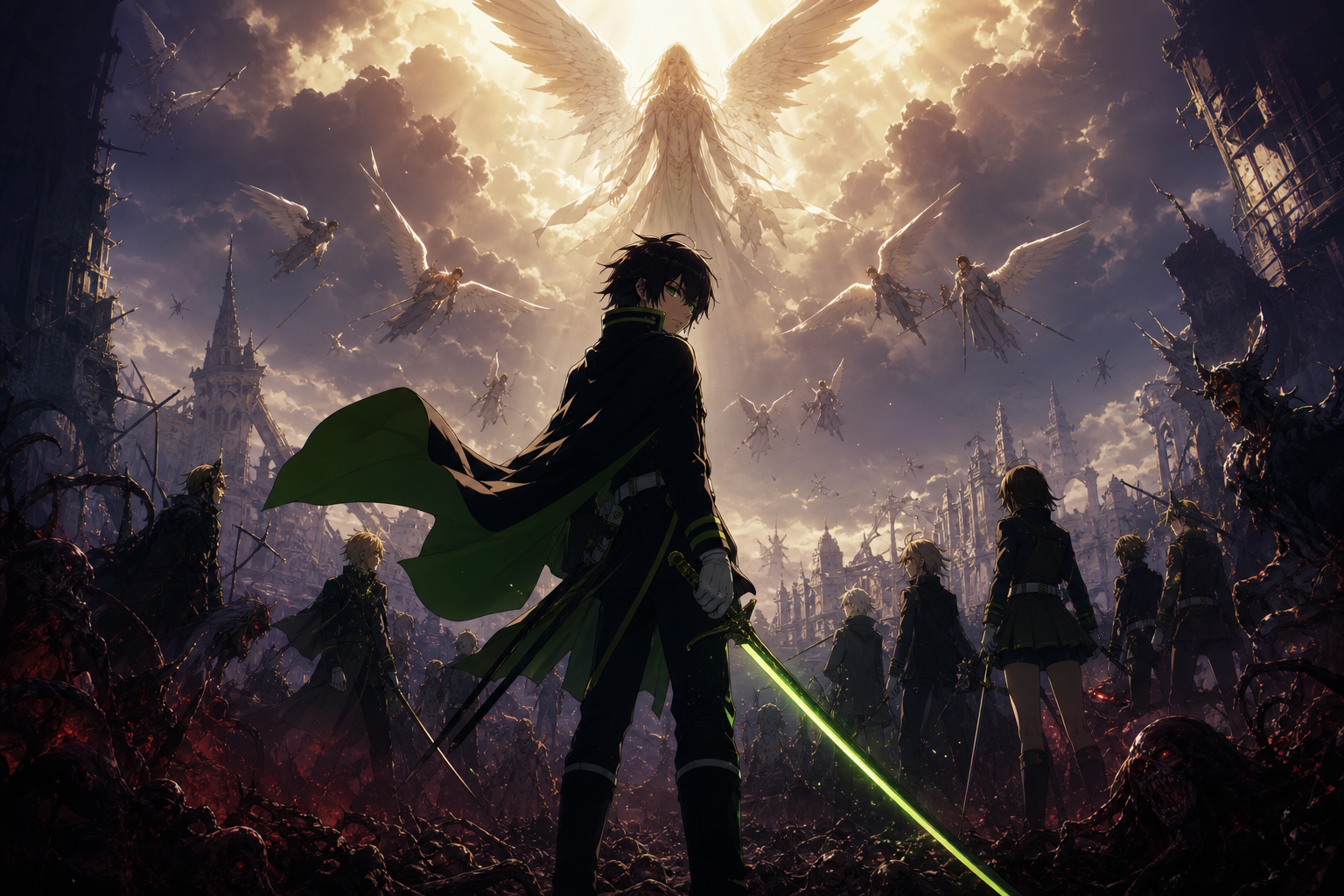
Remember that moment in Seraph of the End when Mikaela, conflicted and torn between his vampire instincts and lingering humanity, chooses not to kill Yuichiro, despite all odds pushing him otherwise? This scene is profound because it encapsulates the tension between nature and choice, an ongoing battle that resonates deeply in the show’s fabric. Mikaela’s decision isn’t just about sparing a friend’s life; it is a powerful testament to the struggle within — the clash between what we are and who we choose to be.
The Fight Within
Mika’s inner turmoil speaks volumes about human nature. Even when transformed into a vampire, he embodies the struggle between his new nature and his enduring humanity. His relationship with Yuichiro challenges notions of identity and loyalty, showing that connections forged by love can transcend even the darkest transformations. The show pushes us to explore the boundaries of identity: Are we defined by our circumstances, or by the choices we make in the midst of them?
This moment is a mirror for our own lives. How many times do we face our darker inclinations, choosing either to succumb or rise above? Mika’s struggle isn’t just a vampire’s dilemma — it echoes our own battles with envy, anger, and selfishness. The choice he makes to spare Yuichiro hints at a profound truth: the power of love to override primal urges.
Scripture Comes Alive: Love as a Bridge
Mikaela’s decision illuminates a biblical truth often shadowed by familiarity: "Love covers a multitude of sins" (1 Peter 4:8). This isn’t just about overlooking faults; it’s about love’s transformative power to change the course of action. Mika’s love for Yuichiro lets him transcend his vampire nature, just as biblical love empowers us to rise above our flaws.
This lens also sheds light on scripture. When love acts as a bridge, it doesn’t merely mask imperfections — it actively transforms. Mika’s mercy offers a vivid depiction of how love isn’t passive forgiveness but a force that actively alters behavior and choices. In both narratives, love isn’t a warm feeling but a dynamic catalyst for change.
Walking Away with New Eyes
Understanding Mika’s choice shifts how we see both him and ourselves. It tells us that identity is not static but fluid, shaped continuously by love and relationships. This shapes how we interpret biblical love: not as mere emotion but as active, transformational power.
So, next time you watch Mika struggle, consider how his journey echoes your own. Are we, like Mika, creators of our identity through choices inspired by love?
Discussion Question: In Seraph of the End, Mikaela’s choice not to kill Yuichiro seems pivotal. How does this moment reframe your understanding of love and identity? Let me know in the comments.
Social Share Post:
"Ever thought of Mika’s mercy as biblical love in action? Discover how Seraph of the End reveals new depths to love’s power. 🦇❤️ [URL]"
If positive Biblical wisdom matters to you, I’d love your support of the mission
Q&A about Seraph of the End (2015)
Is watching Seraph of the End appropriate for Christians?
While Seraph of the End features themes like battling evil, which can resonate with Christian values of standing against darkness, it also contains violence and supernatural elements. Christians are encouraged in Philippians 4:8 to focus on whatever is true, noble, right, pure, and lovely. Consider whether the show helps you dwell on these things and aligns with your faith.
What does the Bible say about fighting evil like in Seraph of the End?
The Bible teaches believers to put on the full armor of God to stand against spiritual forces of evil as seen in Ephesians 6:11. Unlike the physical battles in the show, our fight is spiritual, emphasizing faith, righteousness, and the Word of God as our true weapons.
How should Christians view the idea of a post-apocalyptic world in Seraph of the End?
For Christians, the notion of a post-apocalyptic world can evoke thoughts of the end times as described in Revelation. Instead of fear, believers are called to hope in Christ’s return and the new heaven and earth promised in Revelation 21:1-4, reminding us that God’s plans ultimately lead to restoration and peace.
Is there any biblical basis for the vampires in Seraph of the End?
The Bible does not explicitly talk about vampires, but it does emphasize the reality of spiritual beings. Christians are reminded in 1 John 4:4 that the Spirit in them is greater than any spirit in the world, encouraging believers to trust in God’s power over any imagined evil.