 0
0
 0
0
They Knew It Was Fake. It Worked Anyway.
There’s an assumption most of us carry quietly into adulthood: if you know something isn’t real, it can’t affect you.
The trick can’t fool you after you’ve seen it. The fake pill can’t work once you know it’s fake. Your nervous system — rational, alert, updated with correct information — will simply decline to be moved.
Except, it turns out, that’s not how this works at all.
The Study That Quietly Changed the Question
In June 2026, researchers at Bar-Ilan University published findings from a study that upended something most people assumed was settled science.
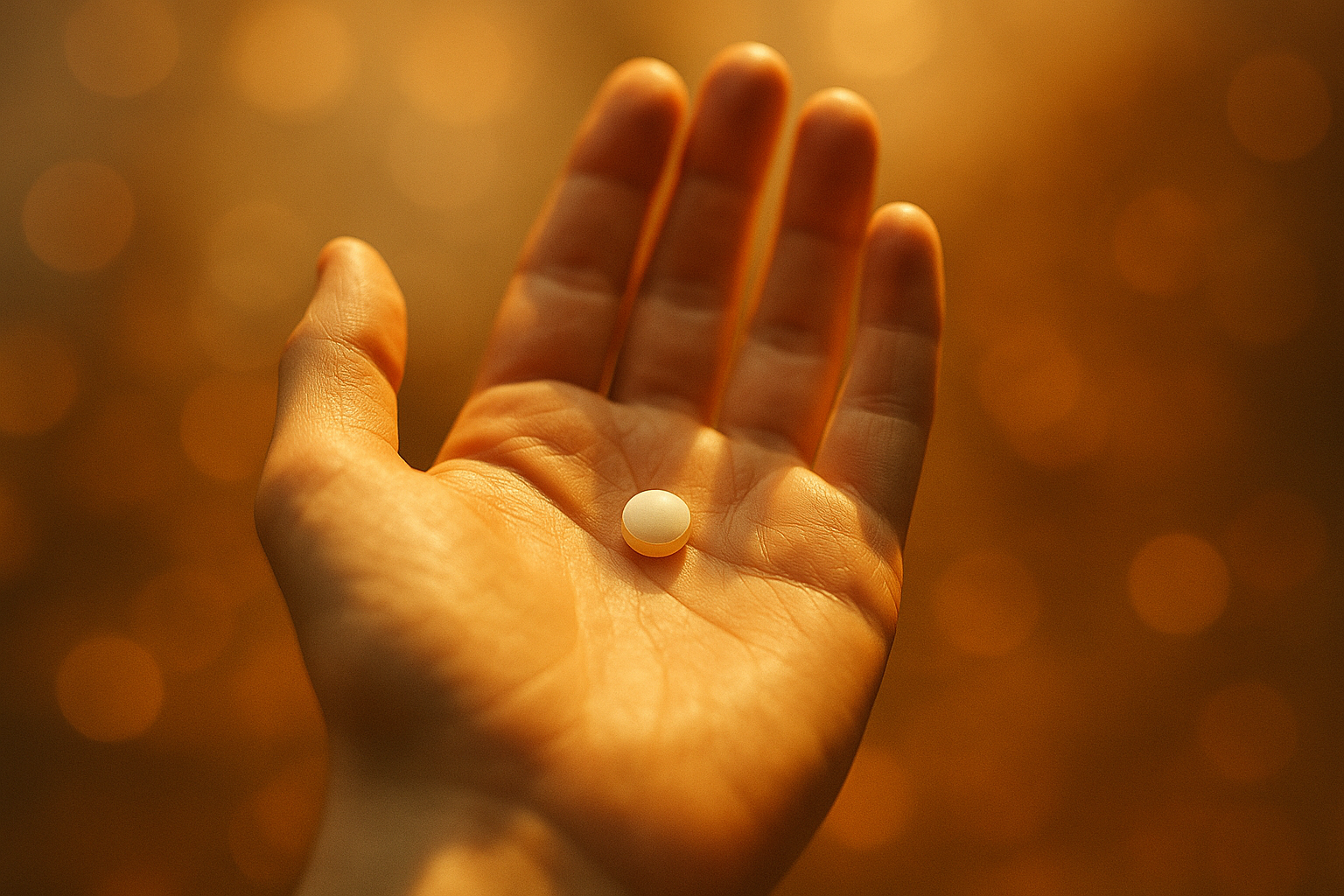
They recruited healthy older adults and divided them into two groups. One group continued their normal routines as a control. The other group was given a small pill — and this is the part that matters — they were told, clearly and explicitly, that the pill was a placebo. No active ingredient. Fake. A sugar pill in every clinical sense.
They took it anyway. For three weeks.
At the end of the study, the open-label placebo group showed measurable improvements across three separate areas: memory performance, physical function, and stress markers.
Not marginal improvements. Meaningful, statistically significant ones.
This wasn’t the first time researchers had documented the open-label placebo effect. Earlier studies recorded similar results for irritable bowel syndrome, chronic lower back pain, and cancer-related fatigue. But this study applied it to healthy adults managing normal aging — and the results held.
The question the researchers were now sitting with was both scientific and, quietly, philosophical:
Why does the brain respond to something it consciously knows is not there?
What’s Actually Happening Inside the Brain
The answer involves something researchers call “embodied ritual” — a process where the act of taking a pill, regardless of its content, activates neural pathways the brain has spent a lifetime building.
Every time medication worked for you, your brain catalogued the context: the ritual of swallowing, the small object in your hand, the expectation that followed. Over decades, those associations carved pathways. When you repeat the ritual — even without the active ingredient — the pathways fire anyway.
But that’s only the surface of it.
The deeper finding is that expectation itself — the mental state of anticipating an outcome — produces measurable physiological effects independently of any substance. Cortisol levels shift. Dopamine changes. The immune system responds differently.
The brain, it turns out, does not separate “reality” from “believed reality” as cleanly as we assumed.
What you expect shapes, at a biological level, what you experience.
This connects to other findings emerging from neuroscience: the way your brain is literally restructured through difficulty and recovery, or how different types of hunger in the brain operate on completely different circuits. In each case, the underlying finding is the same: the brain is far more responsive to what it holds, expects, and anticipates than our working model of the mind assumed.
The Part That Gets Strange
Here’s where this gets genuinely interesting.
The participants didn’t benefit from a chemical reaction. There was no chemical. They benefited, measurably, from the act of holding an expectation — even an expectation they knew was built on nothing pharmacological.
Memory improved.
Physical performance improved.
Stress indicators improved.
Not because of what was in the pill. Because of what was in the expectation.
There’s an ancient phrase for this that predates neuroscience by roughly two thousand years: the substance of things hoped for.
Not the fantasy of things hoped for. Not the wishful thinking of things hoped for. The substance — the material reality, the weight — of something hoped for.
The word was describing what Western thought later assumed was purely metaphorical: that hope and expectation have a kind of weight, a kind of reality, that is independent of whether the hoped-for thing has actually arrived yet.
Modern research is beginning to map the mechanisms that explain why that observation was accurate. The brain was built to respond to that weight. The architecture of the brain itself reflects how precisely and intentionally the mind was designed — not to exist only in confirmed present reality, but to orient toward and respond to what is held in belief.
What This Actually Means
This doesn’t prove the metaphysical claims of any tradition. That’s not what the science is doing.
What it does is something quieter and, in some ways, more interesting: it confirms that the mechanics of belief — the act of orienting yourself toward an outcome you cannot yet see or verify — produces real, measurable effects in the body.
That’s not a religious conclusion. It’s a biological one.
What various wisdom traditions noticed, long before the imaging equipment and the controlled trials, is that human beings are not purely reactive systems. We don’t only respond to what’s present. We respond to what we hold.
The person who holds hope — even hope for something not yet visible — changes at a physiological level. The one who orients themselves toward recovery, toward change, toward something better than where they currently stand — that orientation is not neutral.
It does something.
The Question Worth Sitting With
The researchers weren’t wrong to call this surprising. By the model most of us operate on, it shouldn’t work.
But the model most of us operate on assumed that belief was purely mental — a story we tell ourselves, disconnected from the underlying biological machinery.
The data is suggesting otherwise.
Whatever your relationship to the bigger metaphysical questions — whether you have a tradition, whether you’re skeptical, whether you’ve simply never thought about it — there’s something practically significant to take from this:
The way you hold the future matters.
Not just emotionally. Physiologically.
The act of expecting something good, of orienting yourself toward what you’re hoping for — even something you can’t prove yet, even something you’re not certain about — changes the chemical environment in which you’re making every decision, sleeping every night, and moving through every day.
That’s not a small thing to know.
Discussion Question
The study found that consciously knowing the pill was fake didn’t cancel the effect — the expectation still did the work. Has an expectation ever changed your experience before the outcome arrived? What do you think that means about how we’re built?
Discussion Question: The study found that consciously knowing the pill was fake didn’t cancel the effect — the expectation still did the work. Has an expectation ever changed your experience before the outcome arrived? What do you think that means about how we’re built?
Share This
- Scientists gave people fake pills and told them upfront it was fake. Memory, physical performance, and stress still improved. The open-label placebo effect apparently doesn’t need the deception to work.
- Apparently ‘expecting something to work’ is enough for the brain — even when you know it’s fake. The open-label placebo effect is one of the more quietly unsettling findings in current science. What does that say about how we’re built?
- The expectation, not the pill, produced the effect. What you hold about the future changes what your nervous system does right now. That seems important.
Common Questions
What is the open-label placebo effect?
An open-label placebo is a sugar pill with no active ingredient given to participants who are told explicitly that it’s fake. Studies have found that even when people know the pill contains nothing, they experience measurable improvements — in conditions ranging from IBS to chronic pain to, more recently, memory and stress in healthy older adults. The effect appears to work through learned associations and the physiological impact of expectation itself, independent of any pharmacological cause.
How does a placebo work if you know it’s fake?
The traditional assumption was that the placebo effect required the patient to believe they were receiving real treatment. Open-label placebo research has challenged this. The current hypothesis is that the ritual of taking a pill activates neural pathways the brain built over a lifetime of actual treatments. Additionally, expectation itself — independent of knowing the treatment is fake — produces measurable shifts in cortisol, dopamine, and immune function. The brain responds to believed reality even when that belief is consciously held with full information.
What did the 2026 Bar-Ilan University placebo study find?
Researchers recruited healthy older adults and gave half of them open-label placebos — pills explicitly identified as fake — for three weeks. The placebo group showed statistically significant improvements in memory performance, physical function, and stress markers compared to the control group who received no pill. This extended earlier open-label placebo findings from clinical populations (IBS, chronic pain, cancer fatigue) to healthy adults managing normal aging.
Does expectation actually change physical health outcomes?
Research says yes — measurably. Expectation influences cortisol levels (the primary stress hormone), dopamine production (involved in motivation and reward), and immune function. This is what researchers mean when they say the brain doesn’t fully separate ‘reality’ from ‘believed reality.’ The physiological state of expecting a good outcome creates a different biological environment than expecting a bad one, independent of whether either outcome has yet occurred.
What is the connection between the open-label placebo effect and ancient ideas about faith?
Philosophical and wisdom traditions across cultures observed — long before neuroscience — that orienting yourself toward something you hope for, even before it arrives, seemed to change how people experienced the present. Some traditions described faith as holding the ‘substance’ of things hoped for — not the wish, but the weight of the expectation. Modern placebo research is beginning to map the physiological mechanisms that explain why those observations were accurate: expectation, the act of holding a belief about an outcome, creates real biological effects in the body regardless of whether the thing believed has materialized yet.