 0
0
 0
0
Escalation in Israel-Lebanon Conflict: Netanyahu Hails Strategic Military Advances
By [Your Name]
Date: [Insert Today’s Date]
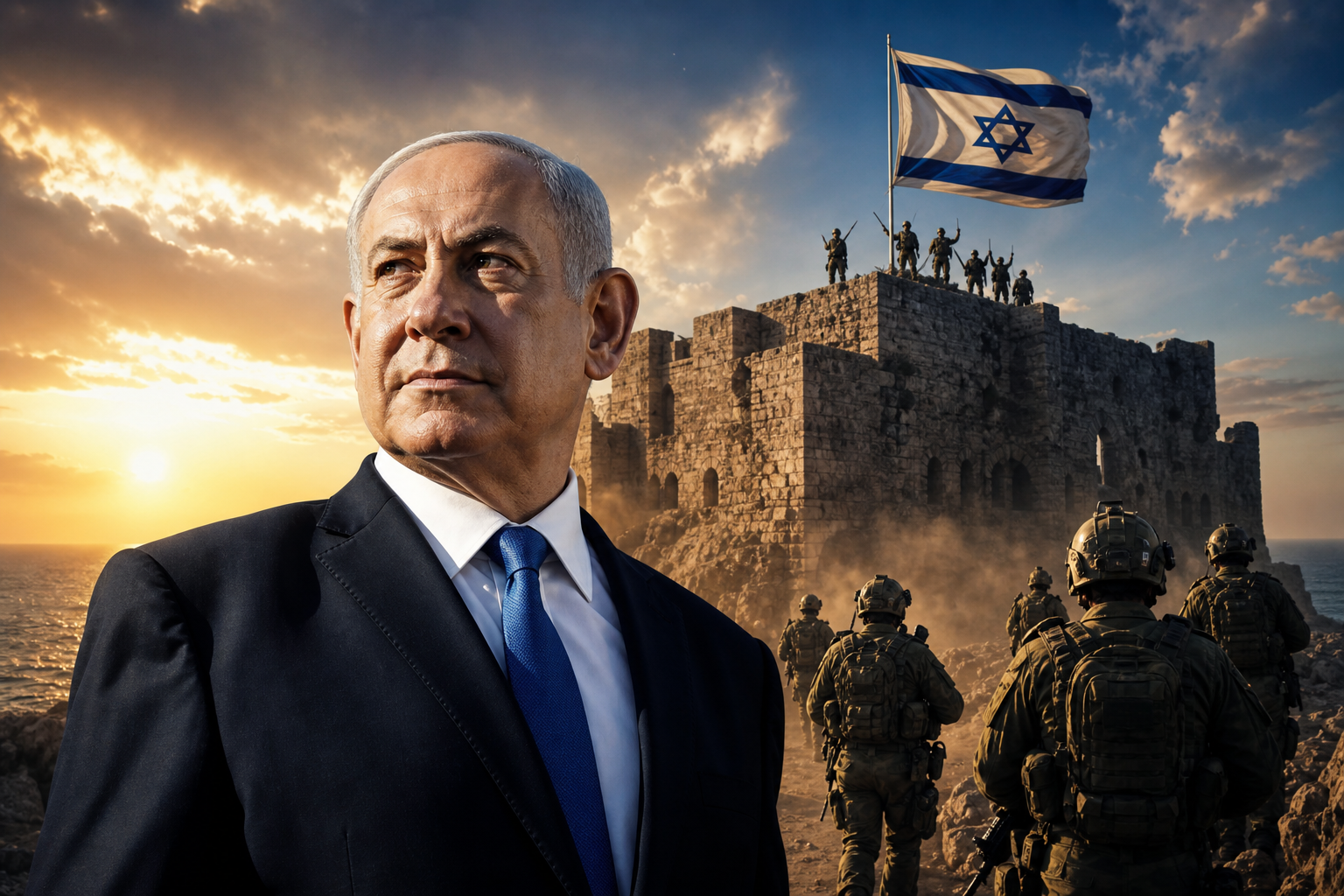
In a significant turn of events on Sunday, Israeli Prime Minister Benjamin Netanyahu celebrated the Israel Defense Forces (IDF) capture of Beaufort Castle, a strategic stronghold in southern Lebanon. During an address, he described the capture as “a dramatic shift” in Israeli policy, emphasizing the government’s commitment to intensify military operations in the region amid ongoing clashes with Hezbollah.
“This is a pivotal moment for our strategy,” Netanyahu stated in a video message released by his office, directing forces to broaden their control over areas previously held by Hezbollah. The announcement comes as hostilities escalate, with Hezbollah responding to military actions by unleashing drone and rocket fire into northern Israel, particularly impacting cities like Acre and Haifa.
As tensions rise, the IDF reported that four soldiers were lightly injured in a drone strike attributed to Hezbollah on Sunday, while a soldier was killed the previous night in a separate conflict. This soldier, Staff Sgt. Michael Tyukin, marks the 13th Israeli casualty since a supposed ceasefire with Lebanon was called back in April.
Following the tragic loss, Israeli troops advanced into the Beaufort Ridge area, an operation underscored by the continual rocket attacks on northern Israel—a sobering reminder of the volatile nature of the region. Netanyahu recalled the historical significance of Beaufort Castle, which has long been a site of division within Israeli society, particularly since it was captured during the early battles of the First Lebanon War in 1982.
“Our return to Beaufort today is marked by unity and determination,” Netanyahu declared, reflecting on Israel’s military objectives across multiple fronts, including Syria and Gaza. He asserted that since the start of the conflict, Israel has eliminated thousands of Hezbollah fighters, underscoring the high stakes involved.
This military advance has provoked reactions beyond Israel, as France requested an emergency meeting of the United Nations Security Council, aiming to address the escalating tensions. French officials highlighted a commitment to diplomatic resolutions, pointing out that Israel’s military actions could further entrench the conflict.
In light of these unfolding events, one might contemplate the principles of peacemaking and conflict resolution that resonate deeply within biblical teachings. As King Solomon wisely observed, “There is a time for everything, and a season for every activity under the heavens” (Ecclesiastes 3:1). This verse invites reflection on the complexity of human strife and the importance of discerning when to act and when to seek peace.
In the face of conflict, both individuals and nations are often called to consider the broader implications of their actions. It’s essential to recognize the call for reconciliation and mutual understanding inherent within Scripture. The current situation encourages an examination of how to balance rightful defense with the pursuit of peace—a lesson that resonates strongly in the teachings of Jesus, who emphasized love and forgiveness even amid adversity.
As we observe these developments, let us embrace the enduring message of hope and unity. The broader spiritual lesson encourages us to strive for peace, reminding us that even in times of conflict, we can seek higher ground through understanding and compassion.
In the midst of turmoil, we are invited to reflect: How can we actively promote peace and understanding in our own communities, even when faced with challenges?
If you want to want to know more about this topic, check out BGodInspired.com or check out specific products/content we’ve created to answer the question at BGodInspired Solutions
If positive Biblical wisdom matters to you, I’d love your support of the mission
Q&A about
How does Netanyahu’s claim of returning stronger than ever relate to faith?
In times of adversity, the Bible teaches us about resilience and strength through faith, as seen in Philippians 4:13, where Paul states that he can do all things through Christ who strengthens him. This perspective reminds us that true strength comes from reliance on God, especially after facing challenges.
What might God’s perspective be on military victories and their impact on nations?
God often uses events in our lives to fulfill His larger purposes, as illustrated by the story of David defeating Goliath. This narrative shows that victories can come from unexpected sources and can serve as a testament to faith, demonstrating how God can elevate a nation or cause under His will.
How should Christians approach political statements like Netanyahu’s about national pride?
As Christians, our ultimate pride should stem from our identity in Christ rather than national achievements, reflecting Galatians 3:28, where Paul reminds us that we are all one in Christ Jesus. A balanced approach involves celebrating our heritage while remaining grounded in our faith and calling to serve others.
Does Scripture offer any guidance on the responsibilities that come with victories like the capture of Beaufort Castle?
With great victories come greater responsibilities, as seen in Luke 12:48, which teaches that to whom much is given, much will be required. This principle encourages leaders and nations to act with integrity and serve their communities wisely, recognizing that their success should benefit others in alignment with God’s will.