 0
0
 0
0
Spiritual Devotional about Sacred Art
Embracing the Divine Through Sacred Art: A Spiritual Journey
Hello, dear friends,
Today, let’s embark on an enlightening journey into the world of Sacred Art, a realm where creativity and spirituality intertwine to glorify the divine and uplift our souls.
Sacred Art, in its myriad forms—be it paintings, sculptures, or stained glass—serves as a bridge connecting the earthly with the heavenly. These expressions of divine inspiration invite us to pause, reflect, and connect with deeper truths. Sacred Art carries the power to convey the profound mysteries of our faith, making the invisible visible and the abstract tangible.
The Bible, our eternal source of wisdom, is replete with instances where art glorifies God. In Exodus 35:30-35, God appoints Bezalel and Oholiab, filling them with His Spirit to craft the Tabernacle’s beauty. Here, God doesn’t just approve of art; He ordains it, showing us the sacred calling of artists to manifest divine splendor.
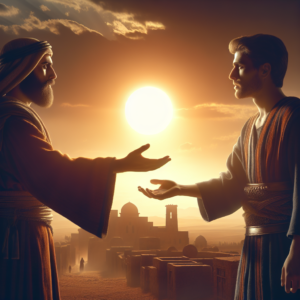
Sacred Art allows us to engage with biblical stories in new and meaningful ways. Consider Michelangelo’s ‘The Creation of Adam’—a masterpiece that captures the divine touch and reminds us of our intimate connection with God, echoing Genesis 1:27, "So God created mankind in his own image."
Examining these artworks, we are inspired to invite beauty into our own lives. They prompt us to see beyond the surface, to seek the sacred in the everyday. Ephesians 5:19 encourages us to, "speak to one another with psalms, hymns, and songs from the Spirit." Much like music, art becomes a visual hymn, singing God’s glory and stirring our hearts to worship.
As we immerse ourselves in this divine creativity, we find joy and serenity. Sacred Art invites us to deeper prayer and reflection, nurturing our faith. It offers a space to contemplate God’s boundless love and grace, reminding us that we are part of His magnificent creation.
For those called to create, know that your artistry is a blessed gift. Whether you paint, sculpt, or simply appreciate, your engagement with Sacred Art can be a form of worship. As Colossians 3:23 reminds us, "Whatever you do, work at it with all your heart, as working for the Lord."
So, let’s celebrate and support those who bring God’s stories to life through their artistry. Visit a gallery, support local artists, or create something yourself! Let’s allow Sacred Art to inspire us, bolster our faith, and fill our hearts with divine wonder.
In this celebration of creativity, remember that you too are a masterpiece—crafted by the Ultimate Artist, who so lovingly designed each one of us.
Blessings to you all,
[Your Name]
If you want to want to know more about this topic, check out BGodInspired.com or check out specific products/content we’ve created to answer the question at BGodInspired Solutions
Q&A about Sacred Art
Q&A on Sacred Art
Q1: What is sacred art?
A: Sacred art refers to artworks that are created with the intention of expressing or enhancing the religious and spiritual values of a particular faith. It is often used in worship, reflection, and teaching, embodying elements that are deeply symbolic and meaningful within a religious context.
Q2: Can you give examples of sacred art?
A: Yes, examples of sacred art include Christian icons, Hindu temple carvings, Islamic calligraphy, Buddhist mandalas, and Jewish menorahs. Each of these serves not only as an artistic expression but also as an object of devotion or meditation.
Q3: How does sacred art differ from secular art?
A: Sacred art is specifically created to embody and convey spiritual or religious significance, often used within rituals and worship. In contrast, secular art is created for a variety of purposes, including aesthetic enjoyment, personal expression, or social commentary, without inherent religious intent.
Q4: What role does symbolism play in sacred art?
A: Symbolism is crucial in sacred art as it conveys deeper meanings associated with religious beliefs and teachings. For instance, in Christianity, the lamb often symbolizes Jesus Christ, while the lotus in Hinduism and Buddhism represents purity and enlightenment.
Q5: How does sacred art vary across different cultures and religions?
A: Sacred art varies widely across cultures and religions, reflecting the unique beliefs, practices, and histories of each. For example, Islamic art often includes geometric patterns and calligraphy due to aniconism, while Christian art might depict biblical scenes and saints.
Q6: Can contemporary art be considered sacred art?
A: Yes, contemporary art can be considered sacred art if it is created with the intention of conveying spiritual themes or used within a religious context. Many modern artists explore spiritual and religious themes in innovative ways that resonate with today’s audiences.
Q7: What is the significance of sacred art in worship spaces?
A: In worship spaces, sacred art serves to create an atmosphere conducive to meditation, prayer, and spiritual connection. It often tells stories or illustrates key concepts and figures from religious texts, helping worshippers to focus and reflect on their faith.
Q8: Is there a relationship between sacred art and architecture?
A: Yes, there is a strong relationship. Sacred architecture, like cathedrals, mosques, temples, and synagogues, often incorporates sacred art to complement the spiritual purpose of the space. This includes murals, stained glass, carvings, and other artistic elements that enhance the sacred environment.
Q9: How has sacred art influenced cultural development?
A: Sacred art has profoundly influenced cultural development by shaping artistic styles, techniques, and iconography. It has inspired countless artists and has been a critical medium for transmitting religious stories, values, and traditions through generations.
Q10: Why is the preservation of sacred art important?
A: Preserving sacred art is vital for maintaining the cultural and religious heritage of communities. It helps ensure that future generations can access and appreciate the spiritual, historical, and artistic significance of these works, keeping traditions and beliefs alive.