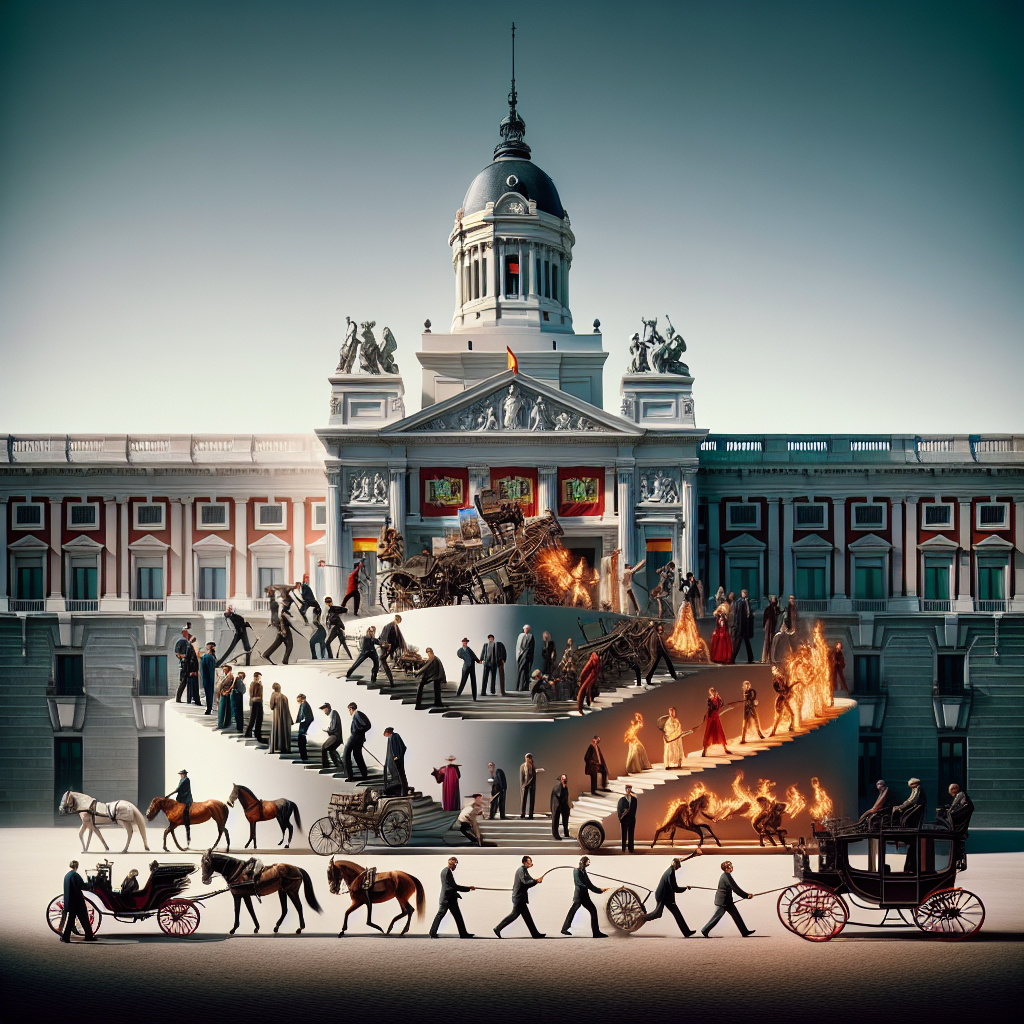
New Rehang at Reina Sofía Museum Highlights Spain’s Socio-Historical Turmoil Through Art
Madrid — The famed Reina Sofía Museum has unveiled a striking new rehang of its contemporary art collection, beginning with a poignant image of a detained man, shackled and awaiting judgment amidst institutional bureaucracy. Titled Document No …, this 1975 work by Juan Genovés captures a moment in history when Spain was transitioning from the oppressive regime of Francisco Franco to the fledgling seeds of democracy.
As visitors explore the collection, they are invited to journey through five decades of artistic evolution that mirror Spain’s complex social and political landscape. The exhibit features 403 carefully selected works, nearly two-thirds of which have never been displayed as part of the permanent collection before. This initiative illustrates the museum’s aim to not merely rearrange art but to foster a critical reinterpretation of contemporary artistic practices in relation to significant events, such as the rise of feminism, environmental awareness, and responses to global terrorism.
Ángeles González-Sinde, president of the Reina Sofía’s board, emphasized at a recent press conference that the rehang serves as a dialogue between the past and present, underscoring the role of art in reflecting societal changes. The weight of history is palpable, as pieces by celebrated artists like Nan Goldin and Robert Mapplethorpe intertwine with critical moments of Spanish society captured by photographers such as Carlos Bosch during the early stages of the democratic transition.
This artistic exploration naturally evokes a sense of solidarity with those marginalized or oppressed—a theme that resonates deeply within biblical teachings. Much like the artists documenting the struggles of society, biblical figures have long challenged injustice, advocating for the voiceless and emphasizing the importance of compassion. As Jesus taught, “Blessed are the merciful, for they will be shown mercy” (Matthew 5:7, NIV). This sentiment reinforces the role of art as a medium for empathy and understanding in troubled times.
Among the powerful displays is Alberto García-Alix’s evocative piece Willy’s Absence, a poignant reminder of the devastating impact of the heroin epidemic in the 1980s. Just as art captures the human condition in its myriad forms, it offers a vehicle for reflection on our societal values and the pressing need to compassionately confront today’s struggles, including the ongoing battle for democracy and fundamental human rights.
As Spanish Culture Minister Ernest Urtasun noted during the unveiling, the exhibition invites audiences to ponder the implications of the past while remaining vigilant in defending the values of enlightenment and democracy. The hope is to inspire collective accountability, not just within Spain but globally, in the fight for justice and equity.
In a world often marked by division, the Reina Sofía’s new collection stands as a reminder that art—like faith—can foster understanding and compassion. As we engage with these narratives, may we also reflect on our own roles in advocating for those whose voices remain unheard, embodying the biblical principle of mercy in our interactions with others.
As you explore the stories told through these art pieces, consider the broader spiritual lesson: how can we advocate for justice and compassion in our own communities? In doing so, we not only honor our shared humanity but also align ourselves with a deeper purpose rooted in hope and love.
If you want to want to know more about this topic, check out BGodInspired.com or check out specific products/content we’ve created to answer the question at BGodInspired Solutions