 0
0
 0
0
Scientists Uncover 100-Million-Year-Old Spider-Like Species with a Surprising Twist
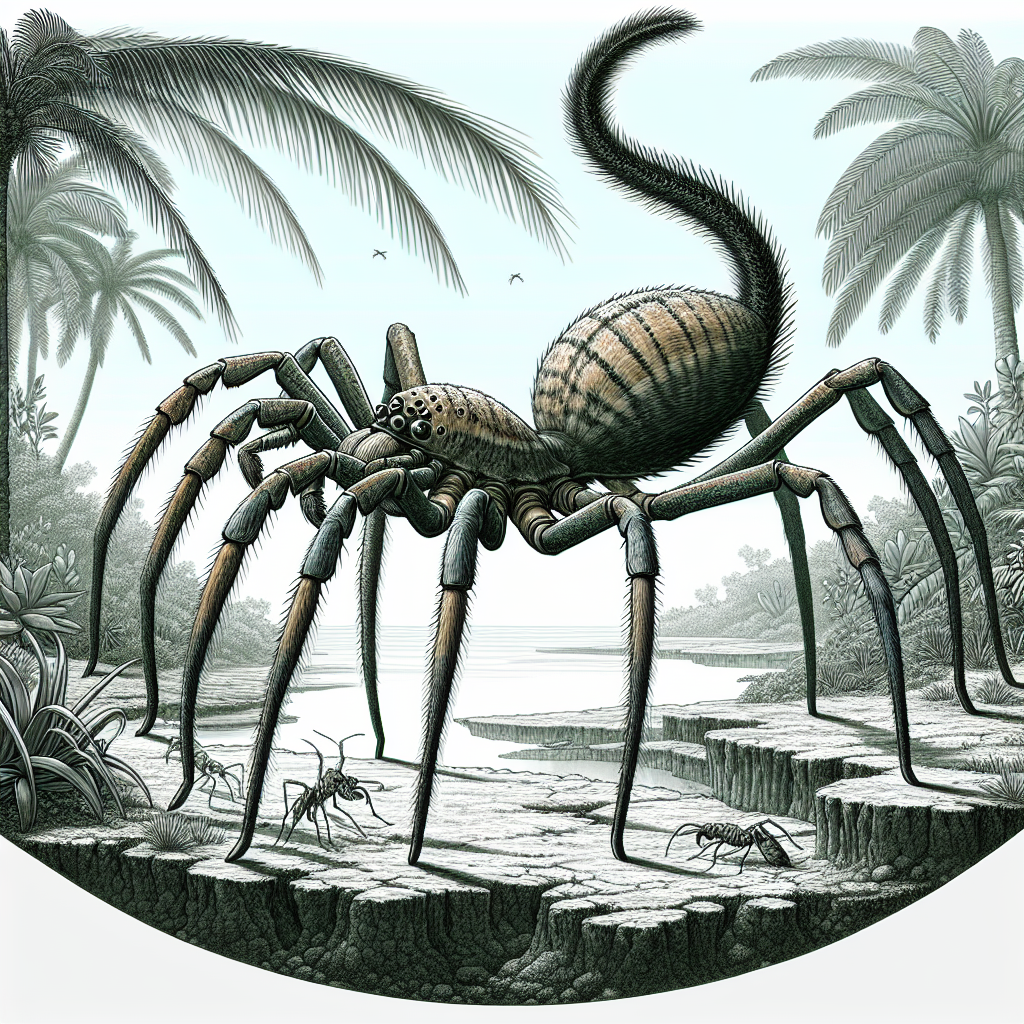
In a fascinating revelation from 2018, scientists have described a new species of spider-like arachnid that existed approximately 100 million years ago. This intriguing find sheds light on the evolutionary history of spiders and introduces a creature that remarkably resembles today’s spiders while bearing distinct differences, including a tail.
The species, named Chimerarachne yingi, features essential spider characteristics such as spinnerets, a specialized organ for sperm transfer, and eight walking limbs. However, what sets it apart—and captures the imagination—is its whip-like tail, whose very existence challenges assumptions about arachnid evolution.
Using advanced microscopy and 3D imaging techniques, researchers examined two male fossils of this ancient creature. Their findings reveal that, while the overall body plan echo modern spiders, C. yingi maintains a segmented abdomen, a trait not found in current spider species. This unexpected feature leads researchers to believe it represents a unique lineage of tailed arachnids, existing alongside true spiders but not directly ancestral to them—much like a peculiar cousin in the family tree of life.
This discovery not only deepens our understanding of arachnid evolution but also provides insights into the functions of the tail. Scientists speculate that the tail may have acted as a sensory organ, served as a defense mechanism, or functioned similarly to a lizard’s tail, possibly detaching to evade predators.
So, is Chimerarachne yingi a spider? The research suggests it could be either the earliest known branch of true spiders or an extremely close relative—an exciting milestone that demonstrates how different traits emerged in a mosaic-like fashion throughout evolution.
While such discoveries spark scientific curiosity, they also invite reflection on the deeper connections between mankind and creation. In reflecting on these ancient creatures, we are reminded of Genesis 1:25, which states, "God made the wild animals according to their kinds, the livestock according to their kinds, and all the creatures that move along the ground according to their kinds." Each arachnid, from modern spiders to their prehistoric cousins, plays an integral role in the intricate tapestry of life—illustrating the design and complexity of the natural world.
As we ponder this remarkable find, let it encourage us to marvel at the diversity of life and recognize the interconnectedness of all creation. Just as the traits of Chimerarachne yingi remind us of the continuing narrative of life on Earth, we can reflect on the broader spiritual lesson that all creatures are part of a greater purpose.
Let this poignant discovery inspire you to consider how we can appreciate and care for the world God has entrusted to us, fostering a spirit of inquiry and stewardship.
If you want to want to know more about this topic, check out BGodInspired.com or check out specific products/content we’ve created to answer the question at BGodInspired Solutions