 0
0
 0
0
Title: Drought and Resilience: Life in Macururé’s Changing Landscape Amid Climate Challenges
Every Tuesday at dawn, Raildon Suplício Maia heads to the bustling market in Macururé, Bahia, to sell goats—the lifeblood of his community nestled in Brazil’s semi-arid hinterland. Yet, challenges loom as prolonged droughts and climate change threaten the very source of livelihood for Maia and his fellow residents.
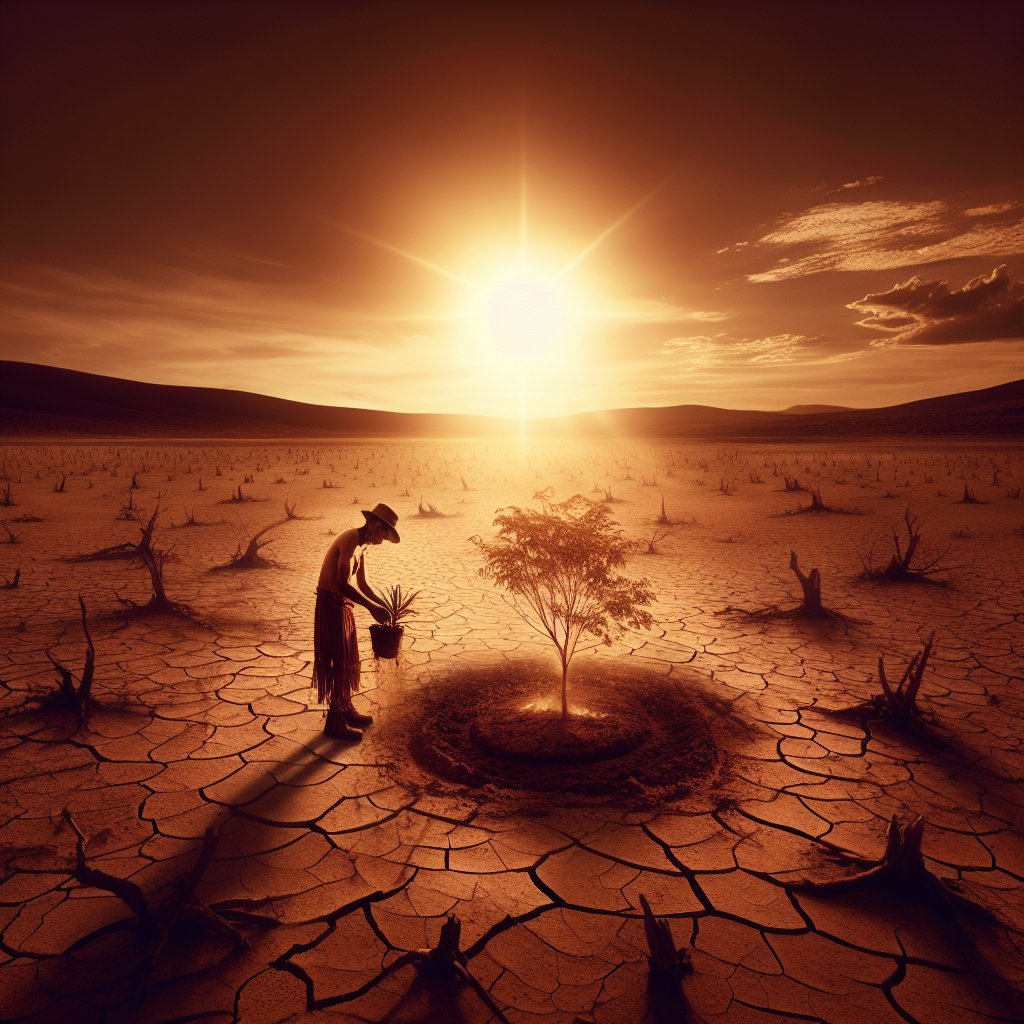
Macururé, a small town in Brazil’s northeastern sertão, endures a harsh climate characterized by dry spells that have now extended well beyond normal patterns. "It used to rain earlier," reflects Maia, a 54-year-old goat farmer. “Now, there are no cacti, no grass, and not enough water.” This lament echoes the struggles of many in this rural region, where goats serve as both an income source and a sign of hope.
In 2023, groundbreaking research revealed that a staggering 5,700 square kilometers of the northeastern semi-arid region could now be classified as arid, the first recorded shift of its kind in Brazil. Ana Martins do Amaral Cunha, a researcher involved in the study, emphasizes the urgency of this situation, reminding us that rising temperatures are closely tied to anthropogenic climate change—the very challenges we are called to confront.
The unfortunate truth is that conditions are worsening. Once abundant crops like corn and beans have become increasingly rare as rainfall diminishes. Younger generations are leaving, seeking stability and opportunity beyond the parched land. Public awareness of this climate transformation is lacking, yet the impacts are palpable, with residents witnessing the decline of their cherished goats.
In the face of adversity, there are glimpses of hope. Some embrace innovative methods to capture and store rainwater, while others engage in community discussions to tackle their pressing issues. This spirit of resilience is reflected in the Biblical principle found in Philippians 4:13: “I can do all things through Christ who strengthens me.”
Equipped with faith and determination, individuals like Raildon and his neighbors strive to persevere despite dwindling resources. Potential solutions, like ecotourism and community-driven development initiatives, offer a vision for a sustainable future.
This narrative encourages us to reflect on our stewardship of the earth and the connections we maintain with our communities. Just as the good Samaritan reached out to help a stranger in need (Luke 10:25-37), so too can we engage with our local and global environments, looking for opportunities to uplift and support one another during challenging times.
As we ponder these realities, remember that even amid tumultuous change, there is hope in collective action, compassion, and the enduring strength derived from faith. Together, we can remain attentive stewards of our resources, embodying the love and care espoused in the teachings of Jesus.
If you want to want to know more about this topic, check out BGodInspired.com or check out specific products/content we’ve created to answer the question at BGodInspired Solutions