 0
0
 0
0
Stanford Graduates Face Job Market Crisis Amid AI Revolution
By [Your Name]
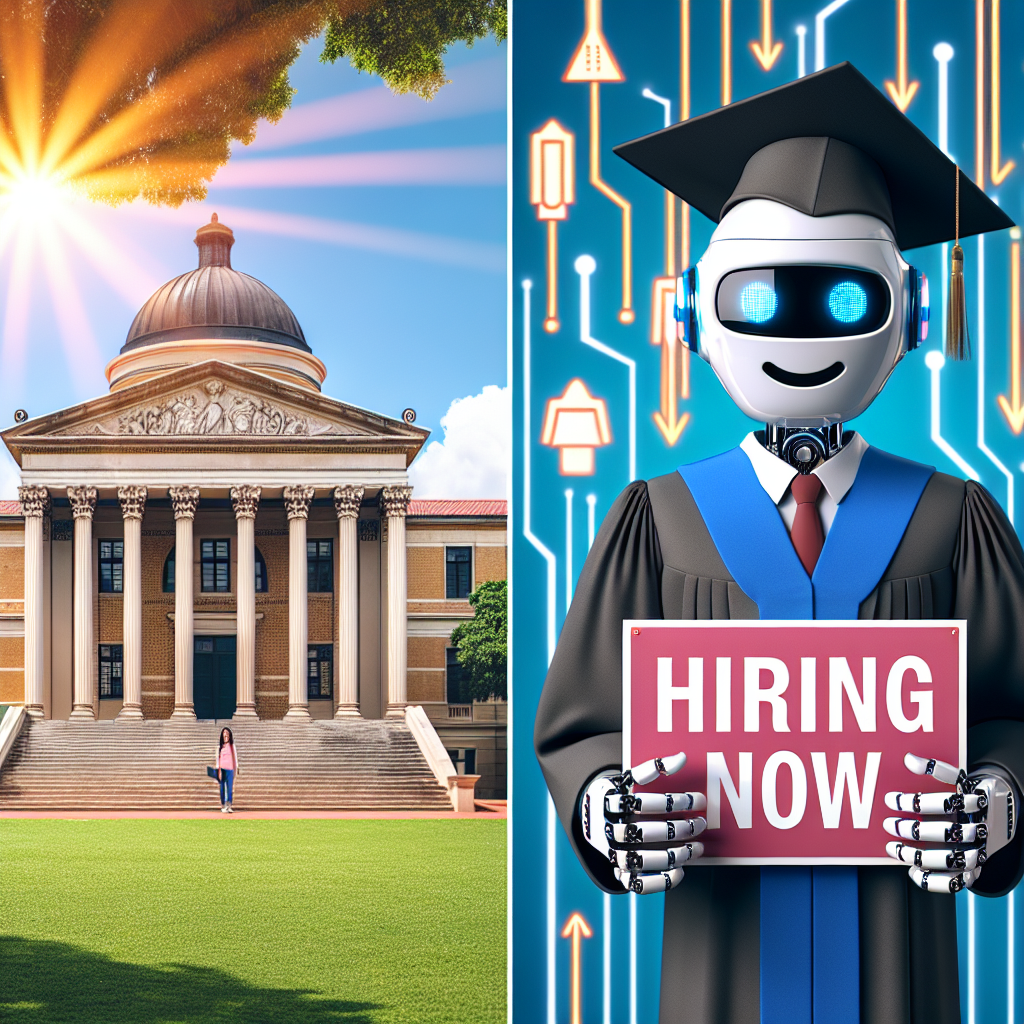
In an era when a prestigious Stanford software engineering degree has traditionally opened doors, recent graduates are finding that their coveted credential has lost its luster. Once recognized as a golden ticket, it now resembles bronze as the capabilities of artificial intelligence (AI) reshape the job landscape.
As these elite students conclude their studies at one of America’s top universities, they report shock and disappointment over an apparent scarcity of job offers. The introduction of generative AI technologies like ChatGPT has revolutionized coding, allowing AI to outperform many human programmers. This rapid advancement has led major tech companies to reassess their hiring needs, leaving a notable gap for entry-level positions.
Jan Liphardt, an associate professor of bioengineering at Stanford, expressed disbelief at the struggles faced by recent graduates: “I think that’s crazy.” While seasoned engineers might enjoy enhanced productivity brought by AI, early-career software engineers are grappling with a grueling job market.
The New Job Landscape
Stanford students describe a disheartening situation where only a small percentage of graduates, often referred to as “cracked engineers” due to their impressive resumes, are securing desirable roles. A recent computer science graduate commented on the palpable anxiety among peers, stating, “People [who are] job hunting are very stressed out, and it’s very hard for them to actually secure jobs.”
The repercussions extend beyond Stanford, affecting other California institutions like UC Berkeley and USC. Eylul Akgul, a graduate from Loyola Marymount University, struggled for months before ultimately gaining valuable experience abroad. Yet, upon returning to the U.S., she was met with rejection after rejection, reflecting a troubling trend of oversaturation in the tech industry. “The industry for programmers is getting very oversaturated,” she remarked.
AI: A Double-Edged Sword
With AI rapidly evolving, today’s tools can code for hours with impressive efficiency, performing tasks that would typically require human input. A Stanford study highlights a nearly 20% decline in employment for early-career software developers since late 2022, as competition from AI casts a long shadow over traditional roles in software engineering, customer service, and accounting.
Anthropic CEO Dario Amodei pointed out that AI now writes a significant portion of codes for his company, predicting a landscape where nearly half of all entry-level jobs might vanish in the next five years. The sentiment among hiring managers echoes this change; many now prefer a lean team of skilled engineers complemented by AI technology.
The Human Touch Amidst Technology
Yet, while AI’s capabilities are undeniably formidable, it is essential to acknowledge that the nuanced understanding and creativity inherent to human input remain crucial. Software engineers are encouraged to lean into roles that embrace oversight and collaboration with AI systems.
John David N. Dionisio, a computer science professor at LMU, advises students to learn how to manage and check AI work, indicating a shift in the necessary skill sets for future engineers. Meanwhile, students find themselves at a crossroads: those who adapt to AI’s presence will thrive, while traditional roles may fade into obscurity.
Reflecting a sense of resilience typical of many communities, students are diversifying their paths, whether through startup ventures, pursuing further education, or reassessing their career aspirations entirely. “If you look at the enrollment numbers in the past two years, they’ve skyrocketed for people wanting to do a fifth-year master’s,” one graduate noted, illustrating a proactive approach to navigating this uncertain economy.
Finding Hope
In a season of challenges, it is vital to hold onto the lessons of perseverance and adaptability. Proverbs 15:22 reminds us, “Plans fail for lack of counsel, but with many advisers, they succeed.” Just as in our spiritual lives, seeking guidance—whether through mentors, prayer, or community support—can illuminate our paths even amidst uncertain terrain.
Encouraging Takeaway: The journey through this remarkable shift in the job market invites us to embrace change and cultivate resilience. As we navigate these evolving landscapes, let’s reflect on how we can use our unique skills not just to adapt, but to contribute positively to our communities, reminding ourselves that, while technology may reshape our environments, the core values of human collaboration and mutual support remain paramount.
If you want to want to know more about this topic, check out BGodInspired.com or check out specific products/content we’ve created to answer the question at BGodInspired Solutions