 0
0
 0
0
Title: New Research Explores the Feasibility of Time Travel, Resolving Age-Old Paradoxes
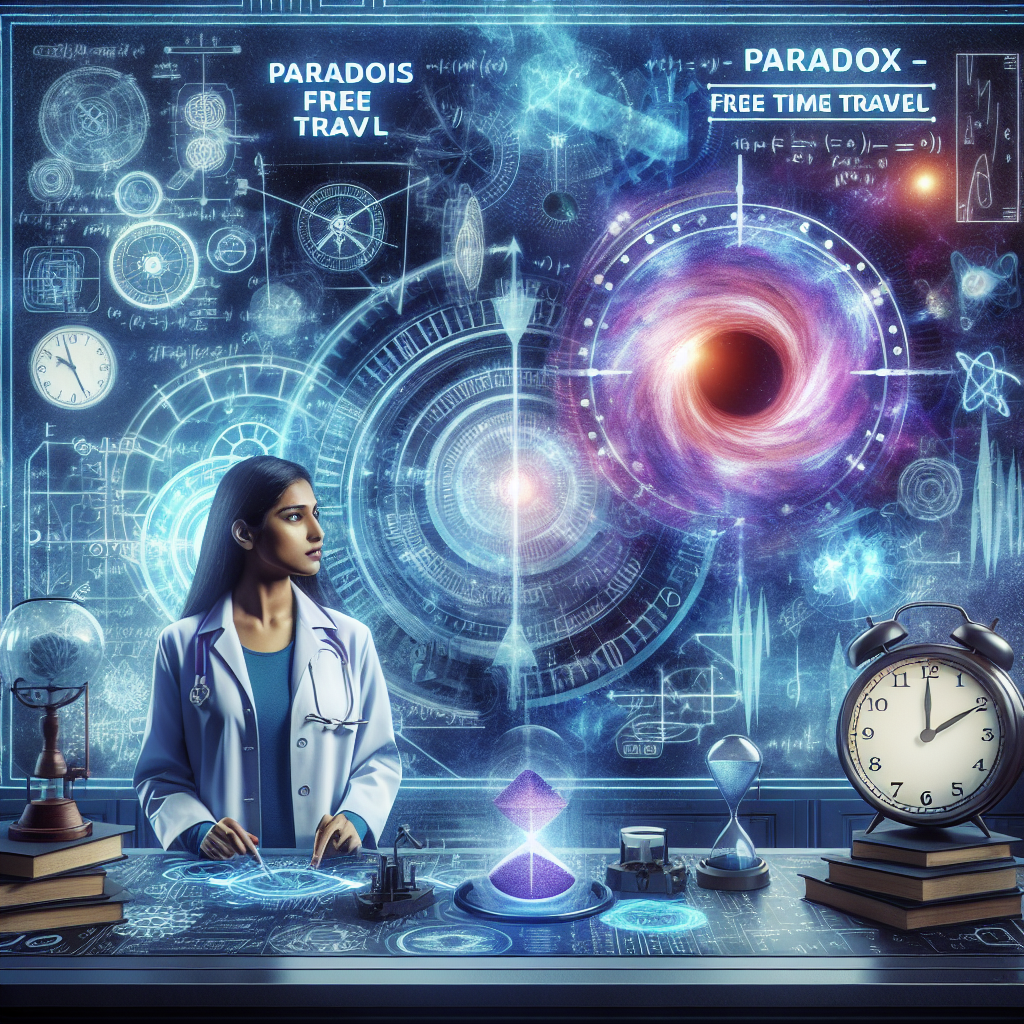
In a groundbreaking study, scientists from the University of Queensland have mathematically demonstrated the feasibility of a specific type of time travel, claiming to resolve long-standing paradoxes surrounding the concept. Their findings appear in the peer-reviewed journal Classical and Quantum Gravity.
Germain Tobar and Fabio Costa’s paper titled "Reversible dynamics with closed time-like curves and freedom of choice" explores the theory of closed time-like curves (CTCs), a concept first introduced by Albert Einstein. The researchers assert that as long as just two elements of a time travel scenario maintain a causal order, the remainder can be subject to local free will. This conclusion presents a significant shift in our understanding of determinism versus freedom of choice, suggesting that time travel could integrate both concepts harmoniously.
Costa illustrates this with a thought-provoking analogy involving the COVID-19 pandemic. He explains that attempting to prevent patient zero from becoming infected could paradoxically lead to one’s own infection, demonstrating a self-correcting dynamic where events adjust themselves to avoid inconsistencies. This idea brings to mind the biblical principle found in Proverbs 16:9: "In their hearts, humans plan their course, but the Lord establishes their steps." Much like our intentions, our actions are never outside the realm of divine oversight, suggesting a greater design at play.
Despite the allure of changing historical events or preventing disasters, Tobar emphasizes a fundamental reality: even with time travel, efforts to erase pivotal moments may lead to unexpected and intricate outcomes. The notion reflects a deeper principle—that while we may desire to shape our futures, the paths we take often lead to unforeseen consequences, reminding us of the importance of wise decision-making.
As Tobar points out, the mathematics behind time travel, reminiscent of concepts in quantum mechanics and random walk physics, might encourage future explorations without fear of catastrophic impacts. However, it serves as a vivid reminder of life’s complexity and the need for thoughtful consideration before taking action—a theme echoed in Scripture.
The researchers caution against rash decisions, suggesting that the principles governing time travel mirror the wisdom found in biblical teachings about planning and purpose. James 4:13-15 states, "Now listen, you who say, ‘Today or tomorrow we will go to this or that city, spend a year there, carry on business and make money.’ Why, you do not even know what will happen tomorrow. What is your life? You are a mist that appears for a little while and then vanishes." This verse underscores the transient nature of life and the importance of grounding our lives in purpose and intention.
In conclusion, while the door to time travel may be ajar through scientific inquiry, it also invites us to reflect on our actions and decisions in the here and now. The pursuit of knowledge is a commendable endeavor, but it is equally vital to approach it with humility and an awareness of the interconnectedness of all life. As we ponder these scientific revelations, let us seek wisdom in our choices, embracing the present moment with gratitude and intention.
Takeaway: Just as the concept of time travel presents both opportunity and responsibility, so does life itself. Let us strive to make choices with a greater awareness of their potential implications, grounded in hope and faith.
Explore and dig up answers yourself with our BGodInspired App. Be careful – each interaction is like a new treasure hunt… you can get lost for hours 🙂