 0
0
 0
0
The Ancient Powerhouses Beneath the Sea: How Life’s Beginnings May Sparkle with Divine Design
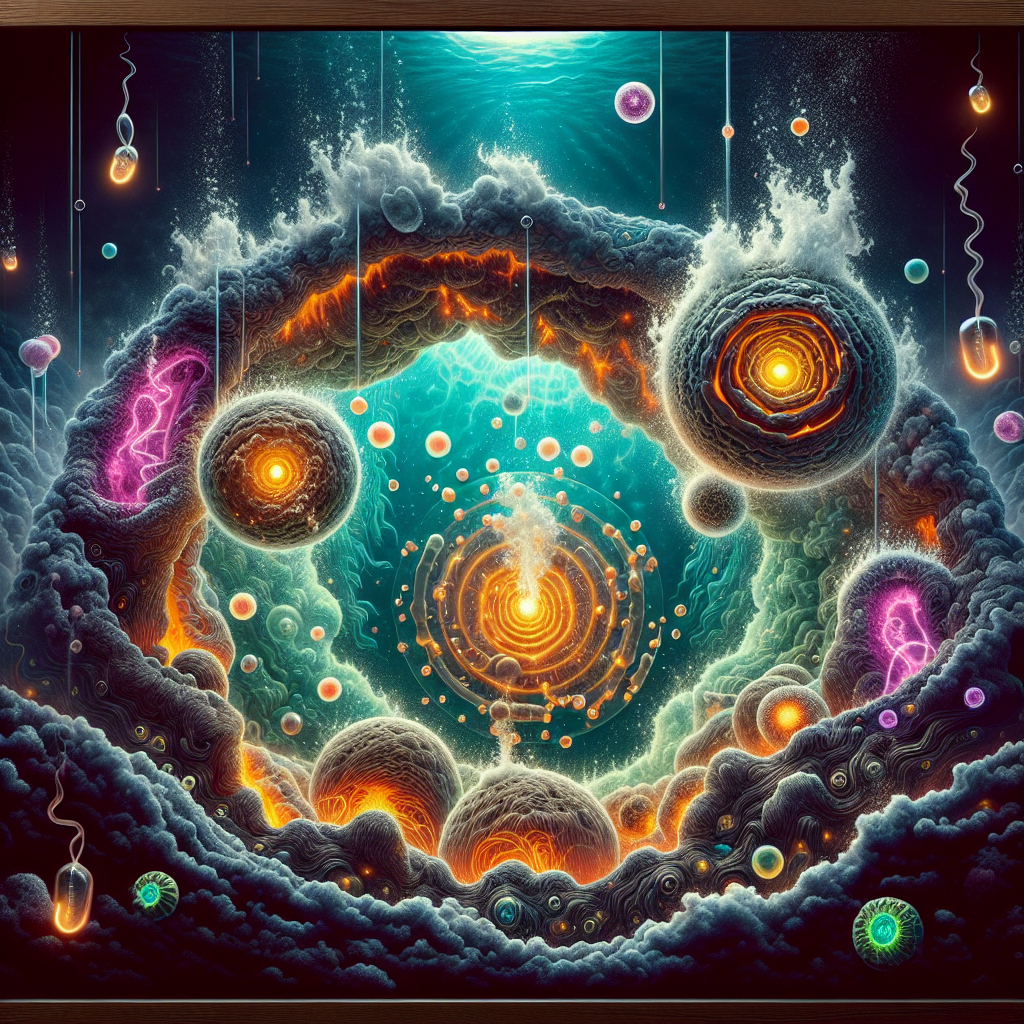
In a remarkable leap for science, researchers have unveiled new insights into the origins of life, recreating primitive Earth conditions in the lab that offer compelling evidence about how life’s molecular precursors may have formed. By mimicking hydrothermal vents, the study suggests that nature’s electrochemical gradients could have driven the first chemical reactions of life—without the need for enzymes.
Published in the Journal of the American Chemical Society (2025), this groundbreaking experiment reveals not just geological features, but potential biochemical engines that might have shaped the dawn of life.
From Chaos to Creation
During the tumultuous Hadean eon—when Earth was still rough around the edges— a cooler, acidic ocean coexisted with mineral-rich fluids flowing from the depths. These unique environments became hotbeds for transformation, creating energy gradients capable of reducing carbon dioxide into essential building blocks like formic acid and acetic acid. “Our experiment sought to determine whether this voltage alone could trigger a carbon fixation reaction. And we found that it could,” explained Thiago Altair Ferreira, the lead author of the study.
At the core of this theory is the idea that natural contrasts in pH, temperature, and redox potential could drive chemistry prior to life itself. Ferreira’s assertion highlights a stunning possibility: that at the intersection of science and theology, the intricate design of the universe reflects an intelligent Creator’s touch.
Chemistry: The Divine Interface
Incredible findings emerged from the use of iron-sulfur and iron-nickel-sulfur minerals, which acted as catalysts, lowering the energy needed for crucial chemical reactions. This mirrors the biblical principle that God often uses ordinary elements to create remarkable outcomes. Just as scripture states in Genesis 1:31, "God saw all that He had made, and it was very good." This connection raises a thought-provoking question: Could the elegance of these natural processes remind us of a divine architect?
The experiment revealed nanoampere-scale electric currents—tiny but consistent charges that powered the chemical reduction of CO₂. Remarkably, no artificial power was needed; instead, the inherent energy gradients within nature drove the reactions. “This suggests that small but constant electric currents at the bottom of the primitive sea would be enough to sustain a rudimentary metabolism,” Ferreira said, hinting at an ancient design that operates through seemingly simple principles.
Life Without Complex Machinery
The implications of this research bridge the realm of geology and biology, showcasing that life’s earliest chemistry could have thrived without complex machinery. The study invites deep reflection on the elegance and simplicity with which life began—a narrative that resonates with Christian principles of creation.
In the simplest of conditions, life found a way, echoing the message of Matthew 17:20: “If you have faith as small as a mustard seed, you can say to this mountain, ‘Move from here to there,’ and it will move.” This essential message of faith in small beginnings resonates with the study’s findings, urging us to consider how God’s power can manifest in unexpected ways.
An Invitation to Reflect
As we explore these fascinating scientific discoveries, let’s remain open to the wonder they inspire. Just as primitive conditions fostered the origins of life, our own lives can flourish through faith and trust in God’s design. What might happen if we embraced the small, often overlooked influences in our lives, allowing them to guide our growth?
With each discovery, we are reminded of the delicate balance of creation and the mysterious forces that governed our beginnings. Let us carry this curiosity and awe into our daily lives, exploring not only the depths of our oceans but also the depths of our spirits.
Explore and dig up answers yourself with our BGodInspired App. Be careful – each interaction is like a new treasure hunt… you can get lost for hours 🙂