 0
0
 0
0
Spiritual Devotional about Sacred Art
Embracing Sacred Art: A Journey into Divine Creativity
Hello, beautiful souls! 🌟 Today, let’s embark on an enchanting exploration of sacred art, a deeply spiritual expression that connects us with the divine and inspires our hearts.
Throughout history, art has been a vibrant tapestry weaving the human spirit with the divine essence. Sacred art, in particular, stands out as a beautiful testament to our faith and devotion, capturing the essence of God’s love, grace, and glory.
Reflecting God’s Creativity
The Bible teaches us that we are made in the image of a creative God. Genesis 1:27 reminds us, “So God created mankind in his own image, in the image of God he created them; male and female he created them.” This divine spark within us calls us to create and express, transforming our inner love for God into visible beauty.
Sacred art is more than just aesthetic; it is an act of worship. Whether it’s the intricate brushstrokes of a classical painting, the harmonious notes of a hymn, or the majestic architecture of a cathedral, each serves as a vessel carrying the sacred truth of God’s presence.
A Visual Gospel
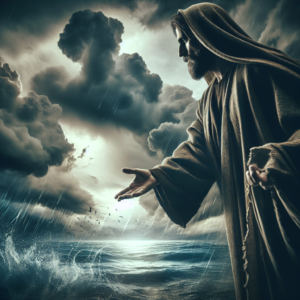
Sacred art also acts as a visual gospel, storytelling through colors and forms. Imagine the vibrant stained glass windows in a church, depicting scenes from the life of Christ. These works guide us into deeper reflection, drawing our minds and hearts into the mysteries of faith. In many ways, they serve as a painter’s or sculptor’s sermon, quietly preaching the Word to all who gaze upon them.
Psalm 19:1 beautifully captures this sentiment: “The heavens declare the glory of God; the skies proclaim the work of his hands.” Just as the heavens tell of God’s glory, sacred art spreads His message, inspiring us to live in His truth and light.
A Source of Inspiration and Peace
Engaging with sacred art can provide peace and inspiration, anchoring our thoughts in serenity and stirring awe and wonder. It invites us to pause and meditate, to see the world not just through our eyes, but through our spirits.
Art can be a means to commune with God, a sacred space where our worries dissolve and our souls find rest. In the stillness of observing or creating, we can hear God’s gentle whispers, guiding and comforting us.
Conclusion: Your Artistic Journey
Dear friends, whether you are an artist or an admirer, I encourage you to delve into the world of sacred art. Allow it to enrich your faith, broaden your understanding, and fill your soul with joy. Let it remind you of the Creator’s limitless creativity and love.
In your journey, may you feel inspired to contribute your own brushstroke to the grand canvas of creation. Remember, your expressions, no matter how simple, are valuable renderings of the faith and beauty within you.
So go forth, and let art be your prayer. Celebrate this divine gift, cherishing it as a reflection of the Greatest Artist, our loving God. 🎨✨
Blessings and light to all!
Explore and dig up answers yourself with our BGodInspired App. Be careful – each interaction is like a new treasure hunt… you can get lost for hours 🙂
Q&A about Sacred Art
Q: What is sacred art?
A: Sacred art is a genre of artistic expression that is created to reflect spiritual beliefs and religious themes. It often serves as a medium for worship, education, and inspiration within various religious traditions.
Q: What are some examples of sacred art?
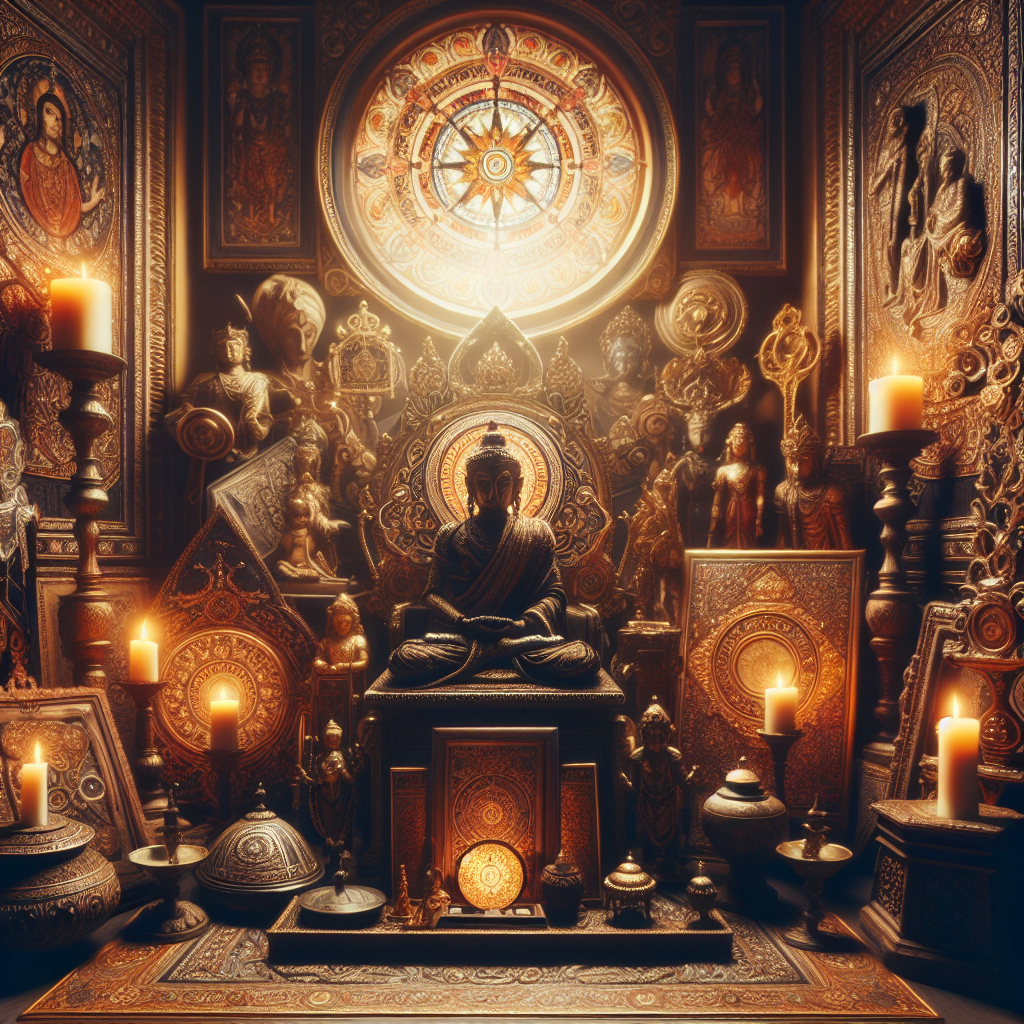
A: Examples include Christian iconography, Islamic calligraphy, Hindu temple carvings, and Buddhist thangkas. These works often depict deities, religious narratives, or symbols.
Q: How does sacred art differ from secular art?
A: Sacred art is specifically created to convey religious themes or facilitate spiritual experiences, often within a ritual or devotional context, whereas secular art may not have a religious purpose or context.
Q: What role does symbolism play in sacred art?
A: Symbolism is a key element in sacred art, used to convey complex spiritual ideas and doctrines through visual means. For instance, the lotus in Hindu and Buddhist art symbolizes purity and enlightenment.
Q: How has sacred art evolved over time?
A: Sacred art has evolved alongside cultural and religious shifts. While maintaining core symbolic meanings, styles and materials may change, reflecting broader artistic trends and technological advancements.
Q: Can sacred art be abstract?
A: Yes, sacred art can be abstract. Certain traditions, like Islamic art, often favor abstract over representational forms to avoid idolatry, using geometric patterns and intricate designs to evoke divine beauty.
Q: What is the significance of color in sacred art?
A: Colors in sacred art often have specific meanings. For example, gold can represent divine light, blue can signify tranquility, and red might symbolize martyrdom or the Holy Spirit in Christian art.
Q: How is sacred art used in religious services?
A: Sacred art is often integral to religious services, used in rituals, processions, or as focal points in worship spaces. It may adorn altars, be featured in manuscripts, or be part of the architecture.
Q: Who are some notable artists known for their sacred art?
A: Notable artists include Michelangelo and Leonardo da Vinci from the Renaissance period, known for their Christian themed works, and Andrei Rublev, famous for his Russian Orthodox icons.
Q: How does sacred art impact contemporary culture?
A: Sacred art continues to inspire contemporary artists and resonates in modern spirituality, contributing to dialogues about faith, identity, and the human experience across diverse cultures.