 0
0
 0
0
Title: Prehistoric Research Challenges Our Understanding of Early Hominins’ Place in the Food Chain
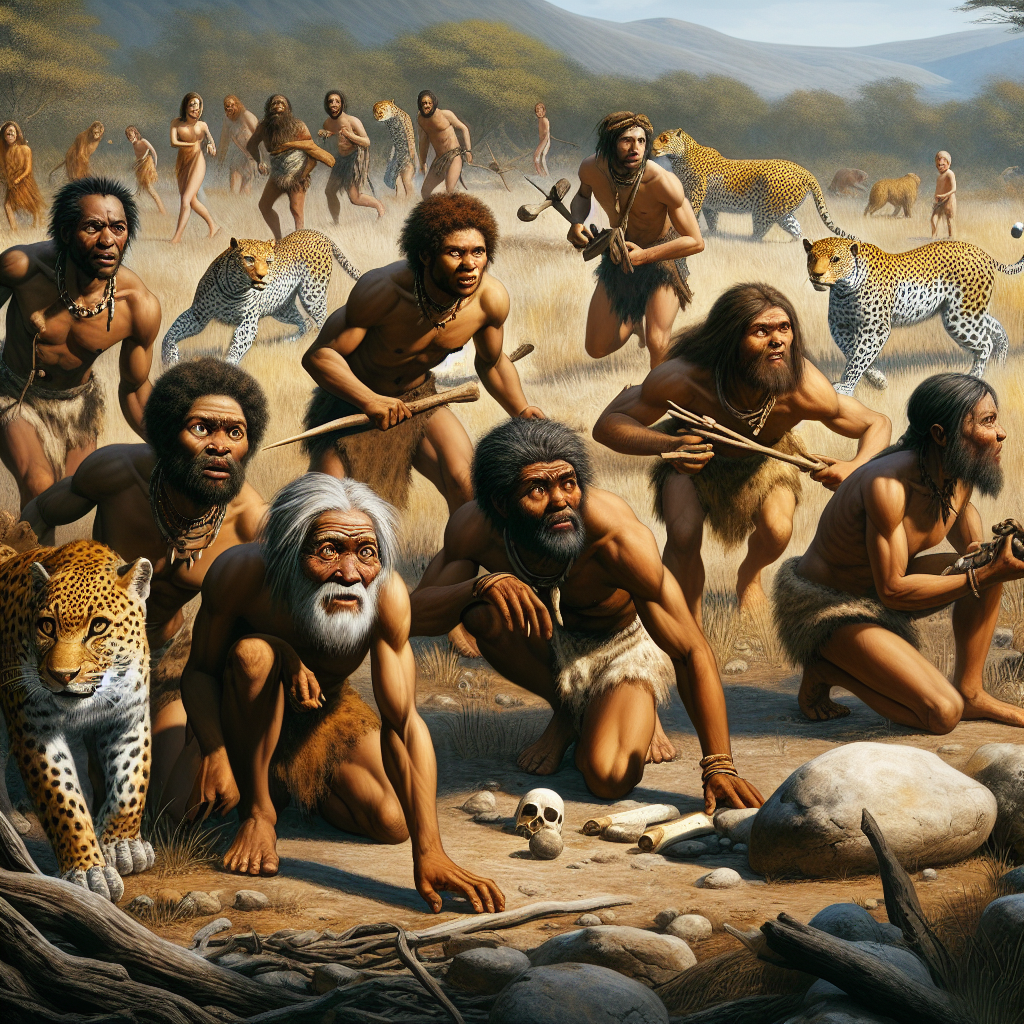
East Africa, 2 Million Years Ago – New research has stirred the scientific community by questioning the long-held belief that Homo habilis stood at the pinnacle of the early human evolutionary tree. Instead, evidence suggests that these early humans may have been more prey than predator, hunted by leopards rather than the triumphant scavengers previously thought.
Scientists have long credited H. habilis with significant advancements, such as creating the Oldowan Toolkit—one of the earliest known stone toolsets. These innovations were pivotal in the East African landscape of Olduvai Gorge, a site known for its rich archaeological significance. However, the latest findings indicate that instead of overtaking carnivores in the food chain, H. habilis may have struggled to evade them.
In a groundbreaking study utilizing artificial intelligence to analyze prehistoric remains, researchers have determined with over 90% probability that H. habilis individuals bore bite marks from leopards. This revelation not only challenges the perception of H. habilis as a top-tier predator but suggests they were vulnerable to the same threats that plagued their earlier ancestors, such as Australopithecines.
This shift in understanding raises deep questions about survival and adaptability in the human story. As anthropologist Manuel Domínguez-Rodrigo notes, “It’s kind of dethroning Homo habilis.” The implications are profound, considering the historical narrative of human evolution and progress.
In a way, this research resonates with a biblical principle: the concept of humility and the reality that every creature, no matter how advanced or skilled, is part of God’s creation and susceptible to His greater plans. In Matthew 5:5, Jesus teaches, “Blessed are the meek, for they will inherit the earth.” This verse prompts us to reflect on the strength of humility, acknowledging that even those who seem at the top can be brought low, reinforcing the universal truth of our shared vulnerability.
As we engage with these findings, we are reminded that progress is not solely about dominance over others; it can also be about learning to coexist and adapt, which resonates with the principles of community and love taught in many passages of scripture.
Takeaway: The story of Homo habilis serves as a poignant reminder that life is a journey of learning and adaptation, inviting us to reflect on our own roles in the world. In a time when the temptation to assert dominance may be strong, let us choose connections rooted in humility and compassion. As we navigate our individual pathways, may we strive to uplift one another, reflecting the communal teachings that bind humanity together in love and understanding.
Explore and dig up answers yourself with our BGodInspired App. Be careful – each interaction is like a new treasure hunt… you can get lost for hours 🙂