 0
0
 0
0
Astronomers Achieve First Measurement of Newborn Black Hole’s Speed and Direction Through Gravitational Waves
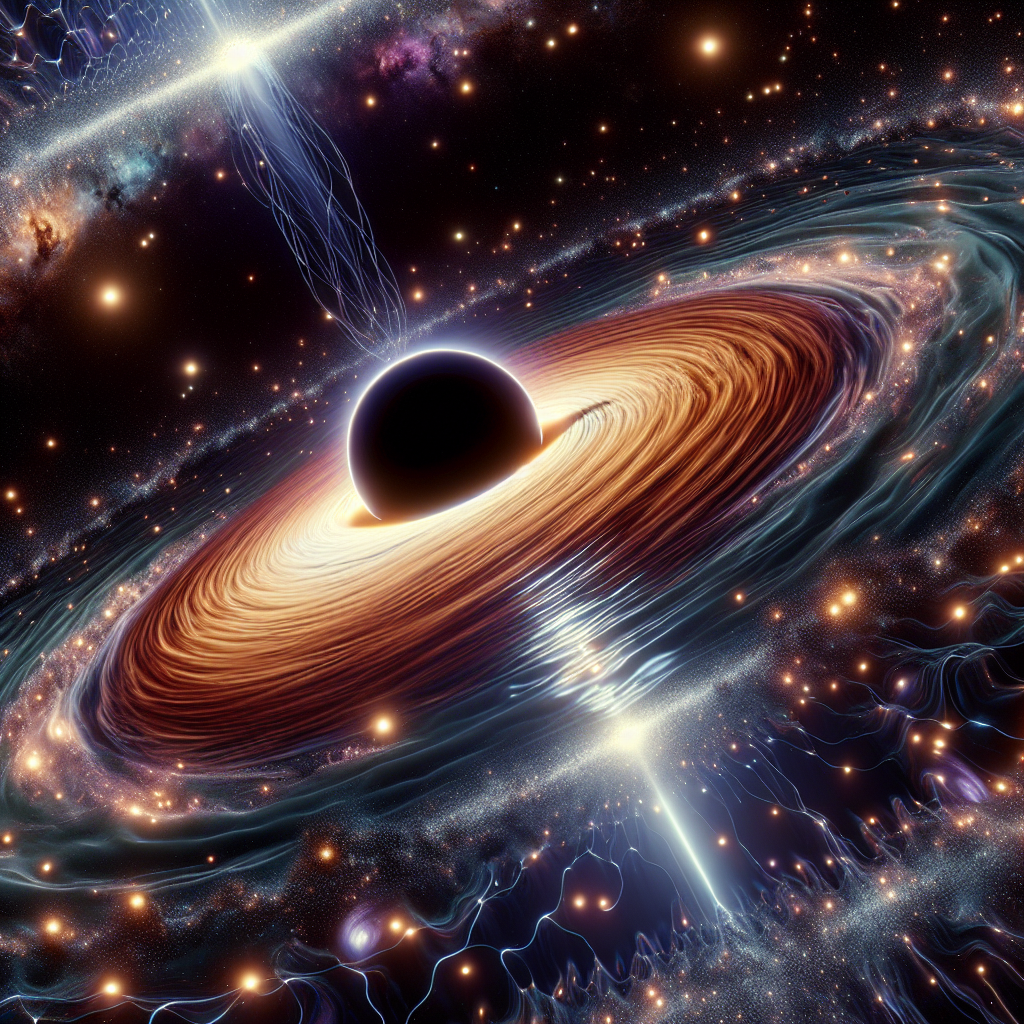
In a groundbreaking achievement, astronomers have successfully measured the speed and direction of a newborn black hole, marking a significant milestone in the field of astrophysics. This remarkable feat was made possible by analyzing gravitational waves emitted when the black hole recoiled following its birth from a black hole merger, a phenomenon that has fascinated scientists since Albert Einstein first predicted gravitational waves in 1915.
The measurement comes nearly ten years after the first detection of gravitational waves by the Laser Interferometer Gravitational-Wave Observatory (LIGO) on September 14, 2015. Over the last decade, a rich collection of gravitational wave detections, along with contributions from other detectors such as Virgo and KAGRA, has provided an increasingly detailed understanding of black hole mergers. Yet, one captivating aspect—the "kick" experienced by the newborn black hole—had remained elusive.
When two black holes merge, the resultant black hole often receives an explosive kick, propelling it away at extraordinary speeds, sometimes exceeding several million miles per hour. This uneven distribution of gravitational waves creates a distinctive signal, allowing scientists to discern not only the speed but also the direction of the black hole’s movement.
Juan Calderon-Bustillo, the study team leader from the Instituto Galego de Física de Altas Enerxías (IGFAE), likened this complexity to an orchestra where different observers might hear varied combinations of instruments, helping them to pinpoint their position relative to the performance. Such intricate measurements offer a glimpse into the dynamics of the universe and echo the wisdom found in Ecclesiastes 3:11, which states, "He has made everything beautiful in its time."
The recent study focused on gravitational wave signal GW 190412—recorded in 2019—where the newly formed black hole was found to be racing away at an astounding speed of 112,000 miles per hour. While this speed is not the maximum possible for a black hole, it is sufficient for the black hole to escape the dense star cluster from which it originated.
Koustav Chandra, a researcher at Penn State University, emphasized the significance of this achievement, stating, "It’s a remarkable demonstration of what gravitational waves can do." The research not only sheds light on black holes but also encourages us to reflect on how we, too, might navigate our own journeys, often influenced by unseen forces.
The study’s findings prompt broader reflections on the interplay of creation and divine order. Just as these gravitational waves provide insights into cosmic events, we can look to our own lives and the hidden paths that guide us, aligning with the biblical principle in Proverbs 3:5-6, which encourages us to "Trust in the Lord with all your heart and lean not on your own understanding; in all your ways acknowledge Him, and He will make your paths straight."
As scientists continue to investigate these cosmic phenomena, let’s take inspiration from their quest for knowledge. May we, too, seek to understand the unseen influences in our lives, embracing the journey with curiosity and faith. Whether through science or spirituality, every discovery beckons us to delve deeper into the truths that shape our existence.
Explore and dig up answers yourself with our BGodInspired App. Be careful – each interaction is like a new treasure hunt… you can get lost for hours 🙂