 0
0
 0
0
Title: Innovative Research Reveals How Herpes Virus Manipulates Human Genome
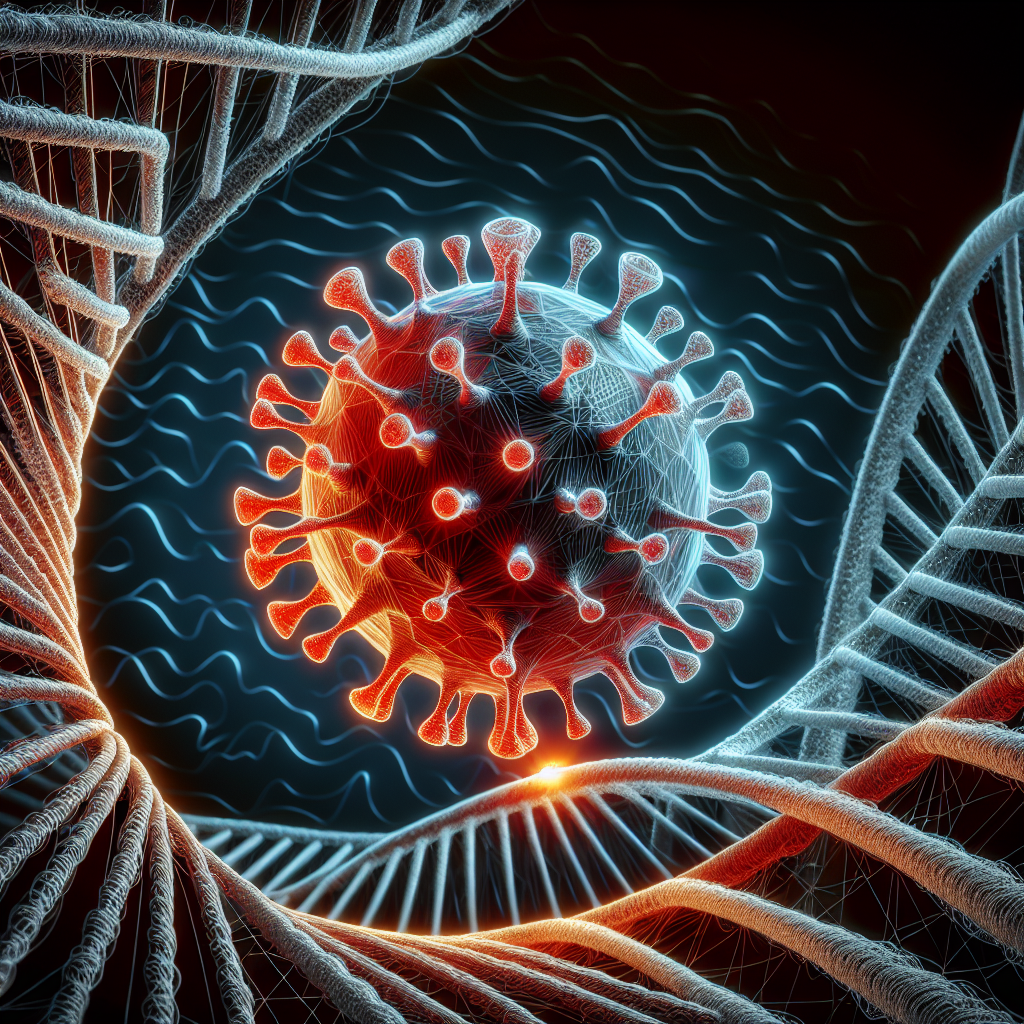
Viruses rely exclusively on their hosts for survival and reproduction, but recent research sheds light on an unexpected behavior of the herpes simplex virus-1 (HSV-1). A groundbreaking study published in Nature Communications reveals that HSV-1 isn’t just a passive invader; it actively reshapes human genomic architecture to facilitate its replication.
Researchers at the Center for Genomic Regulation (CRG) in Barcelona have uncovered how the cold sore virus can rearrange the human genome’s physical structure. This maneuver allows HSV-1 to access host genes that are crucial for its replication, functioning almost like an opportunistic interior designer for the human genome. Dr. Esther González Almela, the study’s first author, noted, "It’s a novel mechanism of manipulation we didn’t know the virus had to exploit host resources."
Historically, other herpes viruses have been observed compacting host chromosomes, but the new findings mark the first evidence that HSV-1 intentionally alters the human genome shortly after infection. Within hours, the virus hijacks essential cellular machinery, effectively pressing pause on the host’s ability to produce its own genetic material.
A pivotal discovery of the study is the role of the enzyme topoisomerase I. Blocking this enzyme hindered HSV-1’s ability to rearrange the human genome, presenting a potential target for new therapeutic strategies against a virus that infects nearly four billion people worldwide. "In cell culture, inhibiting this enzyme stopped the infection before the virus could make a single new particle," explained ICREA Research Professor Pia Cosma, highlighting promising avenues for combating infections.
The researchers employed advanced techniques such as super-resolution microscopy and Hi-C imaging to reveal how HSV-1 commandeers human cells. They found that within just an hour of infection, the virus utilizes the human RNA-polymerase II enzyme to begin synthesizing its proteins. This series of events culminates in a dramatic restructuring of the host’s chromatin, which becomes densified—contrary to the previous belief that dense chromatin solely results in gene silencing.
Dr. Álvaro Castells García, co-first author, reflected on this unexpected outcome, stating, "We always thought dense chromatin shut genes down but here we see the opposite: stop enough transcription first and the DNA compacts afterwards." This dual relationship between activity and structure speaks volumes about the complexities of cellular processes.
As two out of every three individuals under 50 carry HSV-1, its prevalence underscores a significant public health challenge, particularly as drug-resistant strains rise and effective treatments remain limited. Yet, from a broader perspective, these scientific revelations prompt reflection on resilience and the power of adaptation—qualities that many might find spiritually uplifting.
In Scripture, we find reassurance in Romans 8:28, which states, “And we know that in all things God works for the good of those who love him, who have been called according to his purpose.” Even amid adversity, such as viral infections that might threaten health, there is a divine assurance that transformation can lead to recovery and growth.
As we ponder these findings, it’s essential to remain curious and hopeful. The study not only advances our understanding of HSV-1 but also reminds us that like the interplay of host and virus, life’s challenges can often lead to unexpected breakthroughs. In our intersection of science and faith, we find a shared pursuit of understanding and healing, echoing the vital message of hope and perseverance that Jesus taught. Let this story encourage you to reflect on how adversities can reshape us for the better, guiding us on a journey toward holistic healing and renewal.
Explore and dig up answers yourself with our BGodInspired Bible Tools! Be careful – each interaction is like a new treasure hunt… you can get lost for hours 🙂