 0
0
 0
0
Spiritual Devotional about Sacred Art
Embracing the Divine Brush: The Spiritual Beauty of Sacred Art
Hello, dear friends! 🌟
Today, let’s take a journey into the vibrant and soulful world of sacred art. Art has always been a profound way humans express their innermost thoughts and emotions. Sacred art, in particular, forms a unique bridge between the earthly and the divine—inviting us to see and feel beyond what meets the eye.
A Canvas of Faith
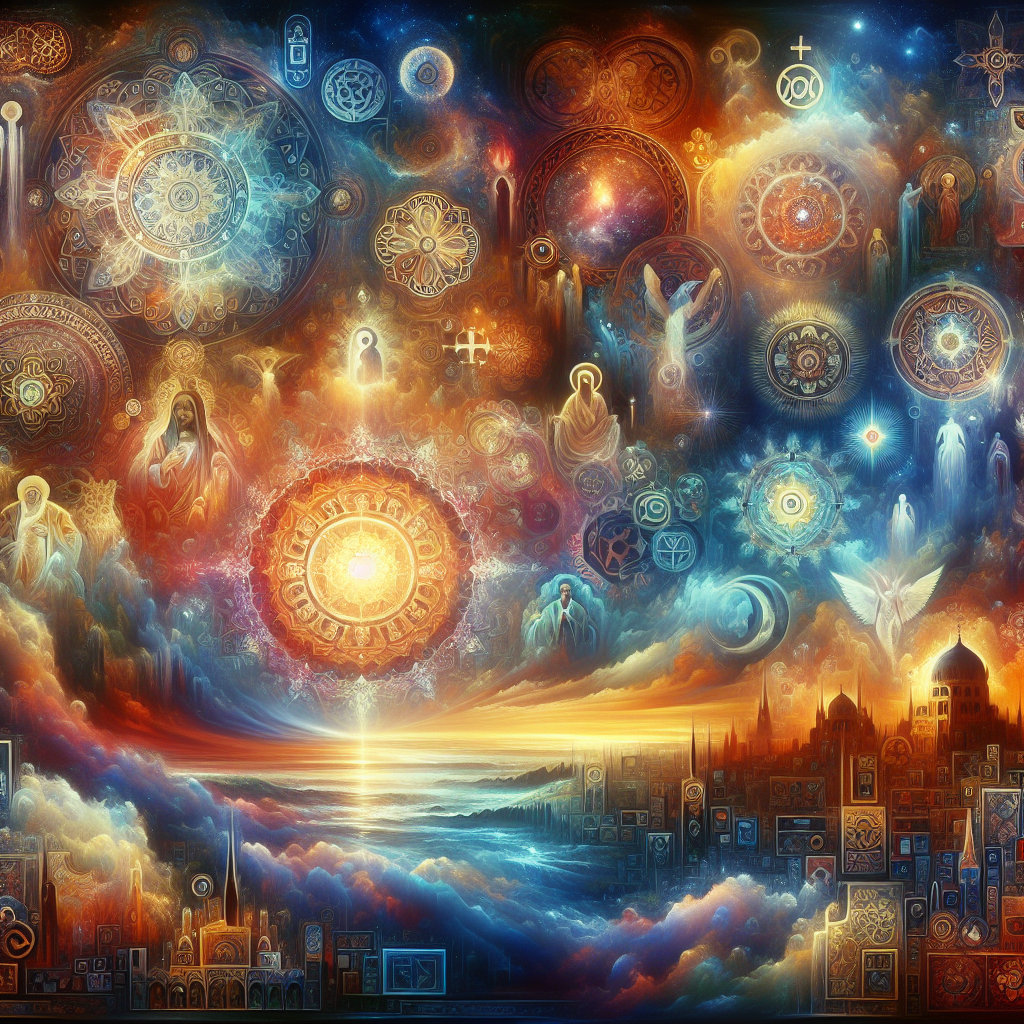
Since ancient times, humans have used art to express their relationship with the divine. The intricate mosaics in early Christian churches, the vibrant stained glass windows that tell stories of faith, and the majestic frescoes that cover cathedral ceilings—all echo the glory of God’s creation and His infinite love for us.
In the Book of Exodus, we see God instructing the Israelites to create a dwelling place for Him, complete with artistic designs: “See, I have chosen Bezalel…and I have filled him with the Spirit of God, with wisdom, with understanding, with knowledge and with all kinds of skills—to make artistic designs…” (Exodus 31:2-4, NIV). This passage reveals the value God places on art and creativity as expressions of His beauty and majesty.
Art as Worship
Sacred art isn’t just about beautiful depictions; it is an act of worship. Each stroke of the artist’s brush can be a prayer, a deep meditation, or an offering. When artists create with the intention of glorifying God, their work becomes more than art—it becomes a conduit of divine grace and truth.
The Psalms often encourage us to worship God with our talents: “Sing to him a new song; play skillfully, and shout for joy” (Psalm 33:3, NIV). Whether it’s a new song or a new painting, the call is the same—to use our gifts in ways that honor God. In this light, every piece of sacred art becomes a testimony of faith, hope, and love.
Connecting with the Divine
Sacred art has the power to touch our souls and deepen our spiritual awareness. As you contemplate a piece of sacred art, whether it’s an icon, a painting, or a sculpture, allow it to draw you closer to God. Let the colors, shapes, and symbols speak to your heart, reminding you of eternal truths and heavenly promises.
In the same way the artist infuses each work with a piece of their spirit, sacred art can infuse us with a renewed sense of the divine presence in our daily lives. It serves as a gentle reminder of God’s profound love, as well as His call to beauty and creation.
An Invitation to Create
I encourage you, dear reader, to embrace your own creativity. Whether or not you consider yourself an artist, you are created in the image of the Ultimate Creator. Perhaps you might try your hand at creating something beautiful—a piece of art, a melody, or even a craft. As you create, invite God into the process and see how He might reveal Himself to you in surprising and delightful ways.
Let us celebrate the divine artistry that flows through our lives, recognizing that with each brushstroke, we reflect a bit more of heaven’s beauty here on earth.
May your heart be uplifted, and your spirit inspired as you engage with sacred art in all its forms. Blessings on your creative journey! 🎨✨
With love and faith,
[Your Name]
Explore and dig up answers yourself with our BGodInspired Bible Tools! Be careful – each interaction is like a new treasure hunt… you can get lost for hours 🙂
Q&A about Sacred Art
Q&A on Sacred Art
Q1: What is sacred art?
A1: Sacred art is a form of artistic expression that is infused with religious or spiritual significance. It often aims to inspire devotion and connect viewers to the divine. This art can encompass paintings, sculptures, icons, architecture, and more, and is found across various religions including Christianity, Buddhism, Islam, and Hinduism.
Q2: How does sacred art differ from secular art?
A2: Sacred art is specifically created to convey or evoke spiritual or religious emotion and meaning. It often adheres to traditional or canonical symbols and themes of a particular faith. Secular art, on the other hand, may focus on a broader range of subjects, often emphasizing human experience, aesthetics, or personal expression without a religious context.
Q3: What are some common symbols found in Christian sacred art?
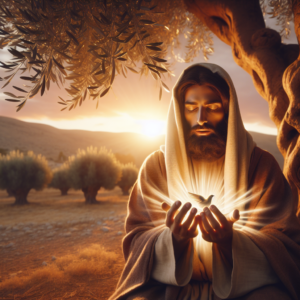
A3: Common symbols include the cross, representing Jesus’s crucifixion; the dove, symbolizing the Holy Spirit; the lamb, representing Jesus as the sacrificial "Lamb of God"; and the fish, an early symbol for Christ. These symbols often carry rich theological meaning and are used to convey religious narratives and teachings.
Q4: Can you name a famous piece of sacred art?
A4: One of the most renowned pieces of sacred art is Michelangelo’s Sistine Chapel ceiling frescoes in Vatican City. Completed in 1512, they depict various scenes from the Bible, including the Creation of Adam. It’s celebrated for its artistic mastery and profound religious themes.
Q5: How is sacred art utilized in religious practices?
A5: Sacred art serves various functions in religious practices, such as enhancing worship experiences, educating believers, and conveying religious stories and values. It can be used as focal points in worship spaces, in rituals, or as tools for meditation and reflection.
Q6: How does Islamic sacred art differ from that in other religions?
A6: Islamic sacred art is distinct in its use of geometric patterns, calligraphy, and aniconism (avoidance of depicting sentient beings). This is due to religious beliefs emphasizing the transcendence and uniqueness of Allah. Instead of figurative imagery, Islamic art focuses on intricate designs and the beauty of the written word, often featuring verses from the Quran.
Q7: What role does sacred art play in cultural identity?
A7: Sacred art often plays a crucial role in cultural identity by preserving and promoting the religious and spiritual traditions of a community. It reflects shared values and history, fostering a sense of unity and continuity among believers, and often serves as a cultural heritage that is passed down through generations.